
Holiday Apartment in Este: History, Trails and Venetian Cuisine
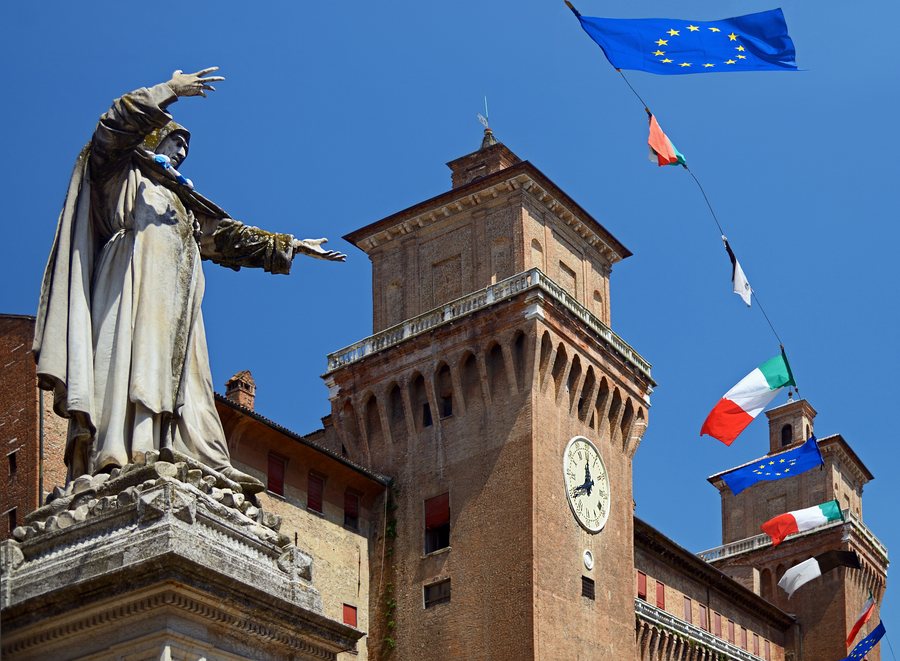 File:Monument Savonarola in the background of Este Castle. Ferrara, Italy.jpg
Photo: Ввласенко via Wikimedia Commons, CC BY-SA 3.0
File:Monument Savonarola in the background of Este Castle. Ferrara, Italy.jpg
Photo: Ввласенко via Wikimedia Commons, CC BY-SA 3.0
Este Between Hills, History and Everyday Venetian Life
Este combines historic sites with experiences that can be planned to suit different interests. In the historic centre, the weekly market takes place every Wednesday and Saturday. The Sentiero del Principe also begins there, on Via dei Cappuccini next to the Arco del Falconetto. When choosing a holiday apartment in Este, you can therefore consider whether culture, a scenic trail, regional cuisine or a flexible daily schedule should be the focus of your stay. Este also has a railway station on the Padova–Mantova railway line.
A Holiday Apartment in Este as a Starting Point for Trails and Discoveries
The Sentiero del Principe conveys the scenic transition between the Euganean Hills and the surrounding Venetian plain. The trail thus offers a special view of the change between the hilly landscape and the flatter surrounding area. The Guido-Negri Route takes about one hour. A map and prepared texts accompany visitors through an immersive experience. The two trails can therefore be seen as different starting points for planning your days in Este.
Castello Carrarese and the Museo Nazionale Atestino
The history of the town is particularly evident at Castello Carrarese. Ubertino da Carrara had the defensive complex in Este built and continued the castle's transformation into its present form in 1339. Two medieval archaeological areas are currently set up for visits in the Castello area: one is located in the basement of the museum and is accessible only with permission; the other is situated at the summit of the hill where the core of the first Este castle stood. The Museo Nazionale Atestino displays finds from the Euganean Hills documenting human life and human activity from the Middle Paleolithic through the entire Bronze Age. The museum is accessible to people with mobility impairments thanks to the removal of architectural barriers and a lift to the first upper floor.
Churches, Art and Religious History
The Chiesa di San Martino is the oldest religious building in the town of Este and has preserved its medieval structure. Romanesque-Gothic elements are particularly visible in the apse area and the bell tower. The Basilica of Santa Maria delle Grazie was founded in the 15th century at the instigation of Marquis Taddeo d’Este. It preserves a Byzantine icon of the Madonna delle Grazie, which was enthroned in 1479. Another art-historical highlight is the painting Santa Tecla by Giambattista Tiepolo: it tells of the plague that struck the Este area in 1630 and was installed in Este Cathedral on 24 December 1759. In Palazzo Mocenigo, the ceiling of Room 4 is decorated with scenes from Torquato Tasso's Gerusalemme Liberata from 1581.
Market and Venetian Cuisine
The weekly market in the historic centre gives a stay a concrete rhythm on two fixed days. Venetian gastronomy, which is highlighted in Este, includes traditional dishes based on polenta and Stracotto d’asino. Schizzotto is also a typical baked product of Venetian gastronomy and one of the culinary themes associated with Este.
Further Options for Different Daily Plans
The municipal swimming pool in Este is intended for swimmers and water enthusiasts of all ages, as well as for use in winter and summer. The event “Visite guidate alle manifatture di Este” was also scheduled for 2026. The range of topics considered in Este therefore extends from active trails and water activities to crafts, art, religious history and regional cuisine.
For your further travel planning: Lozzo Atestino, Torreglia, Albignasego, Cornoleda, Agna, Mestrino, Valle San Giorgio, Villalta
For the overarching travel overview: Padua.
Check prices, availability and amenities for your travel dates directly on Booking.com.
View Accommodation and OffersAdvertisement · Affiliate link to Booking.com
