
San Casciano dei Bagni – Thermal Waters, Cultural Heritage and Local Cuisine
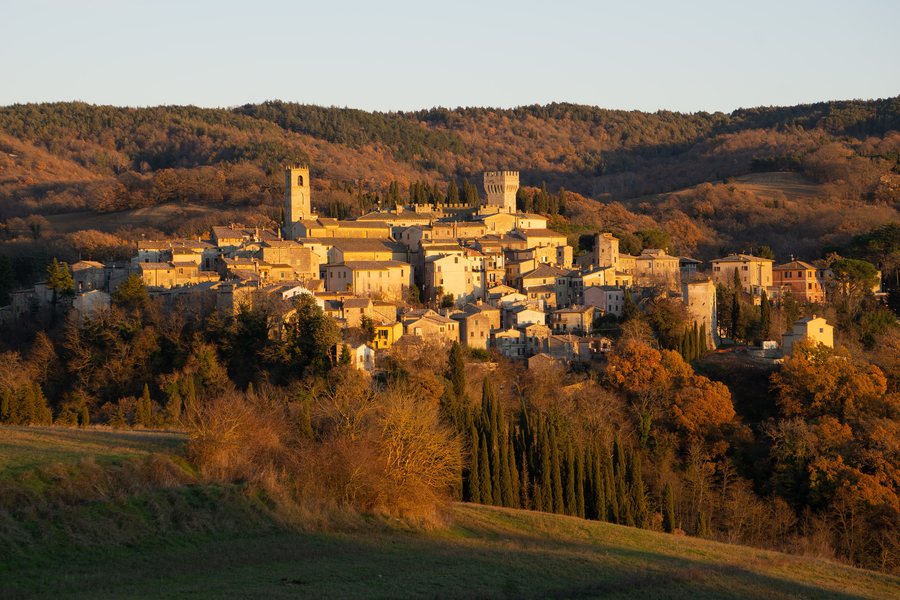
San Casciano dei Bagni represents an unusual combination of thermal waters, ancient history, sacred sites and regional cuisine. Churches, exhibitions, historic routes and theatre history offer different ways of discovering the town. If you are looking for a holiday apartment in San Casciano dei Bagni, you can choose your accommodation according to the experiences that are important for your trip: culture and archaeology, thermal waters, historic routes or culinary traditions. This gives your choice of holiday apartment a clear thematic framework.
Thermal Waters and Roman Heritage
Bagno Grande is the most abundant spring in San Casciano dei Bagni; it produces 25 litres per second at 41.5°C. The Santuario Ritrovato, a Roman sanctuary complex built over older Etruscan structures, is located at Bagno Grande. At its centre is an elongated travertine basin. Inscribed altars, dozens of votive bronzes and a well-preserved Roman coin hoard were recovered from the sacred basin. This creates a clear focus for your itinerary between thermal waters and archaeology.
Archaeology in the Town Hall
The entrance atrium of the town hall houses the new Le Stanze Cassianensi exhibition. It displays finds from the Balena necropolis, including inscriptions in Latin and Etruscan. The exhibits include votive inscriptions, a statuette of Hygieia, Roman pottery and bronze votive offerings. This allows the past to be viewed not only through buildings, but also through specific objects and different forms of ancient religious practice.
Churches, Pilgrimage Routes and Theatre
The Insigne Collegiata di San Leonardo is the main church of San Casciano dei Bagni and was elevated to collegiate church status in 1618. Santa Maria ad Balnea is one of the oldest parish churches in the Diocese of Chiusi. It was built on the site of a former pagan sanctuary, where a pillar or votive chapel for Christian worship was created in the Early Middle Ages. Its history is closely linked to the thermal waters of San Casciano and their appeal to pilgrims travelling along ancient routes. These routes were marked by rest stops such as churches and hospices, which provided travellers with accommodation, refreshment and care. Another cultural aspect is the Teatro dei Georgofili Accalorati: after restoration based on a design by the architect Giampiero Chiucini, it resumed its activities in 1999 and provided space for smaller performances and public initiatives.
Holiday Apartment in San Casciano dei Bagni: Culture, Thermal Waters and Historic Routes
When planning a trip centred around a holiday apartment in San Casciano dei Bagni, you can weigh up different priorities. The Roman and Etruscan traces are suited to days focused on archaeology, while Bagno Grande gives the town’s thermal waters a distinctive theme. The Tuscan section of the Via Francigena ends in San Casciano dei Bagni, more precisely in the small village of Ponte a Rigo, before the route enters Lazio. This route connects the town with a broader historical network of roads. In this way, you can choose your accommodation according to your travel interests without having to follow a fixed itinerary.
For further options when choosing a location, you can also consider Celle Sul Rigo, Palazzone and Fighine.
Ciaffagnone During Carnival
Ciaffagnone is a typical Carnival dish from San Casciano dei Bagni, prepared during Carnival in both a savoury and a sweet version. This change between savoury and sweet gives the local cuisine a distinctive seasonal accent.
For the broader travel overview: Siena.
Check prices, availability and amenities for your travel dates directly on Booking.com.
View Accommodations and OffersAdvertisement · Affiliate link to Booking.comMore Destinations
More places within the same destination:

