
Holiday apartment in Monticchiello: medieval history, theatre and Tuscany
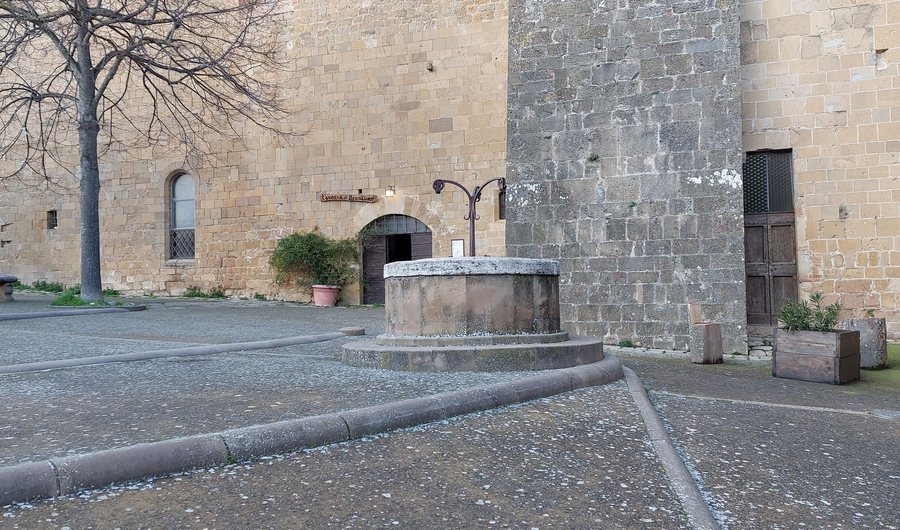 File:Cisterna in Monticchiello Pienza (Siena).jpg
Photo: Anna.Massini via Wikimedia Commons, CC BY 4.0
File:Cisterna in Monticchiello Pienza (Siena).jpg
Photo: Anna.Massini via Wikimedia Commons, CC BY 4.0
Monticchiello combines the character of a medieval fortress with a vibrant village culture and Tuscan cuisine. The village may therefore be particularly appealing if you are looking for a holiday apartment that serves not only as a base for relaxing days, but also for cultural discoveries. The town walls, theatrical tradition, Gothic architecture and the historic venue of the Teatro Povero give your stay several distinct focal points.
Medieval walls and Gothic architecture
Monticchiello has preserved the character of a medieval fortress. The town walls and a cassero tower formed part of the former defence system of the Republic of Siena. The medieval circuit wall is interrupted by eight towers and thus shapes the appearance of the village. At the entrance to the fortifications is a pointed-arch gateway flanked by two smaller towers.
Another distinctive sight is the Church of Saints Leonardo and Cristoforo. It was built in the 13th century by Cistercian craftsmen on behalf of the Republic of Siena and is regarded as an example of Gothic-Cistercian architecture. Its Gothic portal features delicate columns and an intricately designed rose window. Anyone interested in architectural history and detail will find a good reason here to explore the village centre attentively and at their own pace.
Teatro Povero: culture that comes from the village itself
Since 1967, Teatro Povero has brought a series of stage productions to the square in Monticchiello every year. The plays address pressing current issues. In this autodramatic theatre project, the residents of Monticchiello have been directly involved in writing, building and performing the production since its creation in 1967. As a result, the focus is not only on a performance, but also on the special connection between the village community and theatrical work.
TePoTraTos presents traditional folk theatre in a format between a museum and a theatrical performance. When planning a trip, this allows you to choose between architecture, local history and theatre, without reducing Monticchiello to just one experience.
Route and orientation on site
The “Pienza–Monticchiello–Pienza” route follows the walls along a recently secured path around Monticchiello and provides access from above. The only direct access is through the Gothic arch of the Porta Sant’Agata. These two described access points provide different reference points for planning your day: you can treat the route as an activity in its own right or make the direct entrance through the gate the focus.
Parking for Monticchiello is located outside the medieval walls. When choosing a holiday apartment or holiday house, it is therefore advisable to coordinate your arrival and walking plans with the historic village centre and the access points described above.
Tuscan cuisine in the historic centre
In the historic centre, Ristorante Bronzino welcomes guests at the historic venue of Teatro Povero. The restaurant is located in an old 18th-century granary and serves typical Tuscan cuisine made with local ingredients. Another regional connection can be found in the surrounding area of Monticchiello: the new production facility of Mulino Val d’Orcia is located there.
Further places for planning your trip
For the higher-level travel overview: Pienza.
Check prices, availability and amenities for your travel dates directly on Booking.com.
View accommodation and offersAdvertisement · Affiliate link to Booking.com
.jpg)