
Holiday apartment in Buti: culture, forests and trails on Monte Pisano
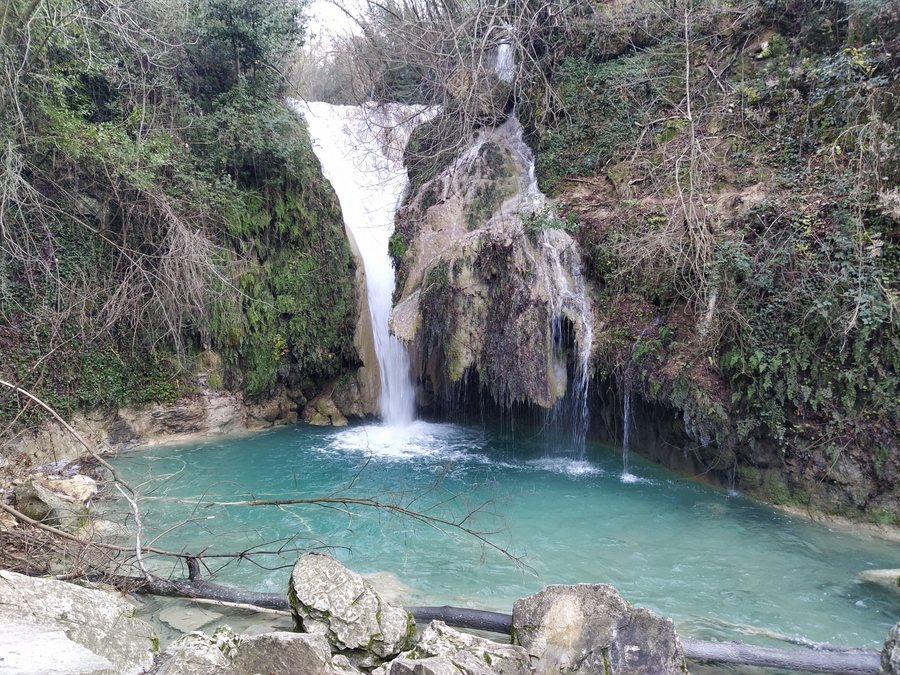 File:Prato, Rio Buti, pozza della Morte e cascata.jpg
Photo: Naioli via Wikimedia Commons, CC BY-SA 4.0
File:Prato, Rio Buti, pozza della Morte e cascata.jpg
Photo: Naioli via Wikimedia Commons, CC BY-SA 4.0
Holiday apartment in Buti between Monte Pisano and the Rio Magno
Buti lies on the eastern slopes of Monte Pisano and on the banks of the Rio Magno. At the same time, the town is surrounded by pine and chestnut forests. The landscape described here therefore combines the mountain, riverbanks and forest as distinct landscape elements.
Hiking, Nordic walking and mountain biking
The mountains around Buti offer trails for hiking and Nordic walking, as well as routes for mountain bike tours. The CAI Trail 148 begins in Buti, leads to Castel di Nocco and then continues through the forest to Roncali, Col di Cincia and Galera. This trail therefore has a documented sequence of specifically named stops; hiking, Nordic walking and mountain biking are additionally mentioned as activities offered by the mountains around Buti.
Forest landscape and Corsican pine
The protected area Stazione Relitta di Pino Laricio was established to protect a relict habitat of the Corsican pine, botanically known as Pinus laricio. The term relict habitat describes a preserved habitat; the protection explicitly concerns this tree species.
Romanesque churches and historic buildings
The Chiesina di Santa Maria della Neve was probably built between the 11th and 12th centuries in the Pisan Romanesque style. It preserves 18th-century frescoes attributed to Pietro Giarrè. The Villa Medicea is located in the heart of Buti, while Castel Tonini towers above the town. The Church of San Francesco is Romanesque. The Frantoio Rossoni is also part of the town’s architectural history: it is a complex consisting of two buildings between Via Paola da Buti and the Rio Magno. The architecture thus ranges from Romanesque churches and the Villa Medicea, and the castle rising above Buti, to a two-part Frantoio complex.
Theatre history with a distinctive floor plan
The Teatro Francesco di Bartolo was established in 1842. Its horseshoe-shaped floor plan makes it a typical example of an Italian theatre. It reopened in 1987 with 220 seats. Its establishment in 1842 and reopening in 1987 therefore mark two clearly separate phases in the history of the building.
Palio, olive oil and sung traditions
The Palio di Sant’Antonio takes place every year in January. The Palio di Buti has its roots in a religious ceremony held in the 17th century on the feast day of Saint Anthony the Great; this ceremony was connected with the town’s agricultural economy. During the Palio in January, local restaurants serve Trippa alla butese in the square; the recipe contains minced meat. Extra virgin olive oil has been produced in Buti’s olive groves for centuries and is an ingredient in every local dish. I Maggi preserves a tradition of sung recitation that originated among agricultural workers in the olive groves in the second half of the 18th century. Thus, at the Palio, the annual January date, the religious history and a traditional dish are directly part of the same festival context.
Further places to include in your plans
For further exploration of the area, you can also include Cascine-La Croce, Staffoli, Luciana, Casciana Terme, Castelnuovo Di Val Di Cecina, Bientina, Fauglia and Guardistallo as well.
For the broader travel overview: Pisa.
Check prices, availability and amenities for your travel dates directly on Booking.com.
View accommodation and offersAdvertisement · Partner link to Booking.com
