
Fiesole: Archaeology and Nature
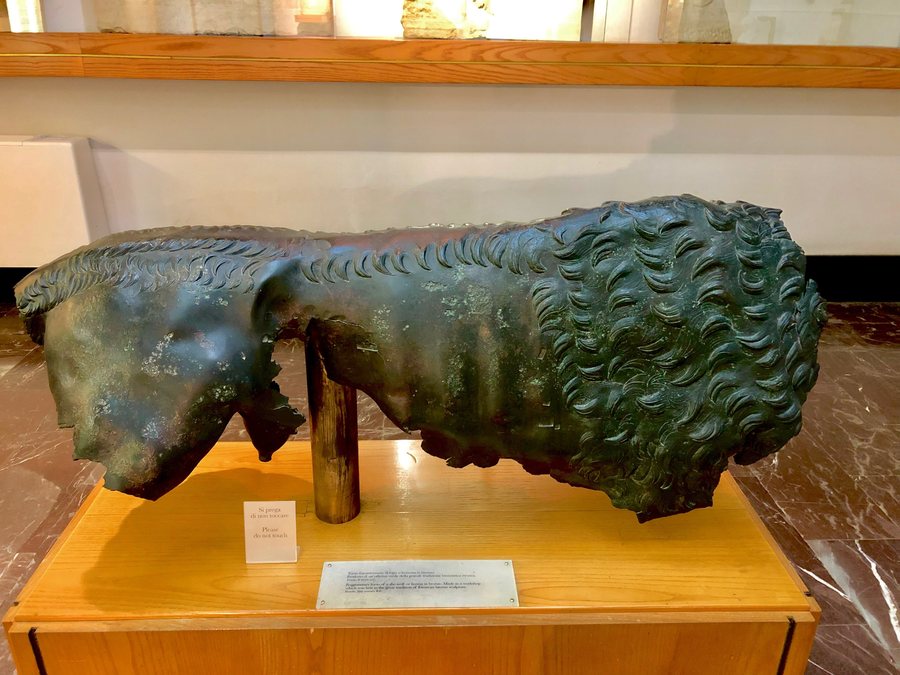 File:Fragmentary Etruscan bronze she-wolf, 2nd century BC. Fiesole Archeological Museum, Fiesole, Italy (46659498224).jpg
Photo: Andy Montgomery via Source, CC BY-SA 2.0
File:Fragmentary Etruscan bronze she-wolf, 2nd century BC. Fiesole Archeological Museum, Fiesole, Italy (46659498224).jpg
Photo: Andy Montgomery via Source, CC BY-SA 2.0
Fiesole combines archaeological evidence with medieval and Romanesque sacred buildings, views and paths through diverse vegetation.
Museum and Archaeological Zone in Fiesole
The Archaeological Museum of Fiesole traces the history of the city and its surrounding area over a period from the second millennium BC to around the 11th century AD. The Archaeological Zone of Fiesole preserves the remains of an Etruscan-Roman temple, a Roman theatre and Roman baths, as well as several Lombard tombs. A visit to the museum and the Archaeological Zone therefore leads through different testimonies to the history of the same city: the collection establishes the chronological framework, while the temple, theatre, baths and tombs make individual architectural and cultural-historical traces visible.
The San Francesco monastery complex in Fiesole was built by the Franciscans in 1399. It was created by expanding a chapel and a house for a Benedictine community of nuns that had existed since 1225. The Badia Fiesolana served as Fiesole Cathedral from the early Middle Ages until 1028. Cosimo de’ Medici, il Vecchio, commissioned the 15th-century Badia Fiesolana.
The Cathedral of San Romolo in Fiesole is a Romanesque cathedral. It was built in 1028 and extended in the 13th century. The sacred buildings show how Fiesole’s religious significance has been expressed in different structures over several historical periods.
Etruscan Walls and Views in the Garibaldi Area
The Garibaldi area contains Etruscan terraces dating from the 4th to the 3rd century BC. A walk along the Etruscan walls there offers views across the entire city. This area thus combines historic architectural remains with a path from which you can also see Fiesole from an elevated perspective.
The Casa-Museo Primo Conti includes the villa’s garden, with impressive views over the Mugnone Valley. Group visits to the Museo Primo Conti are possible on Fridays, Saturdays and Sundays, as well as in the afternoon, by prior appointment.
The Stilicone Trail and the Landscape of Fiesole
The Stilicone Trail begins at the Fiesole Tourist Office next to the Archaeological Zone and ends in Olmo. It is characterised by diverse vegetation and the presence of numerous wild orchid species. The trail complements the historic sites with a landscape experience centred on the vegetation and wild orchid species.
Paesaggi plurali: Four Thematic Circular Routes
The “Paesaggi plurali” project connects 40 sites of historical, artistic, landscape and cultural value across four thematic circular routes. As part of the “Paesaggi plurali” project, information facilities and panels with QR codes have been installed at each stop. The “Paesaggi plurali” project has installed an information tower in Piazza Mino in Fiesole. Those who do not want to visit just a single building will find a thematic connection here between history, art, landscape and culture.
The Archaeological Museum and Fiesole’s other museums do not have their own car park; however, free parking spaces can be used in the city.
Further Places to Choose From
For further options, you can visit Ellera and San Jacopo Al Girone.
To the overview of the wider travel destination: Florence.
Check prices, availability and amenities for your travel dates directly on Booking.com.
View Accommodation and OffersAdvertisement · Affiliate link to Booking.comFurther Destinations
Other places within the same destination:

.jpg)