
Holiday apartment in Dicomano: Etruscan traces and trails in Mugello
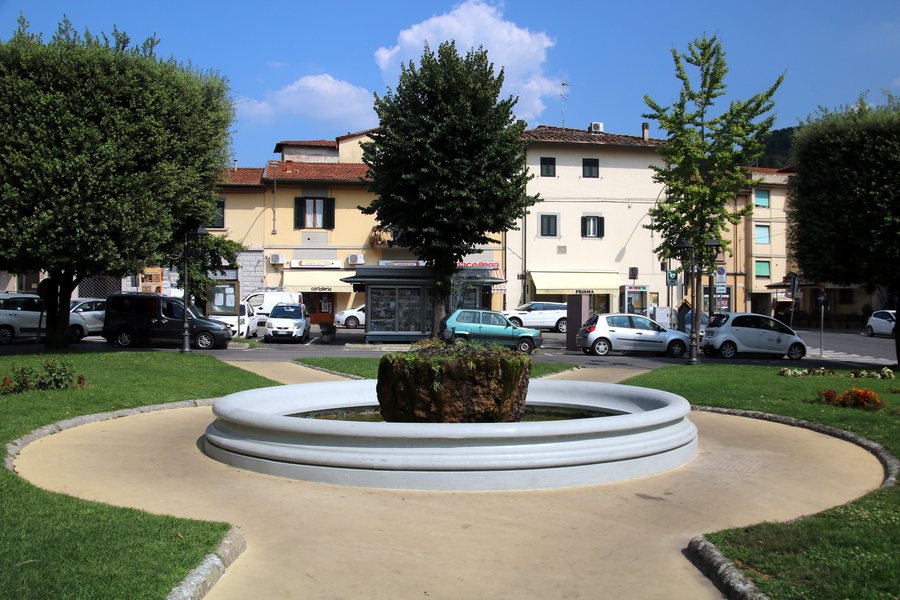 File:Piazza della Repubblica (Dicomano) 01.jpg
Photo: Mongolo1984 via Wikimedia Commons, CC BY-SA 4.0
File:Piazza della Repubblica (Dicomano) 01.jpg
Photo: Mongolo1984 via Wikimedia Commons, CC BY-SA 4.0
Dicomano is a place for holiday days in which landscape, architectural history and Etruscan traces come together. The municipality lies where the Comano River flows into the Sieve. Around Dicomano, the mountain landscapes typical of Mugello meet the valleys typical of Val di Sieve; green beech, oak and chestnut forests grow on the slopes. If you are looking for a holiday apartment in Dicomano, this contrast can help you choose the focus of your holiday: you can combine cultural discoveries with days of walking and hiking, without limiting your stay to just one experience.
Neoclassical architecture and Etruscan traces
Dicomano’s culture can be explored in two very different settings. The Oratorio di Sant'Onofrio was built in 1796 to a design by the Florentine architect Giuseppe Del Rosso and is an example of Italian Neoclassicism. Its interior has a central plan; a dome resting on sixteen columns with Corinthian capitals completes it. For culture-focused days, the Oratorio thus offers a specific architectural detail, while the museum and the excavations direct attention further back into the Etruscan past.
The Museo Archeologico comprensoriale houses finds and excavation results from the Etruscan archaeological sites of San Martino a Frascole in Dicomano. It also houses archaeological and historical evidence from the whole of Mugello, Alto Mugello and Val di Sieve. Outside its current closure, the Museo Archeologico comprensoriale is also accessible to people with reduced mobility; however, due to renovation work, it has been closed since 31 March 2026 until further notice.
The archaeological area of Frascole includes the remains of the small church of San Martino, built in the mid-13th century. The archaeological finds include a well-preserved Fiesolan-type funerary stele from the 6th century BC. The archaeological excavations at Frascole also include the significant remains of a large Etruscan building, identified either as a sanctuary or as a defensive structure. The San Martino a Poggio - Frascole area is part of Tuscany’s archaeological route. The combination of church, find and unresolved building function makes the history of Frascole varied.
Panoramas, architecture and trekking routes
The paths through Dicomano also offer different points of focus. The Sentiero Piandrati - Il Lago - Anello E offers panoramic views as well as examples of medieval and Renaissance architecture. It begins at Piazza della Repubblica and leads to the A. Bartolozzi cycle and pedestrian path. Also connected with Dicomano is the Sentiero degli Etruschi - Anello D; its route sequence is Pista Ciclabile – Sandetole – Scavi Frascole – La Cella – Ponte Vecchio. When planning your holiday, this allows you to distinguish a panorama-oriented route with an architectural focus from a route centered on archaeology.
The right holiday apartment for your plans
When choosing a holiday apartment in Dicomano, you can therefore first determine the kind of day structure you want: culture and Etruscan history, panoramas and architecture, or a combination of both. The landscape with its mountain and valley areas, together with the forests, gives the holiday a clear connection with nature, while Piazza della Repubblica, the cycle and pedestrian path, and the two routes mark out different starting points for your planning.
Further places to discover
You can also discover Corella. Further places to discover: San Mauro, Pastine, Reggello, Leccio, Londa, Figline Valdarno, Le Quattro Strade.
For the higher-level travel overview: Florence.
Check prices, availability and amenities for your travel dates directly on Booking.com.
View accommodation and offersAdvertisement · Affiliate link to Booking.com
_01.jpg)