
Discover Sant'appiano: Pieve, Antiquarium and Holiday Apartment
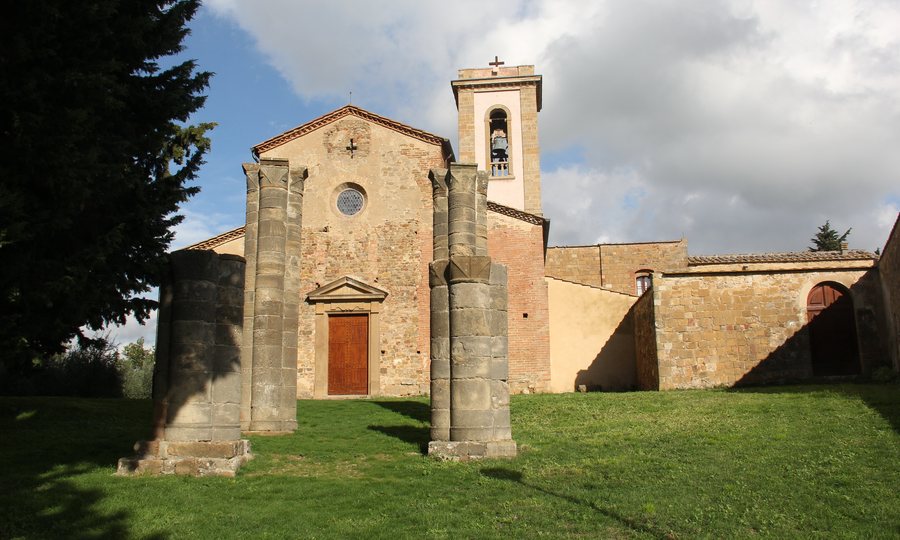 File:Barberino Val d'Elsa, Chiesa di Sant'Appiano 01.JPG
Photo: Mattis via Wikimedia Commons, CC BY-SA 3.0
File:Barberino Val d'Elsa, Chiesa di Sant'Appiano 01.JPG
Photo: Mattis via Wikimedia Commons, CC BY-SA 3.0
The Pieve di Sant'Appiano stands on a picturesque hill surrounded by tall cypress trees. The site combines the history of religious architecture, archaeological finds and two trails into a destination with an unusually wide range of tangible points of interest. If you choose a holiday apartment in Sant'Appiano, you can spend your days combining culture, historical traces and outdoor activity in the surrounding area.
Pieve di Sant'Appiano and Antiquarium
The Pieve di Sant'Appiano has been documented since 990. Its fabric preserves pre-Romanesque architectural elements, including parts of the left aisle, the apse and the crypt. Thus, early architectural history and a religious tradition extending into the Middle Ages come together in one place.
The Pieve di Sant'Appiano houses the Sant'Appiano Antiquarium. It contains archaeological finds from Sant'Appiano, San Martino ai Colli and Semifonte. The spatial connection between the Pieve and the Antiquarium makes the visit particularly interesting if you do not want to view a building in isolation, but also wish to learn about the archaeological traces of its wider surroundings.
Archaeological and Artistic Details
The Sant'Appiano Antiquarium displays Etruscan grave goods. They come from tombs discovered in San Martino ai Colli and date from the 7th to the 2nd century BC. One of the exhibits is also a red-figure column krater dating from the 4th century BC.
Further exhibits offer different approaches to history: the second room contains a sandstone sculpture of a putto riding a dog. Also on display is a Hellenistic alabaster urn with a relief depicting the Rape of Proserpina; its lid is decorated with a half-reclining male figure. The only painting exhibited in the Sant'Appiano Antiquarium is a panel depicting the Madonna and Child, John the Baptist, Saint Anthony of Padua and two angels. It was painted by the Maestro di Signa, an anonymous artist of the first half of the 15th century.
Historical Traces and Trails
The history of Sant'Appiano also includes the ancient baptistery, which collapsed in 1805 as a result of an earthquake. Archaeological remains of an 8th-century BC complex were also discovered near the Pieve di Sant'Appiano. These traces, separated by considerable spans of time, give the site a historical depth that can be read in its architecture, excavation finds and individual works of art.
The Pieve di Sant'Appiano is the first stop on the local itinerary “Luoghi e storie dell’arte romanica: un viaggio tra pievi e chiese medievali”. The circular route “Anello di Sant'Appiano” also begins at the Pieve di Sant'Appiano. This provides two different starting points for planning your day: an itinerary focusing on Romanesque art and medieval churches, and a circular route starting at the Pieve.
When choosing a holiday apartment in Sant'Appiano, you can therefore consider whether you would like to focus your trip on the Pieve and the Antiquarium or on combining culture with an experience on the trails. The many different exhibits provide conversation starters for travellers with a range of interests, while the historical sites also make the area accessible for shorter days of discovery.
Discover More Places
If you would like to combine Sant'Appiano with other destinations in the same area, you can find Vico D'elsa, San Filippo A Ponzano, Marcialla and Monsanto here.
For the main travel overview: Barberino Val D'elsa.
Check prices, availability and amenities for your travel dates directly on Booking.com.
View Accommodation and OffersAdvertisement · Affiliate link to Booking.com
