
Castellana Sicula: Murals, the Madonie and Historic Trails
Accommodation in Castellana Sicula
Castellana Sicula combines a colourful present with archaeological traces, religious buildings and varied trails. The municipality lies within Parco delle Madonie and is nicknamed “Città dei Murales” because of its modern murals. There are also churches, the Museo Civico, historic sites, nature trails and local traditions.
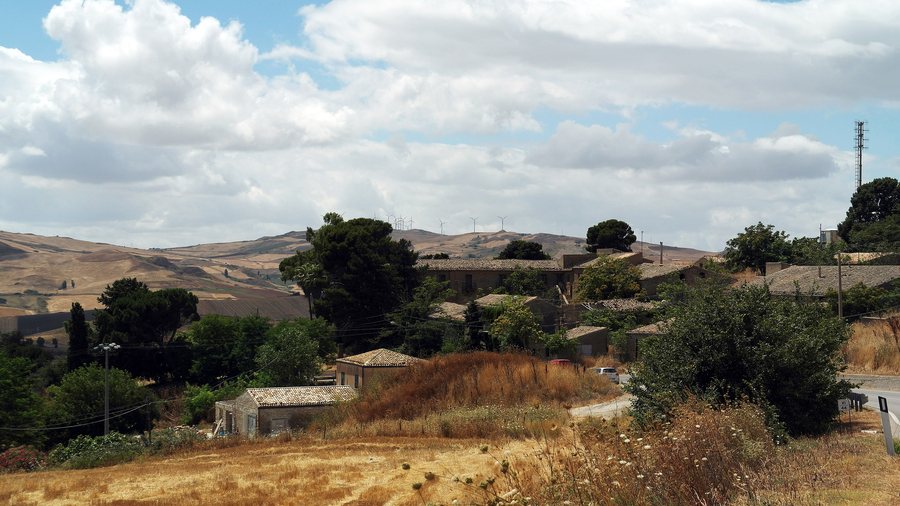 File:90020 Castellana Sicula, Province of Palermo, Italy - panoramio (1).jpg
Photo: trolvag via Wikimedia Commons, CC BY-SA 3.0
File:90020 Castellana Sicula, Province of Palermo, Italy - panoramio (1).jpg
Photo: trolvag via Wikimedia Commons, CC BY-SA 3.0
Murals, churches and museums
A striking feature of the townscape is the modern murals that have earned Castellana Sicula the name “Città dei Murales”. The Chiesa di San Giuseppe is located in Calcarelli. Its old pipe organ is still used during services; the church’s ceiling and walls are also decorated with paintings. In Frazzucchi stands the Chiesetta Madonna della Catena, which dates from 1909.
The Museo Civico is located within the archaeological area of Contrada Muratore and comprises an ethnographic and an archaeological section. Its collections include a small collection of archaeological finds, objects and tools from the local rural culture, as well as a special collection of animals prepared and preserved in formalin. The archaeological section displays finds from Contrada Muratore and further finds from surface surveys at Cozzo del Morto, Cozzo Zara, Monte Rotola Vecchia and Cozzo Re. These finds attest to prehistoric human settlement at these locations.
The Muratore site itself also offers unusual historical details: a necropolis contains three hypogea carved entirely into the rock. Excavations there uncovered the settlement area and the public area of a probable pagus from the Roman Imperial period. The Baths of Muratore are among the few examples from the Roman period excavated to date in Sicily. The building measures 19 × 20 metres. The site also includes a multi-lobed thermal complex with adjoining rooms around a small courtyard, a high-quality paved floor and a well-preserved ambulatory.
Hiking, cycling and discovering nature
Several trails give the landscape around Castellana Sicula a variety of focal points. The geological trail G7 “Le pietre e l’acqua” runs through the Castellana Sicula area from Mulino Petrolito to Cozzo Morto. It combines natural and geological features with traces of human activity. The trail is 2.228 kilometres long, takes around two hours in the direction of the destination and one hour for the return journey, and is classified as difficulty level E.
Trail 553 alternates between sections through Mediterranean vegetation and expansive views of the Southern Imera Valley. The challenging hike begins in the Borgata Nociazzi near Castellana Sicula and leads to the Santuario Madonna dell’Alto, a religious building dating from the 15th century. The MTB3 provides another route to the sanctuary: it leads through a beech forest to Fontana Madonna dell’Alto and then to the final ascent to the Santuario Madonna dell’Alto at an altitude of 1,827 metres. From Castellana Sicula, the MTB3 runs through the hamlet of Nociazzi to the developed area above Mulino Petrolito.
Numerous trails for various activities begin at the developed Piano Mulino area. An old, disused water mill stands near the mountain spring at Piano Mulino. The G8 trail “Le pietre e l’acqua” begins in Castellana Sicula at the Centro di Educazione Ambientale next to the municipal sports hall and runs from Tufo Gipsi to the Muratore archaeological area in the Castellana Sicula area. At Tufo Gipsi are the “Carcare”, structures used for the craft processing of gypsum. Tufo Gipsi is particularly suitable for educational excursions with a focus on natural history. The Calanchi are geomorphological structures formed by the erosion of surface water in clay-rich rocks.
Older traces also enrich the landscape. The Grotta del Vecchiuzzo served as a multi-family dwelling from the third millennium to the first centuries of the second millennium. At Cozzo Moro, at an altitude of 1,165 metres, are the remains of inhumation graves from the pre-Roman period.
Traditions and local specialities
Castellana Sicula preserves a diverse tradition of festivals and crafts. At the “Manciari di San Giuseppi” on 19 March, communal tables are set with local and typical dishes, including pasta with beans, cod, fried cardoons and Sfinge, meaning sweetened fritters. Locally handcrafted foods include bread, amaretti made from bitter almonds, cheesecake and oven-baked cassata.
The traditional annual calendar also includes the “Carnevale delle Madonie” and the “Ballo della Cordella”. The carnival usually takes place on the Sunday before Shrove Tuesday and includes a procession with allegorical floats and masked groups. Associated with the local folklore group is the “Ballo della Cordella”, an old fertility and thanksgiving dance with 24 dancers. Each dancer holds the end of a ribbon, the other end of which is attached to the top of a three-metre-high pole. Traditional crafts include baskets and carrying baskets made from willow branches and strips of reed, as well as saddles, bisaccia bags, crochet work and lace embroidery.
The “Centro Addestramenti Sicilia - Sport Equestri” offers riding lessons for every age and level, from recreational riding to professional equestrian sport.
Getting there via the SS120
The SS120 state road connects Castellana Sicula directly with the nearby motorway.
Further destinations for your planning are San Nicola l'Arena, Alia, Masseria D'amari, Sommariva, Godrano, San Mauro Castelverde, Villagrazia and Cerda.
More about the region: Palermo.

.jpg)