
Holiday apartment in Furnari: Churches, Coast and Sicilian History
Accommodation in Furnari
Furnari combines impressive evidence of Sicilian history with views of the northern coast, Tonnarella Beach and maritime experiences. If you are looking for a holiday apartment in Furnari, you can tailor your stay to very different interests: art and religious buildings, the sea and boats, or regional culinary culture can shape your choice of activities.
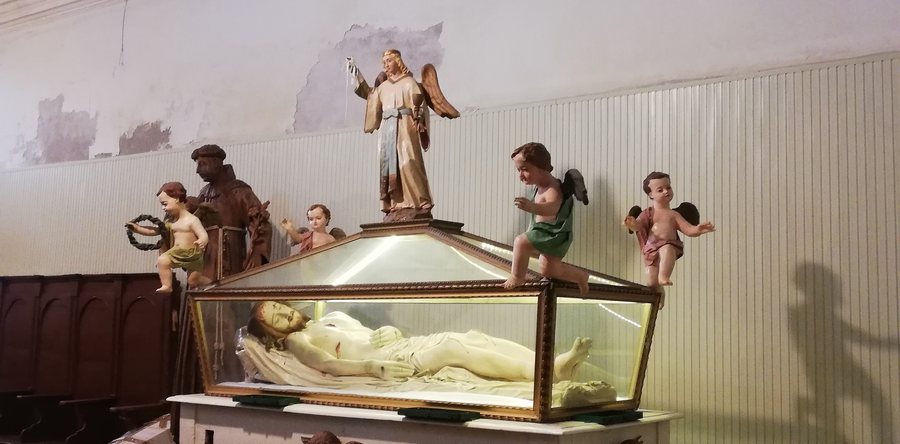
Historical Churches and Art in Furnari
The Chiesa di Gesù e Maria is a particularly multifaceted site. It dates from the mid-15th century, features an Arabic style in its original form and has an adjoining oratory. Inside, it preserves four paintings from the school of Polidoro da Caravaggio, dating from the second half of the 18th century.
The Chiesa Madre also leads deep into Furnari’s history. It was built in 1600 on the ruins of the castle of the Principi di Furnari. Its furnishings include a large wooden crucifix from the 16th century by an unknown artist. The present-day Chiesa della Madonna del Carmine and the former monastery, now used as the Palazzo Municipale, were built from 1547 onwards. The church houses a triptych from the school of Tommaso De Vigilia, dating from the second half of the 16th century.
Further notable buildings complete this historical picture. The Torre Pagana is the only surviving structure of the ancient castle of Furnari, which was built by the Furnari family in the 13th century. Palazzo Marziani was built at the beginning of the 18th century and houses a large, magnificent mosaic fresco. The Teatro Comunale was established in the 17th century by the Principi Mariziani, who converted a spacious warehouse next to their palace into a theatre for this purpose. The theatre has a capacity of 500 seats.
Sea Views, Tonnarella and Maritime Experiences
For wide-ranging views of the landscape, Piazza Marconi offers a lookout point overlooking Sicily’s northern coast. Tonnarella Beach provides a different setting and is a destination for numerous tourists and holidaymakers in summer. The Monumento al Pescatore there commemorates the maritime origins of the Tonnarella district.
Those wishing to experience the coast from the water can find boat, rubber dinghy and yacht rentals and charters in Portorosa for exploring Sicily. The production of red wine in Furnari is also significant.
Getting There and Sant'Antonio da Padova
Furnari can be reached by car via the A20 Messina–Palermo motorway and the Falcone exit. For travel by regional train, Novara-Montalbano-Furnari railway station is an important point of reference, as regional trains stop there. As part of the cultural offering, the Chiesa di Sant'Antonio da Padova also has several noteworthy points of interest: a small chapel was built on its grounds around 1400, and one work is attributed to De Matteo da Pozzo di Gotto and dated to 1836. The church is accessible during religious celebrations.
Furnari combines historic spaces and works of art, views from Piazza Marconi across the northern coast, Tonnarella Beach in summer and maritime services in Portorosa.
For further travel planning, you can also view Cesarò, Brolo, Galati Mamertino, Capo D'orlando, Fondachelli-Fantina, Rometta Marea, Vulcano Piano and Sant'angelo Di Brolo.
To the higher-level travel overview: Messina.

_21_03_2024_04.jpg)