
Holiday apartment in Buddusò – Granite, Nuraghi and Art
Accommodation in Buddusò
Buddusò combines a distinctive granite landscape with traces of Sardinian history and contemporary art. The landscape is characterised by white granite quarries, grazing land, cork oak forests and dense Mediterranean maquis. Around the town, granite formations display cavities created by erosion. In Sardinian, these are known as tafoni or concheddas. When choosing a holiday apartment in Buddusò, this combination of exposed stone, wooded areas and maquis offers an initial indication of the character of the stay.
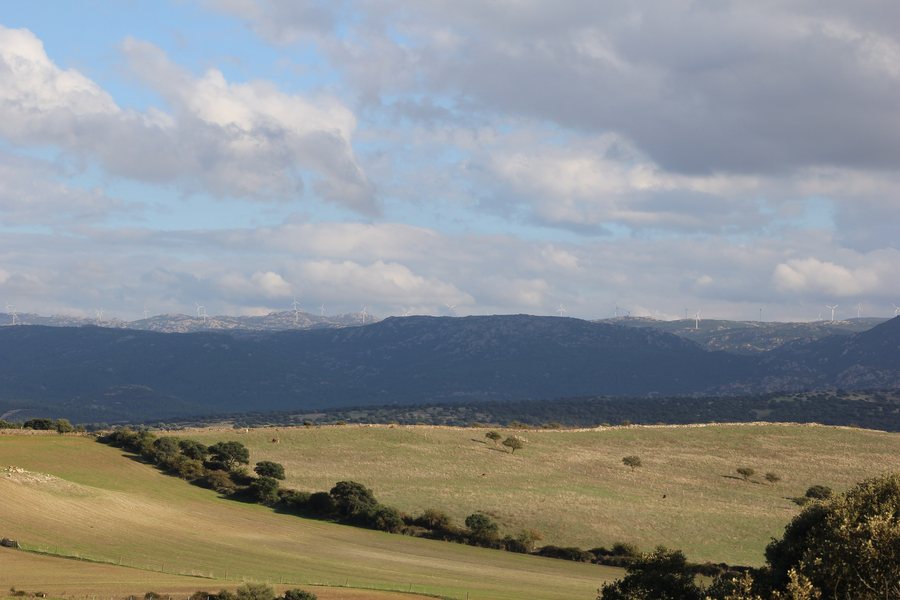 File:Alà dei Sardi - Buddusò, parco eolico (01).JPG
Photo: Gianni Careddu via Wikimedia Commons, CC BY-SA 4.0
File:Alà dei Sardi - Buddusò, parco eolico (01).JPG
Photo: Gianni Careddu via Wikimedia Commons, CC BY-SA 4.0
The Ludurru necropolis is located about 200 m from the northeastern edge of Buddusò.
Choose a holiday apartment in Buddusò by theme
Nuraghe Loelle is a mixed-type nuraghe that combines features of corridor nuraghi and tholos nuraghi. The complex consists of a central tower with a trilobate bastion. A large settlement with round huts extends around Nuraghe Loelle; two giants' tombs are located nearby. As a result, different forms of Sardinian architectural and settlement history stand side by side at this site.
At the Museo d'Arte Contemporanea, granite works are displayed in the museum's outdoor park and at several locations in the historic centre of Buddusò. The material therefore appears both in the museum surroundings and in the townscape. Su Palattu is a multi-storey building in Buddusò constructed from visible or only roughly hewn granite blocks. The townscape is complemented by the Church of San Quirico, a Baroque church in Buddusò.
A stay in a holiday apartment in Buddusò can therefore be organised around different cultural themes: historic sacred architecture, granite construction, archaeological evidence and public art each provide their own focus. The choice between a holiday apartment and a holiday house can be based on the desired combination of local culture, landscape and regional destinations, without having to combine the individual themes into a single ensemble.
Mountains, maquis and granite landscape
The mountains around Buddusò also provide their own distinctive features. Punta Carreri, Punta Covecada, Monte sa Mesa and Punta Lattari are mountains in the vicinity of the town. Together with the white granite quarries, grazing land, cork oak forests and dense Mediterranean maquis, they create a landscape with clearly distinguishable natural elements and elements shaped by human activity.
Romanzesu is a ruin site in the vicinity of Buddusò. Fonte Sacra Su Tempiesu is a ruin site in the wider regional surroundings of Buddusò. The Native House and Museum of Grazia Deledda and the Museo Archeologico Nazionale Giorgio Asproni are also located in the wider region; both are museums. When planning accommodation, you can therefore first decide whether the focus should be on local history, the mountains, the granite landscape or destinations farther afield.
Buddusò is therefore particularly suitable for planning a trip that brings together several interests. Granite is a geological feature, a building material and the material used in contemporary works. Added to this are Nuraghe Loelle with its settlement and giants' tombs, the Ludurru necropolis, the Baroque Church of San Quirico, ruin sites, mountains and museums. Accommodation can thus be selected according to the desired rhythm of the stay, with greater emphasis on culture, landscape or a combination of both.
Discover more destinations
More destinations: Portobello Di Gallura, Baia Sant'Anna, Poltu Quatu, Golfo Aranci, Biasì, Tinnari, Bassacutena, La Marinedda
To the overarching travel overview: Olbia-Tempio.

.JPG)