
Gonnesa: Sandy Coast, Culture and Nature
Accommodation in Gonnesa
A four-kilometre-long sandy beach stretches along the coast of Marina di Gonnesa. Porto Paglia, Punt’e s’Arena, Plag’e mesu and Fontanamare divide it into four sections. Gonnesa thus combines coastal scenery with mining history.
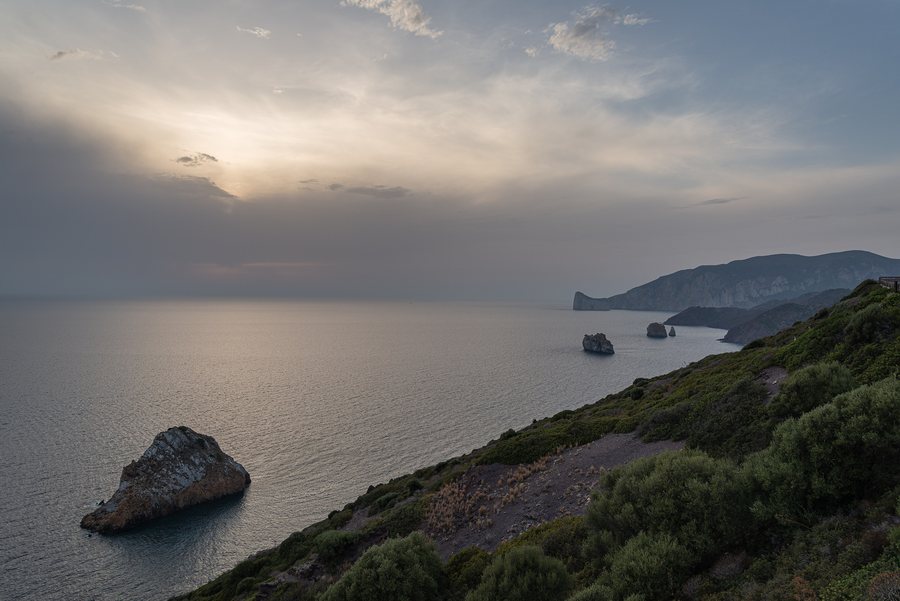 File:Scoglio il Morto, Scogli l'Agusteri e Pan di Zucchero - Gonnesa, Sud Sardegna, Italy - August 13, 2020.jpg
Photo: Giorgio Galeotti via Source, CC BY 4.0
File:Scoglio il Morto, Scogli l'Agusteri e Pan di Zucchero - Gonnesa, Sud Sardegna, Italy - August 13, 2020.jpg
Photo: Giorgio Galeotti via Source, CC BY 4.0
Beaches and Coastal Scenery
The three main beaches of Gonnesa – Fontanamare, Spiaggia di Mezzo and Porto Paglia – each have spacious car parks and service facilities. Spiaggia Fontanamare beach is located in the immediate vicinity of Gonnesa. The beach names and the division into four sections give the long coastline a clear spatial structure.
Marsh, Cave and Panorama
The Sa-Masa marsh near the beaches of Gonnesa is used for birdwatching and is home to rare waterbirds. The Grotta di Santa Barbara cave is located in the immediate vicinity of Gonnesa. Spiaggia di Acqua Sa Canna beach and the Passeggiata panoramica di Nebida viewpoint are also located in the area around Gonnesa. As a result, the coastal scenery alternates between sand, wetland, cave and viewpoint.
Nuraghi and Mining History
The Seruci nuragic complex covers defensive walls and towers, a giants’ tomb and a village with more than one hundred huts, and extends over six hectares. Guided tours of the Seruci nuragic complex can be arranged by telephone or WhatsApp at +39 3773968844. The historic Villaggio Normann was built as a residential settlement for the director and employees of the San Giovanni mine, near the mining site named after the engineer Edward Normann.
In Funtanamare, the outlet of the 1875 drainage tunnel, known as Umberto I, has been preserved. The Miniera di Monteponi Museum, the Museo della Civiltà Mineraria di Genna Luas, the Museo dell'Arte Mineraria and the Museo Diocesiano are also located in the area around Gonnesa.
Regional Cuisine in Nuraxi Figus
In Nuraxi Figus, visitors can learn traditional bread-making techniques and taste bread together with a glass of wine. At the Sagra del Raviolino Fritto in Nuraxi Figus, visitors can learn traditional culinary techniques and taste the dishes prepared using them. The two offerings differ in form: in one case, bread-making technique, bread and wine are presented together; in the other, traditional techniques and the resulting dishes take centre stage.
Getting There and Orientation
From Cagliari, Gonnesa can be reached by train to Iglesias and then by bus to Gonnesa. The journey therefore involves two stages: first by train to Iglesias, then by bus to Gonnesa. The change takes place in Iglesias. Gonnesa’s infopoint provides information about attractions in Gonnesa and the surrounding areas. It also provides information for Gonnesa on public services, economic activities, transport and events in the summer calendar.
Other Places in the Same Region
Other places in the same region: Matzaccara, Fluminimaggiore, Masainas, Sant'anna Arresi, Calasetta, Giba, Porto Pinetto and Villamassargia.
To the higher-level travel overview: Carbonia-Iglesias.

