
Carbonia: Archaeology, Mining History and Modern Urban Architecture
Accommodation in Carbonia
Carbonia between Archaeology and Mining History
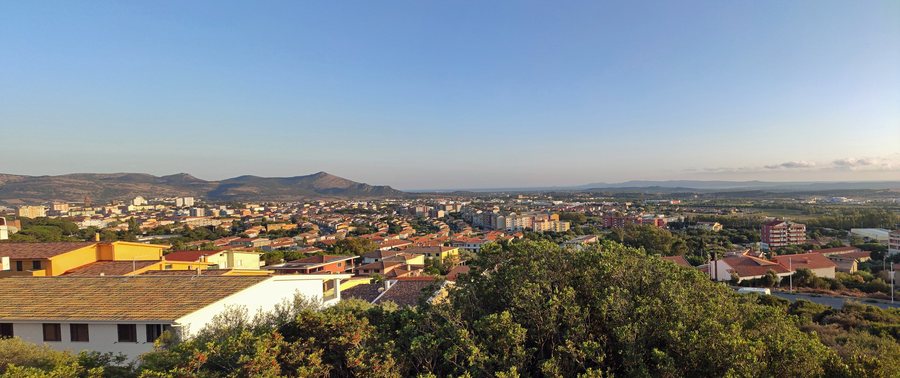
Carbonia combines archaeology, mining history and rationalist architecture to create a diverse cultural destination. The Parco Archeologico del Monte Sirai, the Museo del Carbone, CIAM and Piazza Roma each offer a different focus. The themes range from the fully preserved settlement on Monte Sirai and the underground gallery in Serbariu to squares, towers and churches shaping the cityscape.
Monte Sirai: Archaeology on the Plateau
At the Parco Archeologico del Monte Sirai, Carbonia preserves a fully intact Phoenician and subsequently Punic settlement, with no construction or restoration phases from later historical periods. The park lies on a plateau overlooking the coast of Sulcis and the archipelagos of Sant’Antioco and San Pietro. In addition to the archaeological visit, archaeology hikes as well as educational and interactive activities are offered. The archaeology hikes complement the visit, while the educational and interactive activities provide a separate focus.
Serbariu and the History of Coal
The Lampisteria of the Museo del Carbone houses a permanent exhibition on the history of coal, the mine and the city of Carbonia. The underground gallery shows the development of the coal-mining techniques used in Serbariu from the 1930s until operations ceased. The site of the Museo del Carbone in Serbariu was restored and repurposed for museum and educational purposes. The exhibition and gallery have different focuses: the history of the city and the mine, and the development of specific mining techniques.
CIAM and Rationalist Urban Architecture
CIAM, Carbonia Itinerari di Architettura Moderna, is an urban route that transforms Carbonia into an extensive open-air museum and links characteristic buildings associated with the city’s foundation. The focus is not on a single building, but on the cityscape as a connected route.
The Torre Civica is also known as the Torre Littoria, is 28 metres high and has five floors. Piazza Roma is a typical example of rationalist architecture and is considered the social centre of the city of Carbonia.
Churches and Museums Offering Different Perspectives
The Chiesa di San Ponziano was inaugurated in 1938 and designed by Valle and Guidi. Its rectangular façade is made of granite; the upper section is constructed from red volcanic rock.
The Museo Archeologico Villa Sulcis uses an exhibition designed with a particularly strong educational focus. Finds are explained by reconstructing the context in which they were discovered or the surroundings in which they were used. The Museo PaleoAmbienti Sulcitani E. A. Martel offers schools various educational workshops in which students can gain a brief practical experience in speleology.
Sa Grutta and the Necropolis of Cannas di Sotto
The Sa Grutta urban park, with the hypogeal necropolis of Cannas di Sotto, is accessed via a covered elevated walkway. Here, the access route connects the park and the necropolis.
Discover More Places in the Surrounding Area
Portixeddu, Domusnovas, Musei, Calasetta, Santadi, Portoscuso, Iglesias and Masainas
To the higher-level travel overview: Carbonia-Iglesias.

