
Discover Trasquera: Ponte del Diavolo and Historic Churches
Accommodation in Trasquera
Trasquera combines impressive buildings with a landscape where high plateaus, gorges, mountain flowers, and old paths come together. Anyone planning a holiday apartment in Trasquera will find a place for days that combine culture and activity: the Ponte del Diavolo, the Oratorio di San Rocco, and the mountain tulip trail each set a different tone, without limiting the area to just one type of holiday.
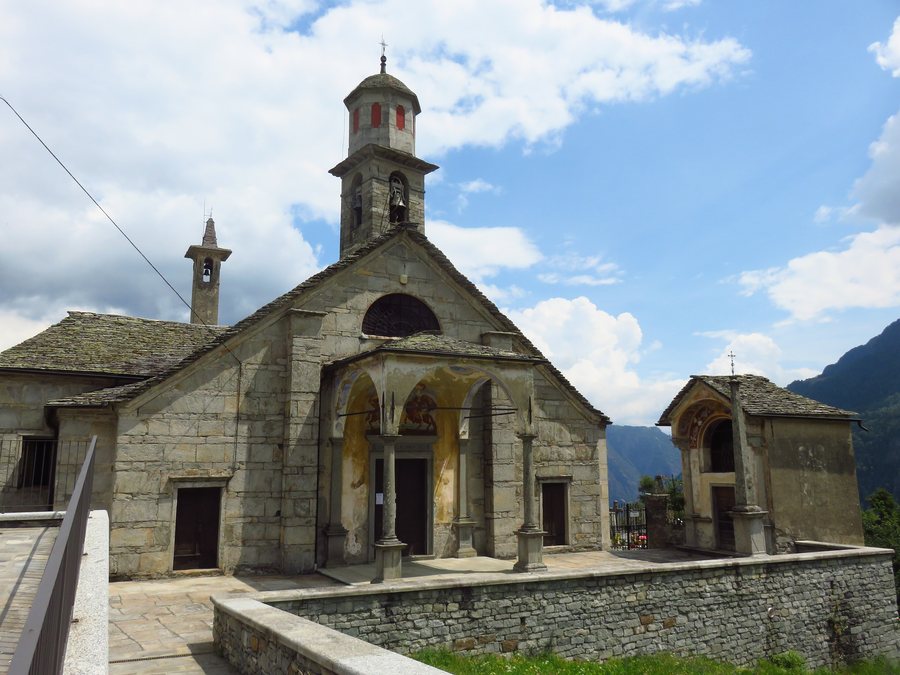 File:Trasquera Chiesa parrocchiale dei Santi Gervasio e Protasio.jpg
Photo: Francoerbi via Wikimedia Commons, CC BY-SA 4.0
File:Trasquera Chiesa parrocchiale dei Santi Gervasio e Protasio.jpg
Photo: Francoerbi via Wikimedia Commons, CC BY-SA 4.0
Bridges, Churches, and Traces of History
The Ponte del Diavolo is located on the road from Trasquera to the hamlet of Bugliaga. The bridge crosses the Rì stream, was built in 1880, and opened on September 10 of the same year. It is approximately 100 metres high and has an arch span of 33.30 metres. Remains of the Vallo Alpino fortifications are also visible at the entrances to the Ponte del Diavolo and the Ponte del Diavolino.
The Oratorio di San Rocco also preserves several historical layers. It dates from the time of the plague epidemics that affected Trasquera in the 15th and 16th centuries. On the southern façade, the year 1637 is painted beneath the depictions of Saints Roch and Sebastian. The parish church of Saints Gervasius and Protasius was already mentioned in the 1321 statutes of the Divedro Valley; the present church was created through an extension after 1550.
The Cimitero della Peste del 1600 commemorates a plague epidemic in which almost one hundred people died in Bugliaga and Trasquera. Together with the oratory and the parish church, it forms a cultural focal point that can be explored step by step during a stay in Trasquera. For families with different interests, the area's history offers just as much to talk about as the landscape offers outdoor experiences.
Cherry Blossoms and Rare Mountain Flowers
The Sentiero del Kirsch leads to places where Kirsch was once distilled and marketed. The spectacular cherry blossoms in spring in Trasquera and Bugliaga are also connected with this Kirsch tradition. Numerous specimens of the rare mountain tulip, botanically Tulipa australis, also grow in the pastures between Bugliaga and Balma. Those wishing to combine nature observation with regional highlights will find striking subjects here for planning their trip.
High Plateaus, Houses, and Hiking Trails
The high plateaus of Trasquera and Bugliaga slope down towards Monte Teggiolo. Along the mountain tulip trail, characteristic houses made of wood and stone can be explored, standing above the deep gorges of Gondo. The hiking trail designated F32 leads from Iselle to Alpe Pianezzoni. The various route connections therefore offer different perspectives on the landscape, settlement patterns, and botanical features.
For your journey, it is also important to note that a shuttle service runs from Varzo FS railway station to Trasquera; Trasquera can also be reached by car. When choosing a holiday apartment, you can therefore first consider whether historic buildings, the cherry blossoms, mountain tulips, or hiking sections should be the focus of your stay. Trasquera offers an unusual combination of history, nature, and paths through a striking mountain landscape.
More Places for Planning Your Trip
More places for planning your trip: Cissano, Cesara, Passo, Malesco, Madonna Del Sasso, Omegna, Stresa, Cambiasca
To the overarching travel overview: Verbano-Cusio-Ossola.

