
Holiday Apartment in Quarna Sotto: Among Alpine Pastures, Museums and Chapels
Accommodation in Quarna Sotto
Quarna Sotto combines alpine pastoral history with cultural and religious heritage. When choosing a holiday apartment in Quarna Sotto, you can therefore consider whether you would like to focus on craftsmanship, religious art, natural history or the history of the alpine pastures. Many of the town’s distinctive themes can be explored independently of one another and together provide a vivid picture of its regional character.
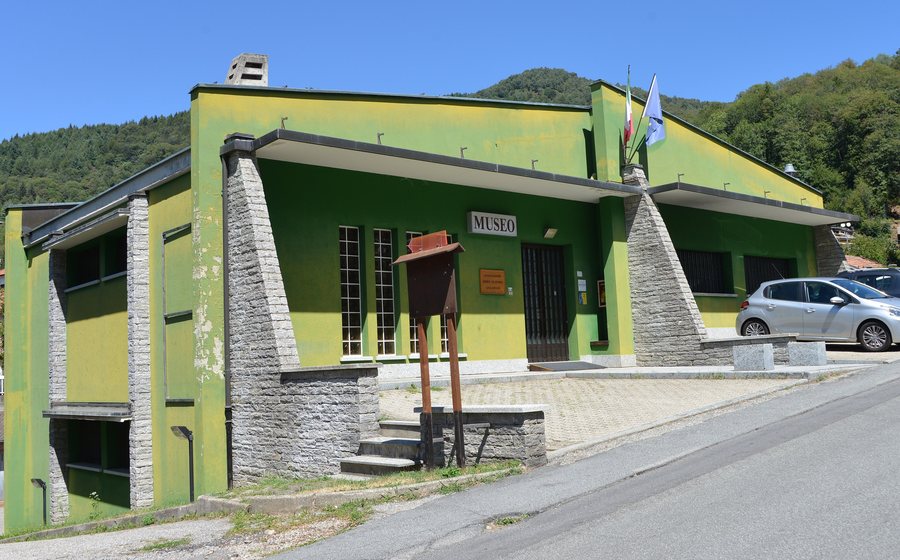
Craftsmanship, Natural History and Religious Heritage
The Museo Etnografico e dello Strumento Musicale a Fiato presents the craft of making wind instruments and historical manufacturing methods. On the lower floor, the alpine rural history of Quarna Sotto comes to life through a reconstructed old kitchen, a sleeping chamber and rooms used to store milk. The natural history section displays preserved reptiles, birds and mammals, including several endangered species, as well as many minerals and rocks, most of which come from the surrounding area. Craftsmanship, everyday history and natural history thus come together in one place.
The townscape includes at least 21 outdoor frescoes, simple wall paintings and wall graffiti on the façades of houses and alpine huts in the town and on the alpine pastures. Almost all the depictions show religious subjects. At the Church of San Nicolao, the lunette beneath the pronaos is dated 1711; according to the municipality, it is still well preserved. In Via Rampone, the Grotta Madonna di Lourdes commemorates another religious site: it was inaugurated in 1929, a stream flows continuously through the spacious grotto, and an illuminated niche contains a statue of the Immaculate Virgin as well as a kneeling statue of Saint Bernadette.
The Oratorio del Saliente also reaches far back into the town’s history. In 1623, the residents of “Cocarna di Sotto” planned it as a rural oratory for the celebration of religious services and dedicated it to the glorious Assumption of Mary. It was blessed on 11 January 1627, and permission was granted for Mass to be celebrated there. Quarna Sotto still has 32 rural chapels. Four additional chapels survive only in historical memory because they collapsed or were demolished.
Alpe di Camasca and Community Traditions
The Alpe di Camasca was used as grazing land for livestock by the residents of Quarna Sotto at least as early as the 15th century. Documents show that it was already frequently visited at that time. The Alpe lies at an altitude of approximately 1,200 to 1,300 metres and is surrounded by extensive communal grazing areas. Today, most of these areas have become forest through natural processes or human intervention. The site thus represents a landscape in which the history of land use and visible changes to the surroundings are interconnected.
At the Alpe di Camasca, the Festa di San Rocco continues to be celebrated as a tradition after Ferragosto. The festival includes a communal meal, a bar service, traditional games, music and other entertainment. These different focuses can provide helpful guidance when choosing your location. For travel with larger groups, it is also relevant that the road from Omegna to Quarna can be used by buses with a maximum of 45 seats.
Other Destinations in the Area
Other places: Aurano, Madonna Del Sasso, Baceno, Cissano, Oggebbio, Valstrona, Cresseglio and Druogno.
To the main travel overview: Verbano-Cusio-Ossola.

