
Holiday apartment in Cicogna: trails, water and local culture
Accommodation in Cicogna
Cicogna appeals to travellers who want to combine nature, historic trails and local culture in their holiday plans. The Centro Visita di Cicogna houses a free exhibition about the natural, historical and cultural aspects of Val Grande. When choosing a holiday apartment in Cicogna, you can therefore focus on different themes: the A story of water educational trail with ten information panels and twenty numbered trail markers indicating observation points, paths through chestnut forests, historic traces and a church with a long construction history.
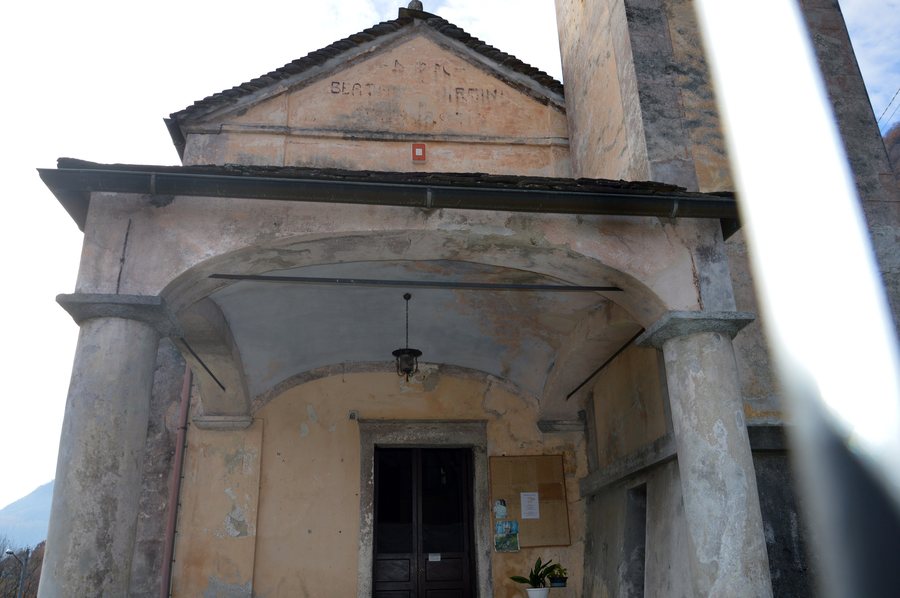 File:Chiesa di Cicogna (Cossogno) 3.jpg
Photo: Nadia Ginevra Goglio via Wikimedia Commons, CC BY-SA 4.0
File:Chiesa di Cicogna (Cossogno) 3.jpg
Photo: Nadia Ginevra Goglio via Wikimedia Commons, CC BY-SA 4.0
Forests, water and sweeping views
The Pogallo da Cicogna route follows a paved mule track through deciduous forests with chestnut, ash and oak trees. Along the route is a bridge high above the mountain stream, crossing the stream opposite a waterfall. In Val Pogallo there are waterfalls and pools of water reflecting the green forest. The route to Alpe Prà and Casa dell’Alpino climbs through large chestnut trees and past the remains of old agricultural terraces. From the abandoned Alpe Leciuri at an altitude of 1,311 metres, views extend towards distant Pogallo and Cima della Laurasca, Monte Torrione, Zeda, Marona, Colma di Cossogno and across to Pizzo Pernice.
Holiday apartment in Cicogna and choosing how to arrive
When choosing a holiday apartment in Cicogna, getting there is an obvious aspect to consider when planning your trip. Cicogna can be reached by car via a very narrow, winding road or on foot along the mule track starting from Cossogno. This allows you to base your decision on your preferred way of arriving and on the landscape and cultural themes you would like to explore during your stay.
Historic trails and places of interest
The path from Cossogno to Cicogna follows an old medieval road that once connected the two villages and passes by the Sasso delle croci. The rock bears simple crosses and the initials of mountain residents. At Alpe Prà there is a bowl-shaped rock with around thirty cup marks, some of which are connected by channels; the ruins of a historic mountain pasture are also preserved there. At the entrance to Cicogna, the communal fountain with a livestock trough at Al Pozzolo retains its original structure, with a broad stone basin and a slate roof. Pogallo was a large farmstead along the transhumance routes to the mountain pastures of the upper valley.
Construction of the Chiesa della Madonna di Caravaggio continued over several decades, into the 1720s and 1730s. In 1768 it became the parish church; the bell tower was added in 1820. For families with different interests, this makes it possible to plan the visit in stages: one trail can focus on nature observation, another on historic traces, and another on a building or exhibition.
Other places in the regional context
Other places in the regional context include Masera, Barbè Superiore, Trontano, Gravellona Toce, Macugnaga, Pontegrande, San Domenico and Nonio.
For the broader travel overview: Verbano-Cusio-Ossola.

_3.jpg)