
Discover Oleggio: Romanesque Art, Nature and Tradition
Accommodation in Oleggio
Oleggio combines museums, Romanesque and religious art, local customs, nature and a stage of the Cammino delle Colline Novaresi.
Holiday apartment in Oleggio: culture, nature and local traditions
The Museo Civico Etnografico Archeologico C.G. Fanchini documents clothing, everyday life, agricultural work and silkworm farming in Oleggio and the surrounding area, as well as typical craft professions. It opened to the public on 10 October 1974.
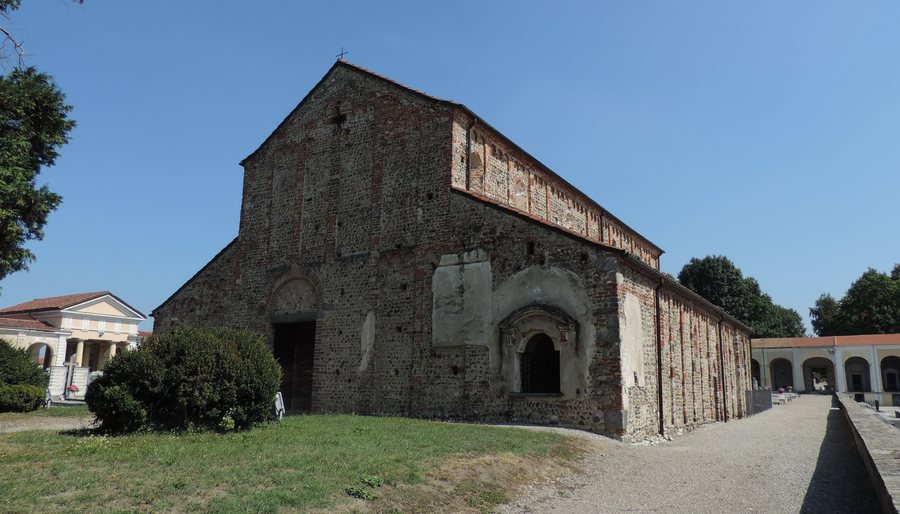
The Chiesa di San Michele contains the only surviving example of a Romanesque crypt in the Novara area. Its monumental, coherent fresco cycle dates from around 1060 and is considered one of the most significant Romanesque cycles in northern Italy. The Chiesa di San Michele dates from around the middle of the 11th century.
The Museo d'Arte Religiosa di Oleggio "Padre Augusto Mozzetti" preserves religious artefacts from the 14th to the 20th century associated with the churches, confraternities and oratories of Oleggio. These include a 14th-century fresco of the Madonna and Child, removed from the Chiesa di Santa Maria Annunciata. The parish church of Saints Peter and Paul has twenty-eight polychrome stained-glass windows and is designed as a neoclassical basilica with three naves and a semicircular apse.
Between 1853 and 1858, the Chiesa Parrocchiale dei Santi Pietro e Paolo was reconstructed according to the design and under the direction of architect Alessandro Antonelli. It houses an early-17th-century painting of the Immaculate Conception by Pier Francesco Mazzucchelli, also known as "Morazzone". The Oratorio di Santa Maria in Galnago preserves richly decorated sacred works from the 15th and 16th centuries. The Torre campanaria was completed during the Baroque period with a belfry and a copper-clad onion dome; architecturally and decoratively, Palazzo Bellini displays a clear neoclassical character.
The local traditions also give Oleggio its distinctive character. The Processione del Venerdì Santo at the Chiesa di Santa Maria Annunciata is a religious custom with a long tradition documented as far back as the 16th century. The Confraternita della Santissima Annunciata remains active and prepares the procession. The Teatro Civico di Oleggio offers an extensive programme of theatrical performances and also hosts conferences and congresses. The masks of the Carnevale di Oleggio, Pirin and Majn, have their roots in the 14th century.
The Oasi delle Ginestre provides a natural highlight with an educational trail featuring rare wildflowers and typical plants. For travel guidance, S.T.N. operates a sequence of bus services from Novara via Oleggio to Arona. Those wishing to plan a more active focus can include the first stage of the Cammino delle Colline Novaresi, La Via della Sesia: it leads from Oleggio to Bogogno and is 16.4 km long. The stage is classified as moderately difficult and takes 4 hours and 18 minutes.
Another local speciality is Tapit, considered a typical and original sweet treat from Oleggio.
More places for your regional travel planning: Bellinzago Novarese, Recetto, Sizzano, Ghemme, Soriso, Cavallirio, Baraggia, San Maurizio D'opaglio.
For the higher-level travel overview: Novara.

