
Discover Lumellogno: Torre dei Canonici and Rice Fields
Accommodation in Lumellogno
Holiday apartment in Lumellogno: between rice fields and history
Lumellogno reveals its character where the medieval Torre dei Canonici continues to shape the rice-field landscape to this day. The place may be an interesting destination for you if you would like to combine historic buildings, archaeological traces, sacred art and agricultural traditions. When choosing a holiday apartment in Lumellogno, these focal points can guide your decision: you can choose whether early history and art or the rice landscape and regional products should take centre stage. Both perspectives have concrete points of reference in the town.
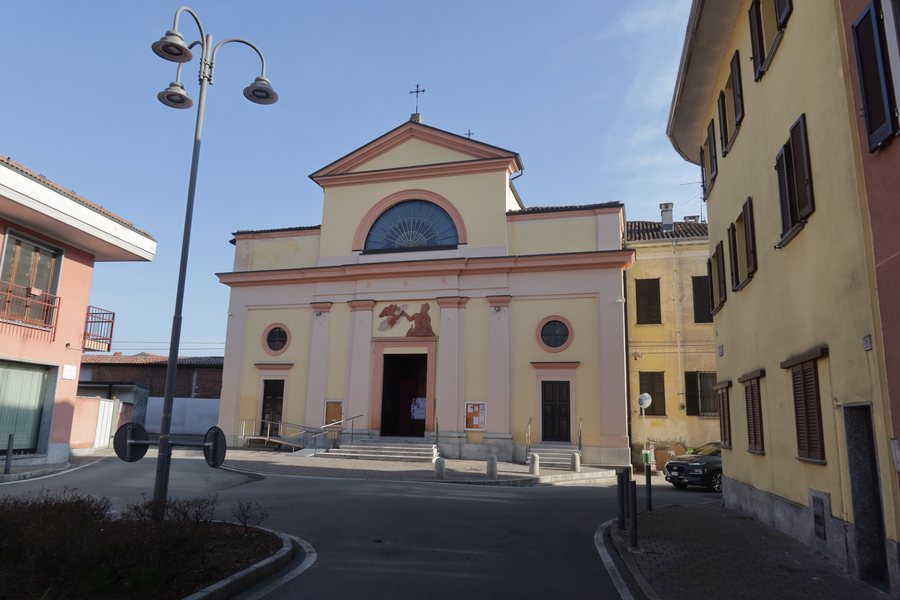 File:Lumellogno Chiesa dei Santi Ippolito e Cassiano 01.jpg
Photo: Francoerbi via Wikimedia Commons, CC BY-SA 4.0
File:Lumellogno Chiesa dei Santi Ippolito e Cassiano 01.jpg
Photo: Francoerbi via Wikimedia Commons, CC BY-SA 4.0
The Torre dei Canonici and the rice landscape
The Torre dei Canonici is a historic residential building from the 15th century. It was also built in the 15th century to protect a mill on the Orione Canal. It retains a characteristic pointed-arch window. As a medieval building, it continues to shape the surrounding rice-field landscape to this day. For your stay, this creates a vivid connection between architectural history, the watercourse and the agriculturally shaped surroundings.
Archaeological traces from the Bronze Age to antiquity
A biconical urn from Bisognina is dated to the Late Bronze Age and is considered an expression of the so-called Canegrate culture. The oldest pottery represented in the museum collections from the area of today’s city of Novara is considered to be a biconical urn found in 1875 in the village of Bisognina in the Lumellogno district. The finds from Bisognina indicate a very ancient burial site in this village. In 1864, nine Padanian silver drachmas from the 2nd century BC were found in Fornasone. The finds from the village of Molino del Bosco near Lumellogno also include a ceramic inkwell from the 1st or 2nd century AD.
Art and remembrance in Santi Ippolito e Cassiano
The parish church of Santi Ippolito e Cassiano in Lumellogno houses a painting of the Madonna of the Rosary with Saints Dominic and Francis by Antonio d’Enrico, also known as Tanzio da Varallo. A painting of the Virgin and Child by Tanzio da Varallo is also kept there. The Rosary Chapel displays a digitally painted image commemorating the 100th anniversary of the six martyrs of Lumellogno. The Battle of Lumellogno on 16 July 1922 is also part of the town’s history: farmers and workers repelled fascist squads, resulting in six fatalities.
Rice and agricultural products
Acqua e Sole rice is grown on the 350 hectares surrounding the An Fed Agri farm, using certified seeds. Azienda Agricola Fontanella in Lumellogno sells agricultural products directly to the public, including on Sundays. When choosing a holiday apartment, these concrete connections can enrich your planning: you can get to know Lumellogno either through its architectural history and art or through its rice fields and regional agriculture.
Other places you can discover: Pella, Marano Ticino, Gargallo, Pombia, Meina, Gattico, Gozzano, Miasino
For the broader travel overview: Novara.

