
Holiday apartment in Biella: Art, Cultural Heritage and Nature in the Biellese
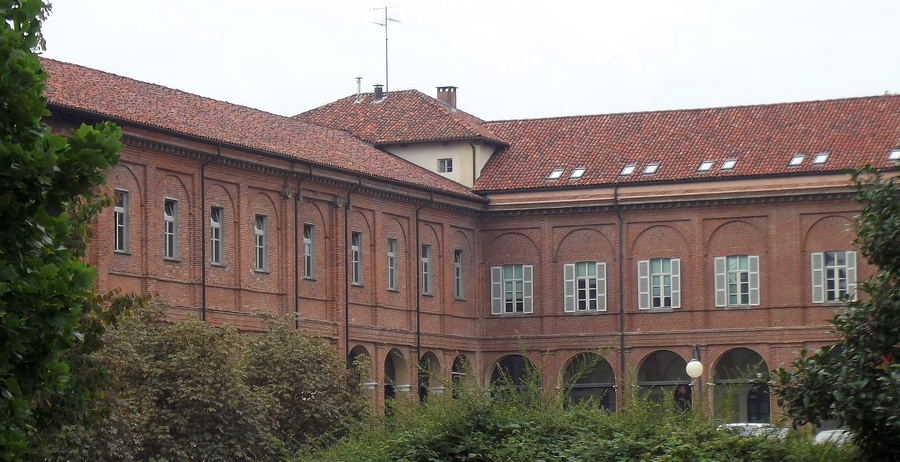 File:Sede della provincia di Biella - ex-ospizio di carità.png
Photo: F Ceragioli via Wikimedia Commons, CC BY-SA 3.0
File:Sede della provincia di Biella - ex-ospizio di carità.png
Photo: F Ceragioli via Wikimedia Commons, CC BY-SA 3.0
Biella presents a diverse succession of art, history and landscapes. Today, works by Michelangelo Pistoletto are displayed at Cittadellarte. The centre is located in the former Lanificio Trombetta, a disused factory in Biella’s historic textile district. Every weekend, on Saturdays and Sundays, guided tours take place at three times; for groups and school classes, tours can also be arranged from Tuesday to Friday by reservation. Cittadellarte is about two kilometres from Biella San Paolo railway station and is connected to Biella and the surrounding towns by frequent urban and regional bus services.
Culture
The Museo del Territorio Biellese takes visitors through a period spanning from prehistory to the 20th century. Its exhibition is divided into an archaeological section and a historical-artistic section. Beyond this museum, the Rete Museale Biellese has so far included 47 different museums and other museum facilities in 32 municipalities. Throughout the Biellese area, it brings together ecomuseums, museums, castles, palaces, natural areas and other sites of interest.
One of the area’s notable historic complexes is the Ricetto di Candelo. It has an approximately 13,000 m² pseudo-polygonal layout and is surrounded by defensive walls. Thus, alongside the museum facilities, a clearly recognisable architectural form is also at the centre of the Biellese’s cultural sites.
History
Piazzo, the higher district of Biella, dates back to 1160, when the fortification of the hill began. The Battistero of Biella is a building in Lombard Romanesque style, erected in the second half of the 10th century on the remains of a Roman burial site. The foundation stone of the Chiesa di San Sebastiano in Biella was laid in 1500. The Chiesa di San Giacomo is a Gothic church built at the beginning of the 13th century and remodelled several times.
The Funicolare del Piazzo is closed; a feasibility study is to be prepared for its reopening.
Pilgrimage
Oropa is one of nine separate Sacri Monti complexes in the mountains of northern Italy. The monumental complex of the Santuario di Oropa includes the cloister with the Old Basilica, as well as the New Basilica. Guided visits to the sanctuary, the Museo dei Tesori, the Sacro Monte, the Monumental Cemetery and the Botanical Garden can be organised for the Santuario di Oropa. The Oropa basin is a starting point for peaks around the sanctuary that reach approximately 2,000 metres.
Nature
Parco Burcina includes a rhododendron valley, wooded areas, meadows, a pond and views of the mountains and the plain. Bessa is crossed by a dense network of easy trails; some of them can also be used by mountain bike or on horseback.
The Cervo, Elvo and Oropa valleys offer hiking trails to the highest peaks of the Biellese, with views of the plain and the surrounding mountains. The Grande Traversata del Biellese is presented as a trekking route. In Oasi Zegna, an innovative signposting system offers visitors an opportunity to engage with nature.
Culinary specialities
A typical sweet speciality is Canestrelli di Biella: crispy rectangular wafers with a single layer of chocolate.
Further places
The additional destination pages can be accessed directly: Viverone, Donato, Vivaro, Biella, Camandona, Graziano-Ruta, Campiglia Cervo, Lessona, Bioglio, Bellaria, Romagnano, Cavaglià, Villa Del Bosco, Graglia, Muzzano, Sordevolo, Torrazzo, Sandigliano, Magnano, Pollone, Netro, Torazza, Candelo, Solesio, Caprile, Roppolo, Portula, Cerrione, Sala Biellese, Salussola, Cossato, Andorno Cacciorna, Sostegno, Zimone, Bielmonte, Tollegno, Masserano, Vigliano Biellese, Mongrando, Crevacuore, Castellengo, Simone.
For the higher-level travel overview: Piedmont.
Check prices, availability and amenities for your travel dates directly on Booking.com.
View accommodations and offersAdvertisement · Affiliate link to Booking.com
