
Holiday apartment in Villanova d'Asti: churches, towers and landscape
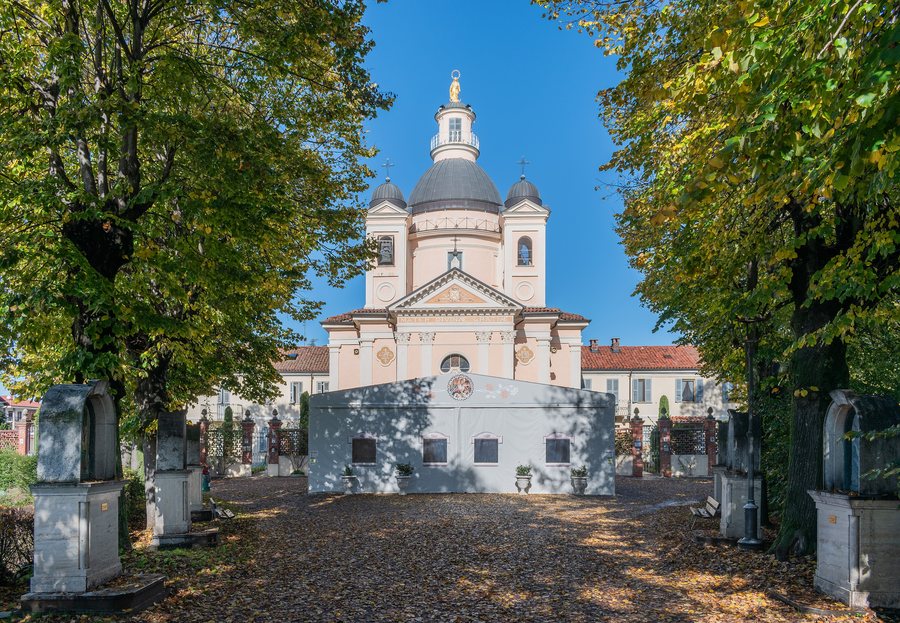 File:Our Lady of Grace sanctuary in Villanova d'Asti (1).jpg
Photo: Tournasol7 via Wikimedia Commons, CC BY-SA 4.0
File:Our Lady of Grace sanctuary in Villanova d'Asti (1).jpg
Photo: Tournasol7 via Wikimedia Commons, CC BY-SA 4.0
Villanova d'Asti combines a gently rolling landscape with striking evidence of religious and historical culture. Green and lush fields shape the surroundings; between them, farmhouses and estates alternate across green hills. In the town and the open countryside, churches, towers and former monastic architecture provide distinctive accents. This gives you different impressions of Villanova d'Asti when you choose a holiday apartment or holiday home as the starting point for your trip.
Discover churches and historic buildings
The Chiesa di San Martino houses paintings by Moncalvo depicting the Nativity and the Immaculate Conception. The main altar is also one of the church's notable details: Carlo Pellagata created it in 1777. The Chiesa di San Pietro contains two valuable paintings by Moncalvo from 1600. The origins of the Pievania of San Pietro date back to around 1200.
The Palazzo De Robertis is located in a former Franciscan monastery and features monastic porticoes. The Torre civica rises above the historic centre of Villanova d'Asti and serves as a prominent landmark visible from afar. Outside the town, the two Bicocche stand as watchtowers in the open countryside around Villanova d'Asti. Together, these buildings lead from sacred art and monastic architecture to towers with a historical function.
Another religious stop is the Santuario della Beata Vergine delle Grazie. It was consecrated and opened for worship on 14 August 1870. If you value cultural discoveries when choosing your accommodation, your stay in Villanova d'Asti can therefore be shaped from different perspectives: the Chiese di San Martino and San Pietro represent art and church history, while Palazzo De Robertis, Torre civica and the Bicocche reveal different architectural forms.
Landscape and Infiorata
The green surroundings give Villanova d'Asti a distinctly rural character without taking the historic buildings out of view. Fields, farmhouses, estates and gently rolling hills form a separate focus for planning your trip.
The Infiorata di Villanova d'Asti complements this combination of religious significance and local tradition. Preparations take place on the night before the event and are carried out by volunteers of all ages. The Infiorata di Villanova d'Asti has taken place since 1985 on the access avenue to the Santuario Madonna delle Grazie. For planning your trip, the special timing of the preparations is therefore an especially interesting aspect.
Getting around by bus
Two bus connections are documented for transport within the town and to neighbouring destinations. Bus route 154, Circolare Villanova, serves Villanova d'Asti Stazione, Villanova d'Asti paese and Valfenera. Route 46 Villanova–Chieri serves Villanova d'Asti, San Paolo Solbrito, Dusino San Michele, Valfenera, Riva presso Chieri and Chieri. When choosing a holiday apartment or holiday home, these served stations and places can complement your personal decision about where to stay. The route lengths and destinations will help you organise your preferred mix of local history, landscape and other excursion directions.
Other places
Other places to choose from individually: Villa, Gorra, San Damiano D'asti, Grazzano Badoglio, Albugnano, Cellarengo, Vesime, Cortazzone
For the broader travel overview: Asti.
Check prices, availability and amenities for your travel dates directly on Booking.com.
View accommodation and offersAdvertisement · Affiliate link to Booking.com
.jpg)