
Holiday apartment in Vigliano d'Asti: Vineyards, Fossils and Astesana
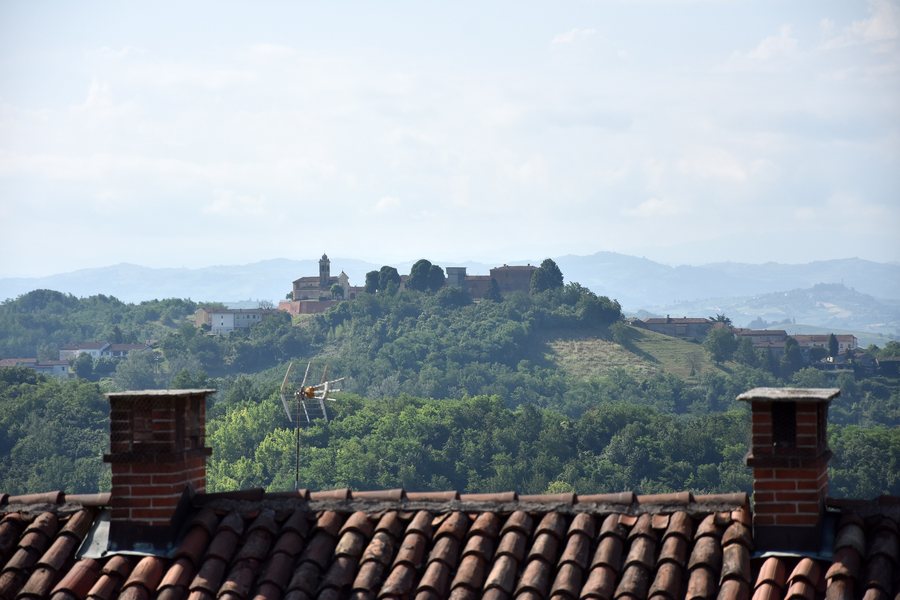
Vigliano d'Asti combines the hilly landscape of the lower Monferrato with viticulture, unusual fossil discoveries and a vibrant local tradition. The municipality is one of those involved in the Strada del Vino Astesana. This makes the town an interesting destination for you if, when choosing a holiday apartment, you are looking not only for accommodation but also for a distinctive setting for a variety of holiday experiences.
Hilly landscape and traces of the Pliocene
In the hilly landscape typical of the lower Monferrato around Vigliano d'Asti, lush vineyards alternate with grain fields, meadows and forests. This varied landscape offers visitors appealing views and provides a special setting for walks. Another distinctive feature is the Colline del mare. Marine fossils from the Pliocene have been preserved in these hills, including molluscs, plants, shells and the remains of baleen whales. The area thus combines visible landscape and geological history in an unusual way.
Routes for experiencing the surroundings in different ways
The Strada del Vino known as Astesana comprises eight scenic routes along quiet side roads running along the hilltops. You can explore this route by car, on horseback, by bicycle or on foot. These different options make it easier for you to shape your days according to your interests and pace: Astesana can be viewed as a landscape experience, an excursion through the wine-growing region or an active outing, without prescribing a single way of travelling.
Festivals, walks and special dates
The Festa Patronale lasts about a week and takes place between the first and second weeks of August. It includes the amateur race “Correndo per Vigliano” and the walk “Quattro passi per Vigliano”. A special focus is placed on the third edition of “Alla scoperta delle balene”. The edition held on 6 August 2026 is a walk through the forests and vineyards of the area between Valmontasca and Sabbionera, along Vigliano d'Asti's local “whale trails”. In this way, physical activity, landscape and the town's palaeontological distinction come together under one event theme.
Castello and Balenottera in nearby Asti
Cultural history also complements the landscape. In nearby Asti, the Balenottera found in 1959 in the Valmontasca hamlet is exhibited at the Museo Paleontologico di Asti. The Castello di Vigliano d'Asti is located in the highest part of the town and offers an exceptional panoramic setting. It is regarded as a residence built by the De Montibus on the ruins of an older castle. According to the documents, this older castle already existed in 1130. Today, the Castello appears as a simple rectangular building; its main façade dates from the 19th century.
Wine, truffles and Piedmontese culinary culture
Viticulture in Vigliano d'Asti produces Barbera, Cortese, Grignolino and Dolcetto, as well as fine grappa. In addition, there are the carefully maintained truffle-growing areas, which produce prized white truffles of excellent quality. On 17 May 2026, the “FASSONA DAY” returned to Vigliano d'Asti with an extensive programme of discussion, in-depth exploration and community centred around the high-quality Piedmontese Fassona cattle breed. These themes can play just as important a role in your choice of holiday apartment as walks and culture: you decide whether regional cuisine, wine landscapes, history or nature should form the focus of your days.
For further orientation in the surrounding area, you will also find Cortazzone, Montemagno, Montegrosso D'asti, Asti, Casorzo, Camerano Casasco, Vinchio and Bubbio.
Check prices, availability and amenities for your travel dates directly on Booking.com.
View accommodation and offersAdvertisement · Partner link to Booking.comFor the overview of the wider area: Asti.

