
Discover Cercemaggiore: History and Pilgrimage
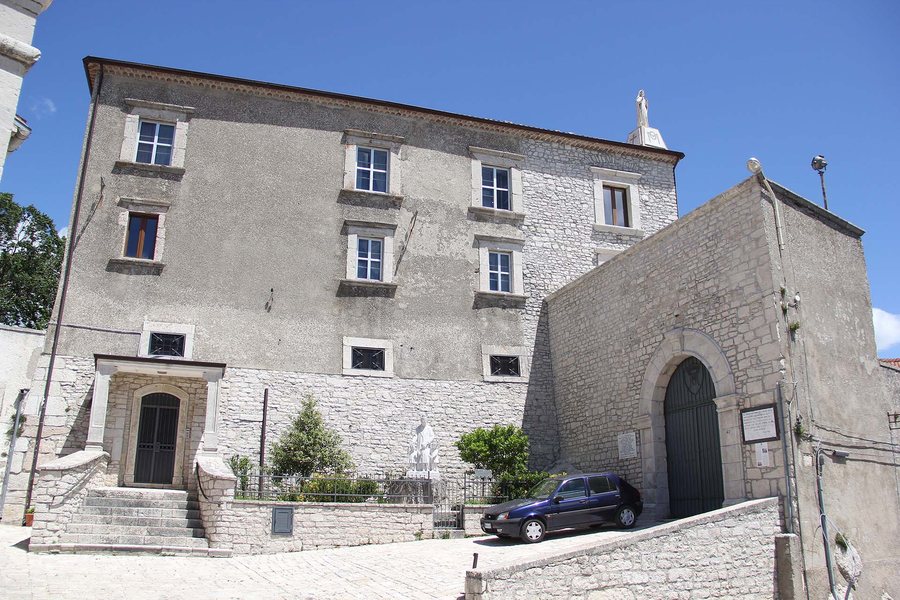
Cercemaggiore lies in a fan shape on the slopes of Monte S. Maria, overlooking the wide valley of Alto Tammaro. If you are planning a holiday apartment in Cercemaggiore, you can expect a place whose character is shaped by its landscape, history and religious traditions. This provides a range of themes for planning your trip – from historical discoveries to an experience along the trail.
Historic Town Centre and Traces at Monte Saraceno
The historic centre preserves part of its original medieval town layout. On the western side of Cercemaggiore, the surviving Porta dei Rocchi can be seen. Monte Saraceno represents an older period in the town’s history, with a double fortified complex dating from Samnite times. It is protected by an archaeological preservation order dated 30 June 1978. Excavations uncovered two main gates there, located along an ancient route running from west to east across the mountain.
Churches, Art and a Norman Palace
Il Castello, or Palazzo Marchesale, was built during the Norman period, around the second half of the 11th century. The Parrocchia S. Maria della Croce was founded around the 12th century; its Latin-cross floor plan dates from 1582. Inside, the church preserves frescoes from the late 16th and early 17th centuries. The mortal remains of San Vincenzo Martire are also kept in a metal urn.
The Chiesa di Santa Maria a Monte was founded around the middle of the 13th century and preserves a late Romanesque character with an intricately crafted portal. Its works of art include an 18th-century marble sculpture of the Assumption of Mary. The Chiesa di S. Rocco also houses a wooden sculpture of the Immacolata created around 1766 by Paolo Saverio Di Zinno. The different periods and materials make the churches independent stops on your tour of Cercemaggiore.
Pilgrimage and Festivals in Cercemaggiore
A special religious history connects the Santuario di Santa Maria della Libera with the year 1412: at that time, a farmer found the statue of the Madonna della Libera; the Dominicans subsequently built the sanctuary. The Feast of the Madonna della Libera is celebrated on 1 and 2 July. In C. Da Convento, it includes a mass, a procession, a fair, a market, local food stalls and concerts. The patronal festival Festa di San Vincenzo Martire also includes a mass, a procession through the town centre, a commemorative ceremony, a fair, a market and concerts.
Hiking the Cammino dell’Acqua
For active travel plans, the Cammino dell’Acqua runs for approximately 60 kilometres from the Basilica Minore dell’Addolorata in Castelpetroso to the Santuario di Santa Maria della Libera in Cercemaggiore. The final stage from Cercepiccola to Cercemaggiore is 4.30 kilometres long, takes approximately 1 hour and 10 minutes, and is classified as difficulty level E for hiking routes. After a final ascent of approximately 1.5 kilometres, the route reaches the gates of the Santuario di Santa Maria della Libera.
The Cammino dell’Acqua can be completed in any season and in both directions. When choosing your holiday apartment in Cercemaggiore, you can therefore consider whether the churches and festivals, the historical sites or the route of the pilgrimage and hiking trail should be the focus of your trip. Those planning around several interests can combine these themes and organise their days in a varied way.
Check prices, availability and amenities for your travel dates directly on Booking.com.
View Accommodation and OffersAdvertisement · Affiliate link to Booking.comMore Destinations
Acquaviva Collecroce, Campodipietra, Lido Campomarino, Montorio nei Frentani, Sepino, Palata, Petacciato, Ripabottoni
To the higher-level travel overview: Campobasso.

