
Holiday apartment in Appignano del Tronto: Churches, Badlands and Olive Groves
Accommodation in Appignano del Tronto
Churches, Landscapes and Local Specialties
Appignano del Tronto combines distinctive religious buildings with a landscape of olive groves and bare, parched badlands at the foot of Monte dell’Ascensione. In Appignano del Tronto, historic architecture, rural paths, regional products and the unusual shapes of the badlands stand side by side.
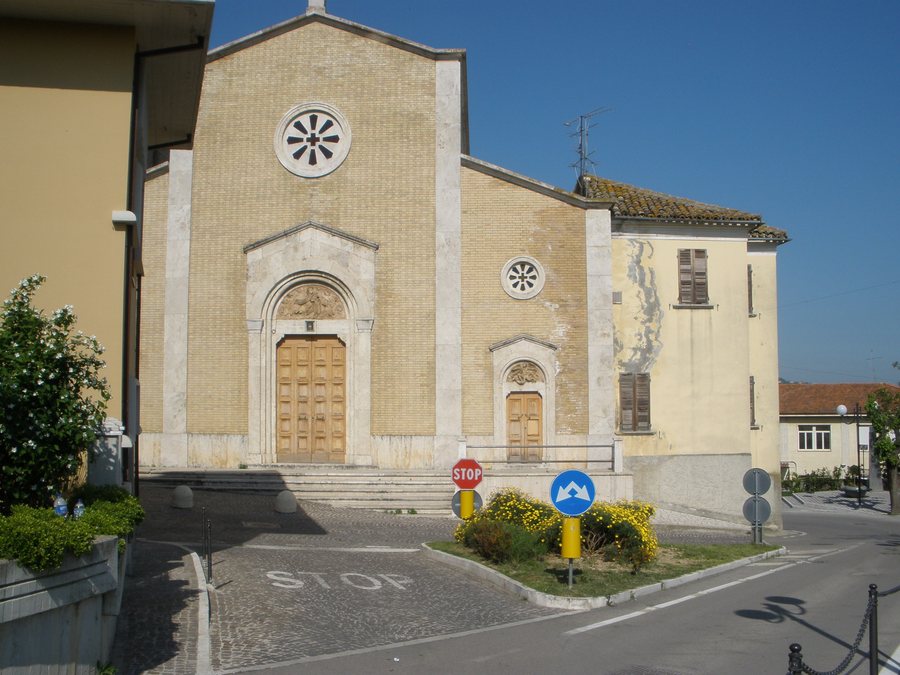 File:Chiesa di San Michele - Appignano del Tronto - panoramio.jpg
Photo: marianna1987 via Wikimedia Commons, CC BY-SA 3.0
File:Chiesa di San Michele - Appignano del Tronto - panoramio.jpg
Photo: marianna1987 via Wikimedia Commons, CC BY-SA 3.0
Romanesque and Renaissance Traces
The Chiesa Parrocchiale S.Giovanni Battista is a Romanesque building dating from the first half of the 14th century. Repeated restorations in the 15th and 16th centuries gave it Renaissance elements. Another notable stop is the Chiesa San Michele Arcangelo. It was built in the 15th century by Lombard masters after a flood of the Chifente stream destroyed the Franciscan monastery. From 1890 to 1909, the church was completely rebuilt. Its high altar features a 16th-century painting of the Assumption of the Virgin Mary by Vincenzo Pagani. Vincenzo Pagani’s painting of the Assumption of the Virgin Mary adds a specific artistic reference to the building’s history.
Churches with Their Own History
The church of Santa Maria del Piano Santo was built between 1604 and 1611 on the initiative of the Confraternity of the Rosary. It was erected on the site of an earlier medieval wayside shrine chapel. The medieval wayside shrine chapel provides the older point of reference for the later church building. The church contains a Baroque altar; the fresco The Coronation of the Virgin is also attributed to the Maestro di Offida. The rural Chiesa rurale dei Santi Gioacchino e Anna also tells a story of special use. Monsignor Francesco Antonio Marcucci had it built in 1775–1776 for nuns and schoolgirls who spent their holidays at his country house. The terracotta building has a simple bell-gable façade with a travertine portal and architrave, topped by an oculus. The building’s terracotta contrasts with the travertine portal; an oculus above the portal complements the simple bell-gable façade. It also includes a small Romitorio, that is, a tiny one-person accommodation where Marcucci usually rested, prayed and meditated.
Badlands, Country Roads and Oliva Ascolana
The olive groves and impressive badlands at the foot of Monte dell’Ascensione give Appignano del Tronto a distinctly rural character. The route follows quiet country roads and passes through fields used for agriculture, including impressive sections of the Cammino dei Cappuccini. The route therefore connects country roads, fields and sections of the Cammino dei Cappuccini.
Oliva Ascolana and Museum
The entire area of Appignano del Tronto lies within the DOP production zone of Oliva Ascolana del Piceno. The Ecomuseo dei Calanchi Grigi Azzurri di Appignano del Tronto is part of the Sistema Museale Piceno.
Other Places for Orientation
For further orientation, you can also include Carassai, Spinetoli, Roccafluvione, Colle San Marco, Grottammare, Piane Vecchie, Castorano and Castignano in your plans.
For the broader travel overview: Ascoli Piceno.

