
Holiday apartment in Senigallia: Velvet Beach, history and seafood cuisine
Accommodation in Senigallia
Senigallia combines a long sandy beach with a diverse succession of buildings, markets and museums. Velvet Beach stretches for 13 kilometres and has very fine, golden sand. At the same time, the history of the Rocca Roveresca extends from the Roman foundation of Senigallia through medieval fortifications to the fortress built by Sigismondo Pandolfo Malatesta in 1450. When choosing a holiday apartment in Senigallia, you can shape your holiday around different ideas for each day: long days at the beach, architecture and specific historic sites.
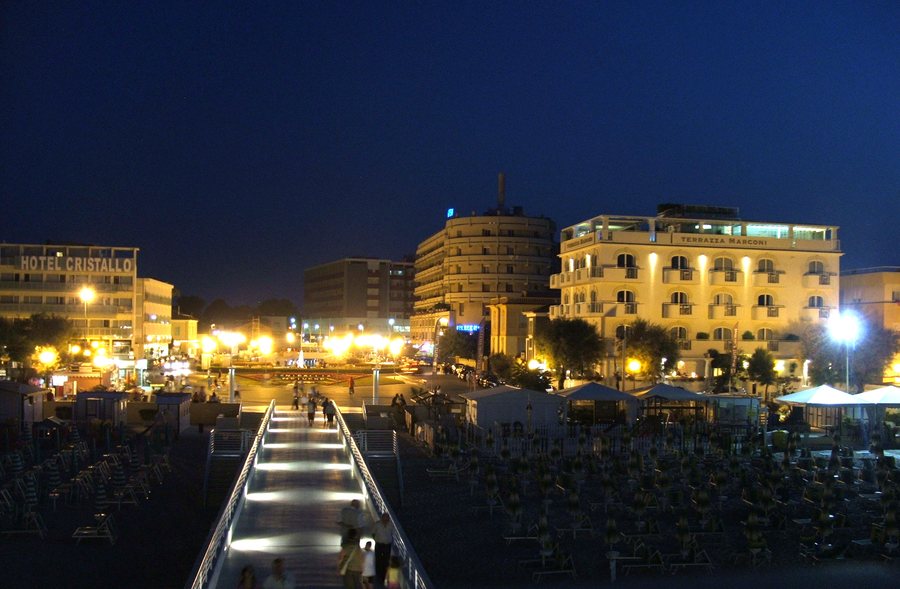
Velvet Beach and the dunes of Senigallia
The coastal landscape also includes the dunes of Senigallia. They are fenced off to prevent the removal of sand and plants. Alongside the fine, golden sand of Velvet Beach, the dune fringe is therefore also part of the town’s visible character. For your planning, this creates a clear alternation between relaxing hours on the long beach and a landscape whose preservation is shaped by the fencing.
Architecture between the market and the history of the town
The Portici Ercolani were designed in the mid-18th century by Giuseppe Ercolani on behalf of Pope Benedict XIV to accommodate the annual Fiera Franca. A weekly market takes place beneath the Portici Ercolani every Thursday morning. The Foro Annonario was designed in 1834 by the architect Pietro Ghinelli, who came from Senigallia.
Seaside architecture and a historic theatre
The Rotonda a Mare was inaugurated on 18 July 1933 and is a harmonious example of seaside architecture. The Teatro La Fenice is Senigallia’s historic municipal theatre and stands on the same site as the former Teatro La Fenice and the earlier municipal theatre. Anyone interested in the development of architectural forms and urban history will find two different points of access here: seaside architecture and the continuing history of a theatre site.
Roman traces and museums
At the Area Archeologica La Fenice, you can view both the remains of Roman buildings and archaeological finds discovered on site. Free guided tours are offered there in summer. This makes the Roman traces a concrete activity for a culture-focused day, without requiring you to limit yourself to a single historical period.
The Palazzo Mastai – Museo Pio IX is the house where Giovanni Maria, the future Pope Pius IX, was born on 13 May 1792. The rooms on the first floor house a museum with significant memorabilia from the life of Pope Pius IX. The palazzo’s ballroom also contains a cycle of 20 biblical paintings by the painter Giovanni Anastasi, who came from Senigallia.
The Palazzetto Baviera offers another architectural highlight. It has five rooms with ceilings entirely decorated with stucco by Federico Brandani. The themes of these ceilings include Roman imperial and republican history, the Iliad, Hercules and the Old Testament. Families and other travellers who want to combine different interests can therefore find Roman history, literature, mythology and religious imagery side by side in a single building.
Seafood cuisine and choosing your holiday apartment
The seaside cuisine of Senigallia includes grilled sardines, fried fish, brodetto, mussels, clams and sea snails. When choosing your holiday apartment in Senigallia, you can therefore consider whether your holiday days should be shaped primarily by the long Velvet Beach, museums and buildings, or seaside cuisine. The sights and food culture give your stay different focal points, without requiring you to commit to just one travel idea.
More destinations for your planning
If you would like to extend your travel planning beyond Senigallia, you can also consider Poggio San Marcello, Offagna, Castelplanio, Monterado, Marina Di Montemarciano, Ostra Vetere, Piticchio and Campodiegoli in your considerations.
To the overall travel overview: Ancona.

