
Discover Camerano: Grottoes, Art and Trails
Accommodation in Camerano
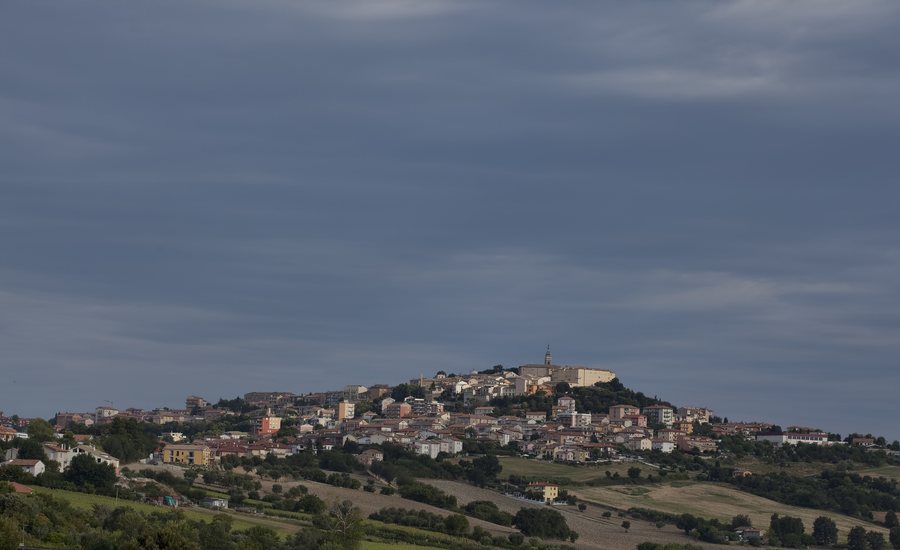
Camerano combines a landscape of gently rolling, cultivated hills with unusual insights into art, archaeology and underground spaces. The hills slope down towards the Aspio River and rise towards Monte Conero. When choosing a holiday apartment in Camerano, you can therefore consider whether you would like to shape your stay primarily around culture, walks, wine or a combination of these themes.
Beneath the historic centre and in the footsteps of history
The Grotte di Camerano form an underground city carved into sandstone, extending like a labyrinth beneath Camerano’s historic centre. The site combines a striking sense of space with a turbulent past: the grottoes are believed to have been created or expanded in the Middle Ages as a refuge for the population from numerous attacks by armies and armed bands. In July 1944, they once again served as a shelter for the people of Camerano during the Second World War. A reservation is required for the visit; it takes place exclusively as a guided tour at set times, lasts approximately 75 minutes and begins at the ticket office of the Grotte di Camerano, Piazza Roma 26.
Above ground, too, history leads in different directions. The Civiche Raccolte Museali in the Palazzo Comunale comprise the “Maratti” collection, an archaeological collection and a collection of historic accordions. The archaeological collection includes finds from the municipality of Camerano: remains of Neolithic and Bronze Age settlements, five grotto tombs and more than one hundred Picenian tombs dating from the 11th to the 3rd century BC. The accordion collection comprises fourteen instruments dating from 1850 to 1934. These include instruments by local producers such as Scandalli, Soprani and SILA; materials also document various stages of accordion production.
Tourist trails through hills and olive trees
Different trail lengths are available for active days. In the San Germano district of Camerano, Parco del Conero presents the Percorso del Betelico as a 7.3-kilometre tourist trail with a duration of three hours. The route follows the Fosso del Betelico through cultivated areas with hedges and centuries-old olive trees before returning to San Germano. Parco del Conero also presents the Anello della Gradina as a 5.4-kilometre circular tourist trail with a duration of three hours. Access is via the road to Camerano. Along the way are a landscaped viewing platform, the cone-shaped hill of La Gradina, the Fosso Tomba ditch, cultivated hill landscapes and Monte Zoia. The different lengths and landscape features help you plan excursions suited to your preferred daily pace.
Art, wine and local traditions
The Itinerario Marattiano was opened on Piazza Roma on 25 May 2025. Along this art trail, visitors can see several works by the painter Carlo Maratti. According to tradition, Chiesa San Francesco in Camerano was founded in 1215 together with the adjoining monastery by Francis of Assisi.
Rosso Conero is also part of the local character. In the Camerano area, this full-bodied and structured wine made from Montepulciano grapes is offered for tasting from winery to winery. In the first week of September, the wine takes centre stage every year at the Festa del Rosso Conero. Snack stalls, market stalls, street games and wine tastings continue late into the night. This allows you to give different weight to culture, activity and regional culinary delights when selecting your accommodation in Camerano.
Further destinations for planning your trip: San Paolo Di Jesi, Montemarciano, San Vittore, Cupramontana, Camerata Picena, Maiolati Spontini, Polverigi, Rosora.
To the broader travel overview: Ancona.

