
Holiday Apartment in Ranco: Nature, Culture and Walking Trails
Accommodation in Ranco
Ranco is a destination for travelers who want to combine nature, walking, cycling tourism and cultural history. When choosing a holiday apartment in Ranco, the preferred rhythm of your holiday days can provide useful guidance: in the Parco del Golfo della Quassa, the focus is on landscape and natural features, while the Sentiero del Verbano, San Quirico Hill and various buildings offer different points of interest. This makes it possible to shape a stay around active trails, quiet discoveries and cultural-historical themes.
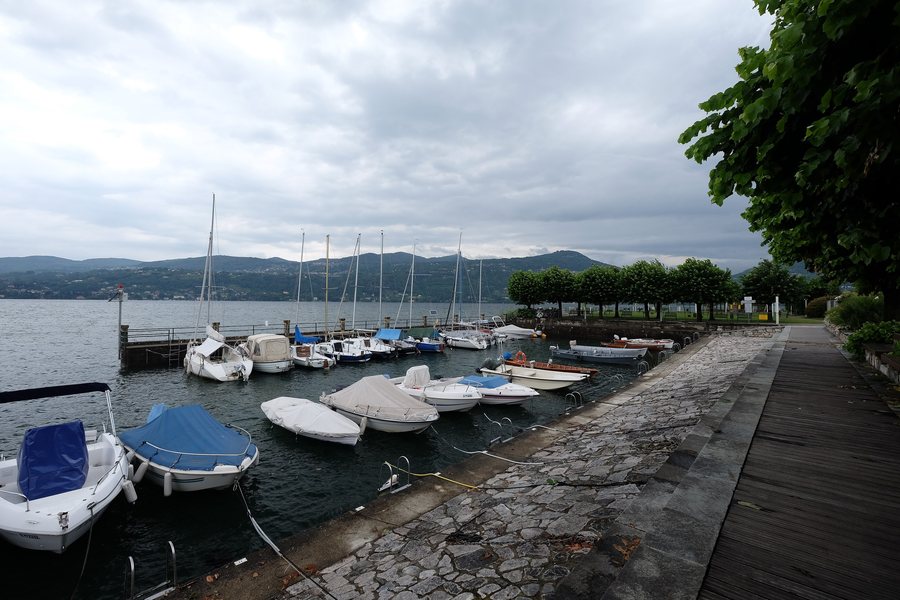 File:21020 Ranco VA, Italy - panoramio (1).jpg
Photo: Ben Bender via Wikimedia Commons, CC BY-SA 3.0
File:21020 Ranco VA, Italy - panoramio (1).jpg
Photo: Ben Bender via Wikimedia Commons, CC BY-SA 3.0
Nature between Ranco and Ispra
The Parco del Golfo della Quassa stretches between Ranco and Ispra. The park contains vegetation typical of a lakeside marshland, including willow stands, reeds, yellow flag irises, white and yellow water lilies, as well as the rare water chestnut of Verbano. This combination makes the natural area particularly interesting for visitors who want not only to be on the move but also to pay attention to different plant forms.
The area of the Parco del Golfo della Quassa is suitable for walking and cycling tourism. The surroundings of San Quirico Hill also offer opportunities for relaxed walks and more strenuous hikes. The Sentiero del Verbano runs through Ranco. This results in a range of possible day plans: a quiet walk can be combined with a more sporting hike, while cycling tourism adds another dimension. Those traveling with children or companions with different activity levels can thereby structure their holiday days in a varied way without committing to just one type of experience.
Cultural History in Ranco and Uponne
The buildings and historical details also give Ranco a distinctive character. The Vecchio Palazzo Comunale housed Ranco's primary school. Gianni Rodari taught at the Vecchio Palazzo Comunale from 1940 to 1941. For visitors interested in culture, this connects a specific place with a period from the biography of the Italian writer.
The Chiesa della Beata Vergine del Rosario in Uponne has a Neo-Romanesque-inspired exterior with twin windows, corbel arches, and brick and natural-stone cladding. The fresco at Cascina Uponne is visible from the road. Both examples draw attention to architectural forms and pictorial details that can be incorporated into a walk without turning it into an extensive sightseeing program.
The Cantiere Nautico Brovelli in Ranco was built in 1931 as a residence and boatyard for boat construction. A fountain with a Roman sarcophagus was originally connected to the old aqueduct. An old wooden statue of the Madonna del Rosario comes from the former Church of San Vittore in Angera. These three facts open up different approaches to the past: craft use, historical water supply and sacred art each represent a distinct theme.
Landscape Details and Brusela
The erratic boulder Sass Cavalasc is also known as Cavallaccio and Cavallazzo. It is cuboid in shape and measures 5 by 8 meters. Its striking name and unusual form give the landscape a concrete feature that interested visitors can use as a point of reference without embellishing its significance further.
Brusela is prepared from bread dough and fresh grapes, either strawberry grapes or American grapes. The grape filling is covered with another layer of dough and baked in the oven. In addition to nature, trails and culture, this introduces a clearly defined preparation method that adds a culinary theme to the stay.
For further travel planning, you can also discover Crugnola, Fagnano Olona, Varese, Valganna, Casciago, Ternate, Luino and Saronno.
To the higher-level travel overview: Varese.

.jpg)