
Holiday apartment in Cosio Valtellino: churches, art and mountain landscapes
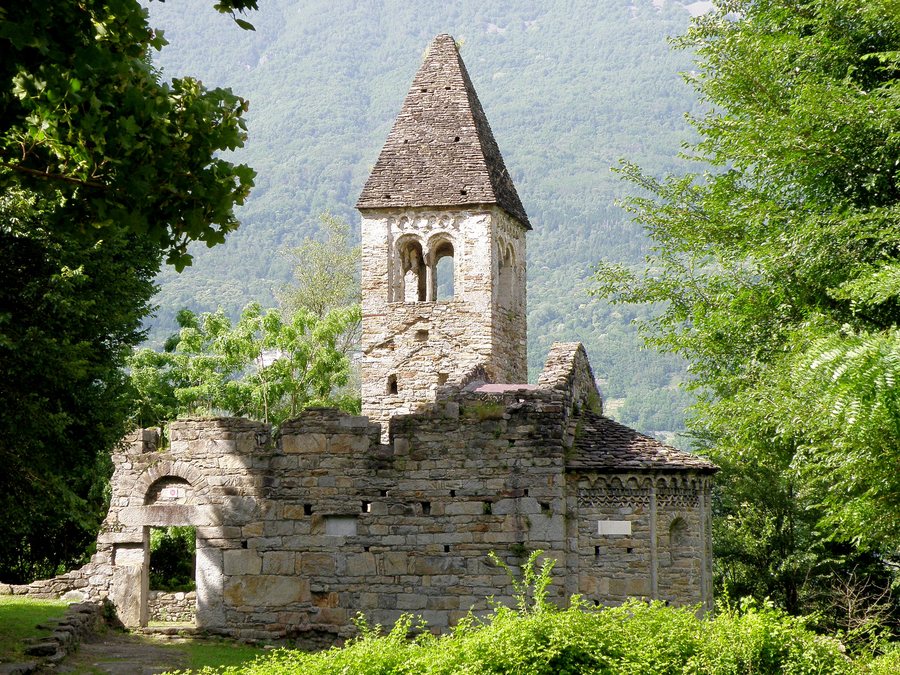 File:Cosio Valtellino Abbazia di San Pietro in Vallate 1.jpg
Photo: Torsade de Pointes via Wikimedia Commons, CC0
File:Cosio Valtellino Abbazia di San Pietro in Vallate 1.jpg
Photo: Torsade de Pointes via Wikimedia Commons, CC0
Valley floor, slopes and several districts
Cosio Valtellino is characterised by significant differences in elevation and therefore does not present a uniform landscape. The inhabited districts of Piagno, Cosio and Regoledo are located partly on the valley floor, while Sacco and Mellarolo lie partly on the slopes of Val Gerola. If you are looking for a holiday apartment in Cosio Valtellino, you can use these different locations as a first point of orientation when planning your trip. The distinction is particularly interesting if you want your days to alternate between village history, easy trails and landscape experiences.
Churches with clear traces of different periods
In the district of Cosio, the parish church of San Martino was built in 1158. In Sacco, the parish church of San Lorenzo is a considerably later sacred building, completed in 1765. Thus, in Cosio Valtellino you will encounter churches dating from widely separated periods. For visitors interested in culture, this provides a specific way of accessing the local history without having to focus on a single era.
Ruscaine and Sacco: history and art
The Church of Santa Maria in Ruscaine was built from 1752 onwards in place of a smaller sacred building dating from 1458. This older building originated from a vow made by the inhabitants of Piagno and Sacco to be freed from the plague. In Sacco, the Quadreria di San Lorenzo complements the cultural focus: the collection comprises 73 canvases created between the 16th and 19th centuries. Of these, 22 canvases are located in the parish church of San Lorenzo and 51 works in the parish house in Sacco. Those who value cultural discoveries when choosing accommodation will find several different opportunities here to engage with art and religious history.
Church, museum and palace nearby
The Abbazia di San Pietro in Vallate is a church in the vicinity of Cosio Valtellino and is also described as a ruin. The Museo Civico di Storia Naturale, a museum for visitors interested in natural history, is also nearby. The Palazzo Malacrida is another independent point of interest there, as a palace. These three destinations expand the choice for days when, in addition to the districts, you would like to include historic buildings and museum content in your plans.
Easy mule track and mountain peaks
From the last houses in Piagno, an easy mule track leads quickly and without difficulty to the ruins of San Pietro in Vallate. The peaks of Monte Sciesa, Cima di Malvedello, Corno del Colino and Pizzo Rotondo are also located in the vicinity of Cosio Valtellino.
Canevèl and seasonal museum opening
In Sacco, the Canevèl was a water-cooled room that served as a natural refrigerator for storing milk. This detail takes you right into the history of local everyday life and food, complementing the churches, works of art and palaces with a practical tradition. The Museo dell'Homo Selvadego is a museum that can be opened outside the season by prior arrangement. This means that timing is also one of the specific factors you can take into account when planning a trip to Cosio Valtellino.
For further regional discoveries, you can explore Cedrasco, Livigno, Fenile, Grosio, Chiuro, Tresivio, Prata Camportaccio and Caiolo from here.
For the higher-level travel overview: Sondrio.
Check prices, availability and amenities for your travel dates directly on Booking.com.
View accommodation and offersAdvertisement · Affiliate link to Booking.com
