
Holiday apartment in San Colombano al Lambro – Culture, Nature and Wine
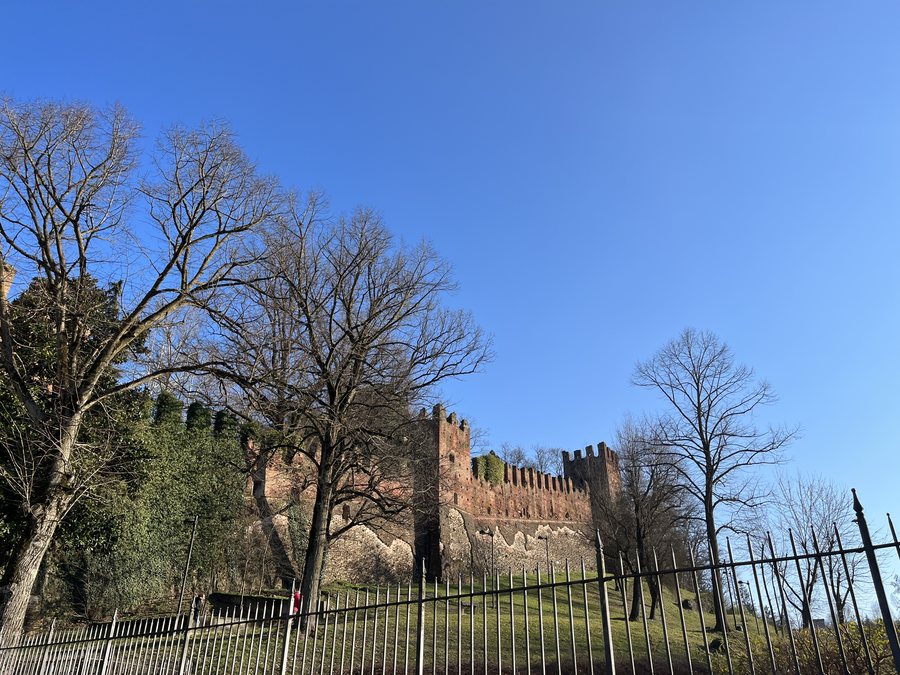 File:Castello Belgioioso di San Colombano al Lambro 28.jpg
Photo: Iolanda Pensa via Wikimedia Commons, CC BY-SA 3.0
File:Castello Belgioioso di San Colombano al Lambro 28.jpg
Photo: Iolanda Pensa via Wikimedia Commons, CC BY-SA 3.0
San Colombano al Lambro combines a distinctive hilly landscape with historic buildings, nature observation and regional wine culture. If you are looking for a holiday apartment in San Colombano al Lambro, you can tailor your stay to very different interests: from fossil collections and churches to a geometrically distinctive town park, birdwatching and guided tours.
Culture and distinctive local sights
The Museo Paleontologico e Archeologico “Virginio Caccia” preserves fossil and archaeological collections. They contribute to an understanding of the origins and history of the Colle di San Colombano as a unique natural phenomenon of the Po Valley. Another prominent destination is Parco Lazzaretto. The 7,950-square-metre town park comprises planted and equipped green spaces. Its exact octagonal shape dates back to the original boundary from the 17th century.
Parco Lazzaretto also includes a monumental complex with an octagonal main chapel from the 17th century and two smaller hexagonal side chapels from the 19th century. The Lazzaretto was historically used as a lazaret. The Chiesa parrocchiale di San Colombano Abate contains paintings by Bernardino Campi and Gian Giacomo Barbelli. The church has a 19th-century neoclassical façade and three naves.
Nature observation and walking experiences
In the hilly landscape of San Colombano al Lambro, at the Moretto locality next to the experimental vineyard, there is an equipped rest area. The Laghetti di Val Panate on the Sentiero Natura are a favoured observation point for resident and migratory birds. At the bird-of-prey observation station on the same Sentiero Natura, birds of prey migrating south from Central Europe can be observed in autumn. This makes landscape and wildlife observation independent travel interests alongside the historic townscape.
Historic traces and regional discoveries
The Portone was built in 1691 by Charles II, King of Spain, as the royal entrance to the Oppidum Insigne. In the historic centre, the birthplace of Don Carlo Gnocchi has been preserved in a typical 19th-century courtyard. The Church of San Francesco dates from 1580, while the Valbissera Dominican complex dates from the 16th century. The Fonti Minerali Gerette were opened to the public in 1926.
Guided tours of the Chiesa di San Giovanni Battista in San Colombano al Lambro are available by prior reservation. Guided tours of the Oratorio di San Rocco are also available for groups by prior reservation. Guided tours of wineries are also offered in San Colombano al Lambro for groups and school classes. These options combine historical exploration with an insight into the local wine culture.
Plan your trip according to your focus
Stage 13 of the Cammino di San Colombano runs from Sant’Angelo Lodigiano to San Colombano al Lambro and is 13.1 kilometres long. The Feast of San Colombano takes place every year on 21 November; a ceremonial procession makes its way through the streets of the historic centre. When choosing your holiday apartment, it can be helpful to first determine your preferred focus: a trip centred on museums and churches, nature observation, regional wine culture or a 13.1-kilometre stage. Different distances and types of experience make it easier to compare travel options according to your personal preferences.
If you would like to compare more places, also discover Morimondo, Bollate, Buccinasco, Canegrate, Concorezzo, Gessate, Turbigo and Burago Di Molgora.
For the higher-level travel overview: Milan.
Check prices, availability and amenities for your travel dates directly on Booking.com.
View accommodation and offersAdvertisement · Partner link to Booking.com
