
Desio: Park, Art and History
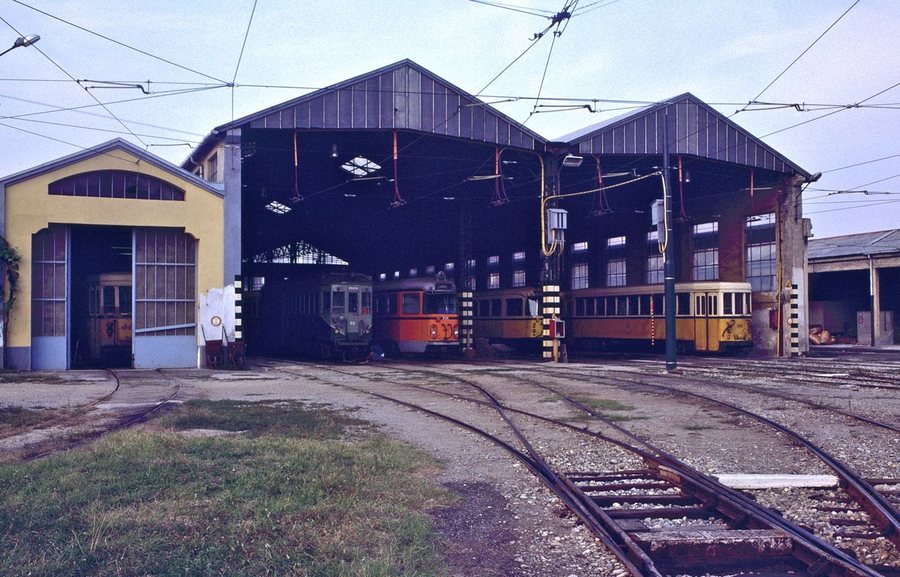 File:Desio carhouse (tram depot) in 1983 - Desio, Italy.jpg
Photo: Steve Morgan via Wikimedia Commons, CC BY-SA 3.0
File:Desio carhouse (tram depot) in 1983 - Desio, Italy.jpg
Photo: Steve Morgan via Wikimedia Commons, CC BY-SA 3.0
Desio between parks, art and urban history
Desio combines a public park with a diverse cultural heritage. Since 1793, Parco Cusani Traversi Tittoni has been one of the early Italian examples of an English landscape garden. Looking back through the history of this place, you encounter the first built centre of Villa Cusani Tittoni Traversi: it originated as a Franciscan monastery founded in the Desio area in 1290. The villa itself was built as a “villa di delizia”, meaning a country estate used by aristocratic families during their leisure stays.
Art and museums for different interests
The Museo Scalvini centres on a donation by Giuseppe Scalvini to the city of Desio. It was created in 1999 and comprises 36 sculptures. The Museo Scalvini is scheduled to open from Friday to Sunday from 10:30 to 12:30 and from 15:30 to 18:00; visits on Thursdays are possible by appointment only. This makes it possible to plan a museum visit specifically as part of a stay without losing sight of the city’s park and historical attractions.
The birthplace of Pope Pius XI was converted into a museum in 1939, immediately after his death. The Museo Pio XI also includes a section devoted to contemporary sacred art. Its most valuable item is a radio set personally made by Guglielmo Marconi and presented to the Pope in 1931. The combination of personal history, sacred art and technological history gives a visit to the museum several points of interest.
Another cultural facet is offered by the multimedia exhibition “Costruirò la Casa della Pace”. It is partly interactive. If you would like to include different forms of cultural experience in your daily planning, this exhibition complements the traditional museum and collection content with a more media-focused format.
From silk manufacturing to historical testimony
Desio’s industrial past is also part of the city’s character. The Ex Tettoia Gavazzi is the last surviving evidence of the former silk-weaving industrial complex of the brothers Egidio and Pio Gavazzi. The complex was established in 1869 and for more than a century was one of Italy’s most important silk manufacturers. This historic testimony therefore represents a period of local economic history that differs clearly from parks, villas and sacred art.
A holiday apartment in Desio to suit your travel plans
Parco Cusani Traversi Tittoni, the Museo Scalvini, the Museo Pio XI and the Ex Tettoia Gavazzi offer different focal points for a stay. If you are considering a holiday apartment or holiday home in Desio as accommodation, you can use your preferred combination of garden art, sculptures, religious history, interactive exhibitions and industrial history as the starting point for your planning. For a stay on a fixed date, the Palio degli Zoccoli 2026 is also a relevant topic: on Saturday, 13 June, the programme includes a camp for medieval arts and crafts on Piazza Conciliazione from 10:00 to 18:00.
Discover more places
Bussero, Robecco Sul Naviglio, Santo Stefano Ticino, Vaprio Dʼadda, Garbagnate Milanese, Rodano, Melegnano, Pioltello
For the higher-level travel overview: Milan.
Check prices, availability and amenities for your travel dates directly on Booking.com.
View accommodation and offersAdvertisement · Affiliate link to Booking.com
_in_1983_-_Desio,_Italy.jpg)