
Holiday apartment in Cusano Milanino: garden city, parks and culture
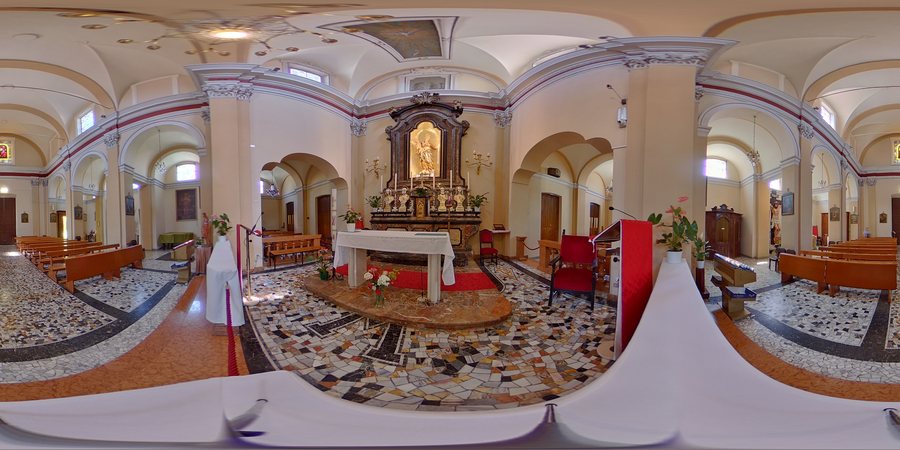 File:Madonna della Cintura (Cusano Milanino) - photosphere presbiterium.jpg
Photo: Kaitu via Wikimedia Commons, CC0
File:Madonna della Cintura (Cusano Milanino) - photosphere presbiterium.jpg
Photo: Kaitu via Wikimedia Commons, CC0
Garden city, parks and historic sites
Cusano Milanino combines Milanino’s distinctive character with spacious parks and impressive buildings. Choosing a holiday apartment in Cusano Milanino offers different perspectives on your stay: you can explore the history of the garden city, discover historic architecture or include public green spaces in your daily plans.
In Italy, Milanino is an almost unique example of a garden city based on Howard’s English garden city model. The public space preserves monumental trees, green parterres, grass-covered paths and tree-lined avenues. These elements make the urban planning concept understandable not only as a historical classification, but also as a tangible part of the townscape.
Parco Matteotti was opened to the public in July 1977. It was created on land that had previously been home to the greenhouse of Villa Tirelli, the gardens of Villa Venini and the Manifatture Griziotti factory.
Parco Matteotti covers 20,500 square metres. Its current facilities include children’s play equipment and two bocce courts. These specific features may be of interest to families when planning their day, while the size of the park conveys a distinct sense of space. At the same time, the park remains embedded in the broader history of Cusano Milanino.
Holiday apartment in Cusano Milanino between the palazzo and the parks
In the heart of Cusano Milanino, Palazzo Omodei Carones is located near the Seveso stream. The palazzo dates from the first half of the 17th century and has an imposing façade with two rusticated portals topped by balconies. The right-hand portal leads to a portico with five openings on columns and frescoed vaults. The building therefore offers several concrete points of interest for a stay shaped by cultural history.
The history of the palazzo also includes the noble chapel, which was built by Giovan Battista Omodei in 1643 and furnished with an important relic. This is the body of Saint Adrian, which Cardinal Luigi Omodei had acquired and which is now kept in the church of Milanino. Another historic landmark is the Santuario della Madonna della Cintura in Piazza XXV Aprile. It dates from 1642 and stands on the site of a former small oratory dedicated to S. Maria del Pilastrello. The statue of the Madonna della Cintura in the sanctuary is considered an example of late Baroque art.
The parks also complement the cultural themes. Parco Ippocastani has a central square facing Via Cooperazione; benches line its perimeter. The Seveso riverbed is also part of Parco Nord Milano within the municipality of Cusano Milanino. This makes it possible to accommodate different interests when planning accommodation, without reducing the town to a single experience.
For a deeper historical orientation, Itinerario D explores the history and origins of Cusano Milanino and leads to curiosities and archaeological finds.
Discover more places
Also discover Lissone, Biassono, Melegnano, Ossona, Assago, Vernate, Cavenago Di Brianza and Basiglio.
For the broader travel overview: Milan.
Check prices, availability and facilities for your travel dates directly on Booking.com.
View accommodation and offersAdvertisement · Affiliate link to Booking.com
_-_photosphere_presbiterium.jpg)