
Holiday apartment in Binasco: church art, Castello and Ciclovia VENTO
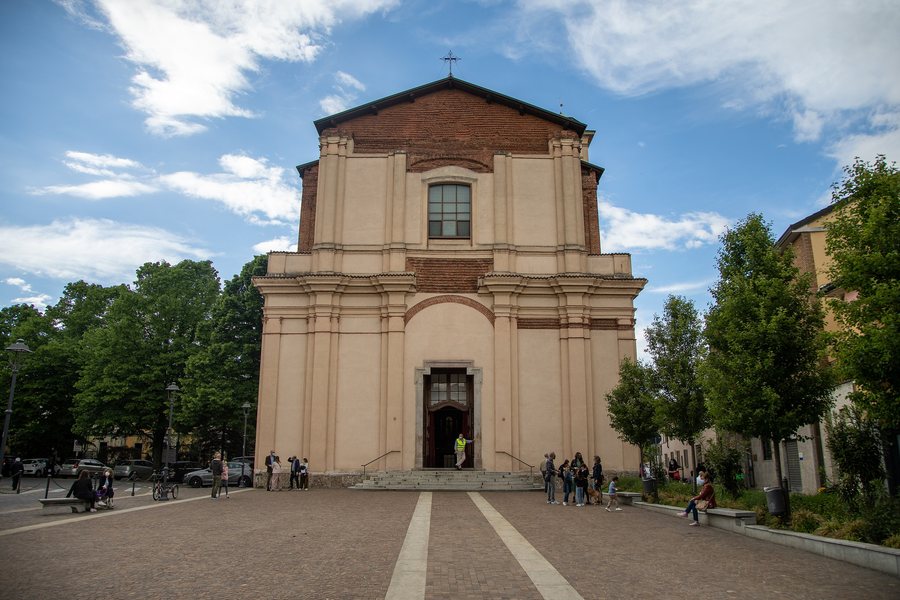 File:Binasco - chiesa dei Santi Giovanni Battista e Stefano Protomartire.jpg
Photo: Jwslubbock via Wikimedia Commons, CC BY-SA 4.0
File:Binasco - chiesa dei Santi Giovanni Battista e Stefano Protomartire.jpg
Photo: Jwslubbock via Wikimedia Commons, CC BY-SA 4.0
Binasco can be explored through several clearly distinct interests: architecture, history, collections and paths along the Naviglio Pavese. This is helpful when choosing a holiday apartment in Binasco if you would like to include culture, a collection and physical activity in your travel plans. Depending on your focus, your stay can therefore be shaped more by architectural history, museums or a route along the water.
Church art with a long architectural history
The Chiesa dei SS. Giovanni Battista e Stefano features architectural elements from the 18th century; exterior pilasters give its façade a strong vertical effect. The interior consists of a single nave, bordered on both sides by three side chapels each. Fully decorated with wall and ceiling frescoes in the Lombard illusionistic Rococo style, the church interior forms a distinctive cultural highlight. Construction work was interrupted in 1768 due to a lack of funds and finally completed in 1783. This combination of design and documented architectural history offers families different topics for discussion, even if children and adults each notice their own details.
Castello Visconteo and MUMAC
Castello Visconteo was built in 1300 as a historical and artistic monument. The original fortified core was constructed to protect the city of Milan from enemy incursions. The castle is also connected with the story of Beatrice Tenda: she was wrongly accused of adultery, sentenced to death and beheaded. MUMAC provides a different cultural focus with a collection of hundreds of espresso machines. Those travelling with several generations can therefore include different interests in their daily planning, ranging from architectural history and the story of Beatrice Tenda to a collection centred on espresso machines.
Cycling route along the Naviglio Pavese
Ciclovia VENTO offers an active perspective. In Binasco, it runs between Milan and Pavia along the towpath beside the Naviglio Pavese; there is a small bridge along the route. From Famagosta station on Milan Metro line MM2, you can take a bus to Binasco and reach MUMAC with a walk of around 10 minutes. This allows you to consider a route and a museum visit as different ideas for the day without having to commit to a fixed order.
Historic centre and destinations in the surrounding area
Binasco’s historic centre contains a 19th-century portico. The surrounding area of Binasco includes Castelletto di Gaggiano, a palace, Goppion, a museum, Certosa di Pavia, a monastery, and Museo delle culture, a museum. The selection therefore ranges from a historic building in the centre to cultural destinations in the surrounding area. When looking for accommodation, you can use this distinction as a guide to the desired balance between exploring the town and taking additional excursions.
Parco Rozzano, a park, is located in the immediate vicinity of Binasco, while Parco di Via dei Navigli, also a park, is located in the surrounding area of Binasco. In the wider regional area around Binasco are the Arco della Pace, a natural arch, and Porta Garibaldi, also a natural arch. For families weighing up culture, time outdoors and a cycling route, this creates a clear planning question: should the holiday apartment primarily complement the cultural themes of your trip, or should it form part of a broader daily itinerary?
More location pages
More ideas for places to visit when planning your trip: Rho, Ozzero, Cuggiono, Truccazzano, Varedo, Novegro-Tregarezzo, Gaggiano, Parabiago.
For the higher-level travel overview: Milan.
Check prices, availability and amenities for your travel dates directly on Booking.com.
View accommodation and offersAdvertisement · Affiliate link to Booking.com
