
Holiday apartment in Motteggiana: Po landscape and historic farm estates
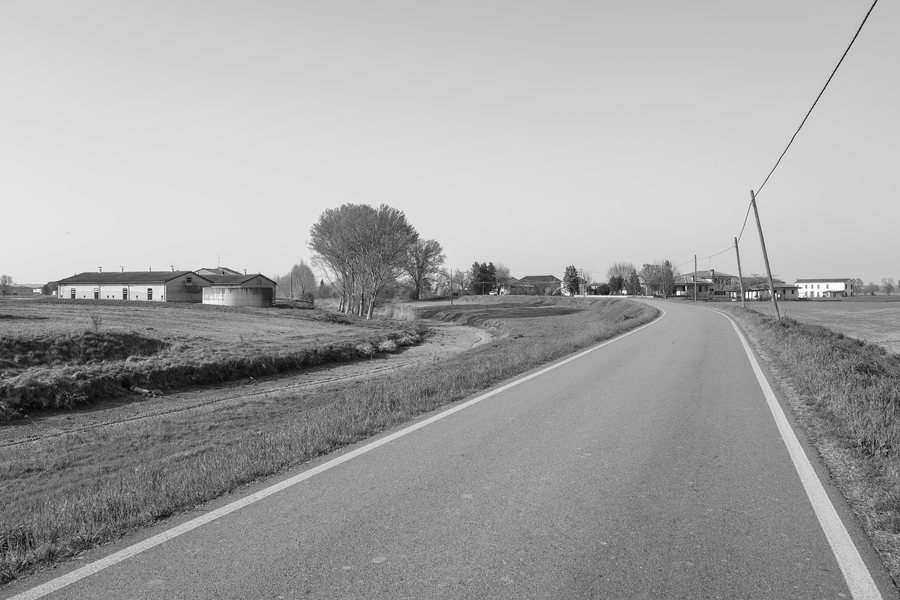 File:Strada Provinciale 52 - Motteggiana, Mantua, Italy - April 5, 2022.jpg
Photo: Giorgio Galeotti via Wikimedia Commons, CC BY 4.0
File:Strada Provinciale 52 - Motteggiana, Mantua, Italy - April 5, 2022.jpg
Photo: Giorgio Galeotti via Wikimedia Commons, CC BY 4.0
Motteggiana combines the river and floodplain landscape with the built landscape of agricultural farm estates. The townscape brings the Po area and historic farm estates together. From the open floodplain to the villa and parish church, this creates a landscape in which natural surroundings and architectural heritage are closely connected. The agricultural farm estates form the built side of the town, while the floodplains define the open landscape.
Po Landscape and Historic Farm Estates
A distinctive landscape feature is Manico di Paiolo. The newly redesigned Po floodplain is intended for sustainable tourism and educational activities. The Po provides the common spatial connection to the agricultural farm estates. The planned educational activities relate directly to this floodplain.
A cycling route follows the right bank of the Po and eventually leads to Motteggiana. Along the way, you can see rural farm estates and Villa Ghirardina. The Renaissance building was designed by Luca Fancelli and served Ludovico II Gonzaga as a place to stay, hunt and receive guests. The route along the right bank of the Po and its endpoint in Motteggiana give cyclists a clear spatial orientation. For an excursion along the banks of the Po, the sequence of river landscape, farm estates and villa can be viewed as a continuous section of the route. The riverbank remains the guiding line, while Motteggiana forms the endpoint of the route.
Church, Corten and Renaissance Architecture
The parish church of San Girolamo is at the heart of the sacred architectural heritage. It is dedicated to the priest and Doctor of the Church San Girolamo and was rebuilt in 1585 at the behest of Duke Guglielmo Gonzaga beside an old tower that had been converted into a bell tower. The sacred architectural heritage is complemented by the secular architecture of the farm estates, villa and palaces.
The historic architectural heritage is also reflected in several clearly distinct forms. Corte Ghirardina was built around 1460 as a country residence and is possibly attributed to Luca Fancelli. Villa Ghirardina combines the architectural forms of a castle, a palace and an agricultural farm estate.
At Corte Quaranta, the buildings line up at the foot of the Po's main embankment. Corte Quaranta has been restored; its palace has symmetrically arranged windows and two large round-arched entrance portals. The restored complex combines its location on the Po embankment with clearly structured palace architecture.
Museums, Palaces and Gardens in the Surrounding Area
For those interested in culture, the area around Motteggiana offers not only farm estates and the parish church but also the Fruttiere di Palazzo Te Museum, the Te Palace, the Tazio Nuvolari Mantova Museum and the Soardi Palace.
There are also gardens in the vicinity of Motteggiana: Giardini di Piazza Anconetta, Giardini Valentini, Giardini Marani and Giardini di Piazza Lega Lombarda.
Also in the surrounding area: Marcaria, Pegognaga, Libiola, Sermide, Casalmoro, Revere, Bagnolo San Vito, Porto Mantovano.
More about the region: Mantua.
Check prices, availability and amenities for your travel dates directly on Booking.com.
View accommodations and offersAdvertisement · Affiliate link to Booking.com
