
Pieve D'olmi: History and Wetlands
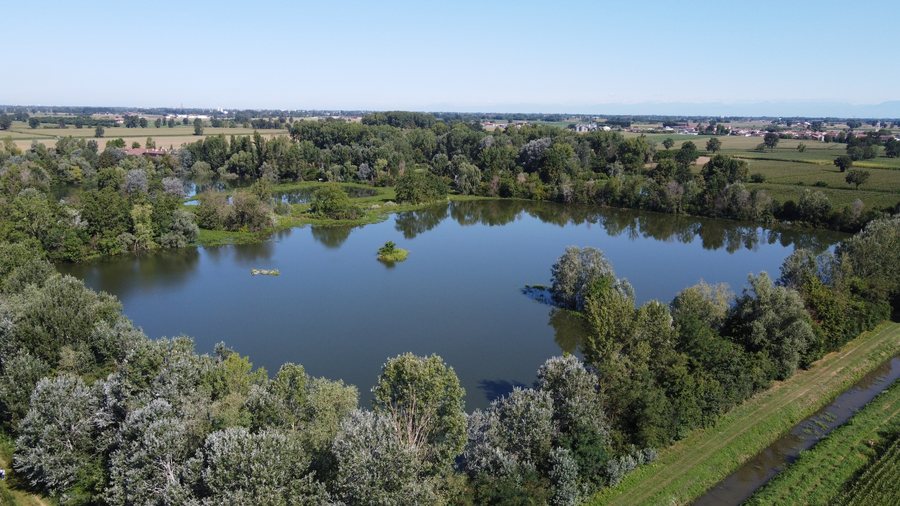 File:Pieve d'Olmi - Comune di Pieve d'Olmi - 2023-09-09 09-28-40 001.JPG
Photo: Bruschi alberto via Wikimedia Commons, CC BY-SA 4.0
File:Pieve d'Olmi - Comune di Pieve d'Olmi - 2023-09-09 09-28-40 001.JPG
Photo: Bruschi alberto via Wikimedia Commons, CC BY-SA 4.0
Pieve D'olmi is a destination for travellers who want to combine history and landscape. Those looking for a holiday apartment in Pieve D'olmi will find Roman history, church art, historic villas and wetlands as points of reference. On an embankment built in the 4th and 3rd centuries BC, the Romans constructed a road connecting Cremona with Casalmaggiore, Viadana and Brescello. This connection gives the area's history remarkable depth over time.
Holiday apartment in Pieve D'olmi between history and culture
Until 1879, a farm with a church in Lagoscuro belonged to the territory of Pieve D'olmi. Benedictine monks established an abbey there, traces of which have survived to this day. The site thus represents a history in which rural settlement and monastic architecture were closely interconnected.
The parish church of San Geminiano has three naves. The church contains frescoes depicting the life of Saint Geminianus. Its furnishings also include 17th-century works by Luigi Quaini. Architecture, religious representation and historic art come together directly here, offering different points of interest for a culturally focused stay.
The villas in the surrounding settlements also complement this picture. Villa Fraganeschi Ariberti Castelbarco Soldi in San Fiorano del Palazzo dates from the first decades of the 17th century and has an L-shaped floor plan. Villa Quaini in Cantarane was built at the end of the 18th century by merging several buildings from different periods. There is a tower structure in the centre of its smaller façade. Both buildings reveal different architectural solutions, and neither can have its history reduced to a single period.
Planned cycle route and practical orientation
The municipal cycleway network project envisages a route from the VENTO cycle route on the main embankment near Ca de Gatti to the beginning of the built-up area of Pieve D'olmi, via Ca Rossa. For planning a day by bicycle, this planned connection is a distinct aspect of the area. Accessibility information concerns the hall of the Casa della Cultura: it is wheelchair accessible.
Wetlands and protected nature
The Bosco Ronchetti Nature Reserve is a protected area in Pieve D'olmi with naturally occurring woodland. It was established to protect the vegetation of the floodplain. The territory of Pieve D'olmi is predominantly characterised by wetlands with white willows, black alders and elms.
The Parco del Po e del Morbasco extends across the Po floodplain. Large parts of the park are used for agriculture and include rural buildings. The landscape therefore ranges from protected woodland areas and wet habitats to a plain shaped by agriculture and rural buildings.
When choosing a holiday apartment in Pieve D'olmi, you can take this thematic range into account when planning your trip. Those interested in architectural history will find points of interest in the road, abbey, church and villas; those who prefer landscapes can focus on Bosco Ronchetti, the wetlands and the Parco del Po e del Morbasco. If members of a travel group have different interests, these focal points can be combined.
Other places for orientation
For further regional planning: San Giovanni in Croce, Drizzona, Corte De' Frati, Cansero, Casalmaggiore, Rivarolo Del Re, Ca' De' Mari, Cignone.
For the broader travel overview: Cremona.
Check prices, availability and amenities for your travel dates directly on Booking.com.
View accommodation and offersAdvertisement · Affiliate link to Booking.com
