
Discover Arcene: Sacred Architecture and Landscape
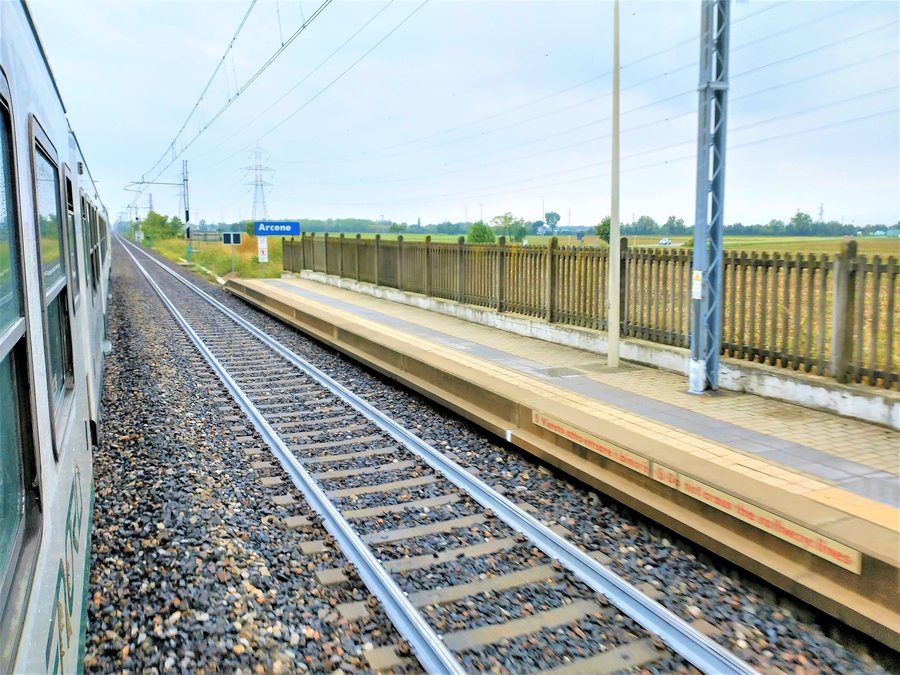
Arcene combines sacred architecture, local history, and landscape. The Chiesa di San Michele is located in the historic centre. The Santuario della Madonna delle Lagrime has a Lombard Neo-Gothic interior with three naves. For those interested in culture, Arcene offers the historic centre and the three-nave interior architecture as two distinct architectural points of reference.
Sacred Architecture and Local History in Arcene
The central chapel of the Santuario della Madonna delle Lagrime was approved in 1873 and blessed on 15 March 1874. In Arcene, 5 April is the anniversary of the miracle of 1864 associated with the Santuario della Madonna delle Lagrime. Travellers interested in local history can consider both the chapel’s construction dates and the tradition of the miracle at the Santuario.
The Municipio di Arcene has a square tower from the late 14th century attached to it, with four storeys. Its masonry, made of pebbles arranged in a herringbone pattern with courses of brick, is particularly illustrative. The square shape and four storeys define the tower’s external appearance; the herringbone pattern of the pebbles and the brick courses provide a distinct material detail. Those tracing historical building forms can consider the tower’s dating together with its masonry construction here.
Traces from Prehistory to Roman Times
The history of the area around Arcene goes back even further. Traces of prehistoric as well as Celtic, Roman, and Lombard settlements have been found there. During Roman times, the ancient “castrum de Arcene” also stood at the intersection of the Milan–Aquileia and Laude Pompeia–Rhaetia roads. The archaeological traces therefore extend beyond a single historical era and also include the Roman road junction.
Landscape and Regional Routes
Arcene also presents a complementary side outside the built-up area. The PLIS della Geradadda extends, among other areas, east of Arcene’s built-up area. The Museo Civico Treviglio is located in the vicinity of Arcene. For those interested in culture, this provides a landscape area east of the built-up area and a museum in the vicinity of Arcene as distinct regional points of reference.
Ciclopedonale and Regional Routes
The Ciclopedonale Lurano–Arcene–Castel Rozzone–Treviglio connects the municipalities of Lurano, Arcene, Castel Rozzone, and Treviglio. It is approximately three kilometres long. For planning a day, the approximate length of about three kilometres provides a clear indication of scale without specifying a particular walking or travel time. As an independent route section, the Ciclopedonale can be considered alongside Arcene’s cultural and historical themes. For a day focused on cultural and landscape themes, the route can be noted as a clearly defined part of the itinerary.
Check prices, availability, and amenities for your travel dates directly on Booking.com.
View Accommodation and OffersAdvertisement · Affiliate link to Booking.comFurther Destinations for Regional Orientation
For further regional orientation: Fara Gera D'adda, Paladina, Comun Nuovo, Colognola, Piazzatorre, Fuipiano Valle Imagna, Ornica and Brusaporto.
For the broader travel overview: Bergamo.

