
Holiday apartment in Pavona: Discover history at Lacus Turni
Accommodation in Pavona
Pavona combines ancient local connections with medieval history, architectural history, nutrition education, and railway art.
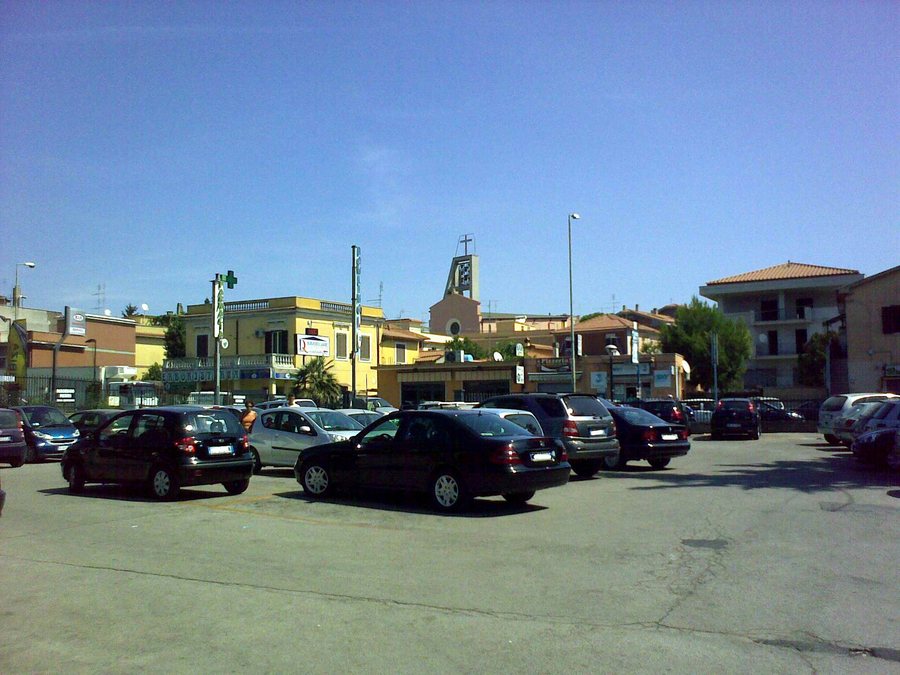
Lacus Turni and the ancient connections
Pavona’s ancient origins are connected with Lacus Turni, known today as the “laghetto”. Lacus Turni is also called Lacus Iuturnae. In 1611, Lacus Turni in the Pavona area was partially drained by Pope Paul V. The name of the body of water belongs to the ancient local history, while the drainage marks a clearly dated intervention in the early modern period. For those interested in culture, this site connects an ancient name with a specific historical date.
Apiolae and medieval traces
In archaic times, the Latin city of Apiolae stood on nearby Monte Savello. At the end of the 7th century BC, Apiolae was destroyed by the King of Rome, Tarquinius Priscus. The early medieval Domusculta Sulpiciana was established on the site where Apiolae had stood. Around the 13th century, it became a fief of the Savelli family. As feudal lords, they built their fortress there, which later became known as “Corte Savella” in Rome. Another important Domusculta in the Pavona area was S. Eufemia; it was later called S. Fumia. This sequence connects an archaic urban history on Monte Savello with the development of Domusculta Sulpiciana and the later rule of the Savelli family.
Villas and palaces
Villa Contarini was originally a monastery and later became the property of the municipality of Albano Laziale. The Palazzo Colonna is also located in the vicinity of Pavona. Villa Contarini illustrates a transition from monastery to municipal ownership. The Palazzo Colonna adds a palace in the area surrounding Pavona to the architectural history. Thus, within Pavona’s architectural history, a former monastery that later became municipal property and a palace in the regional surroundings stand side by side.
ColtiVendo and nutrition education
The “ColtiVendo” farmers’ market, Mercato Contadino dei Castelli Romani, in Pavona frequently organizes nutrition education workshops. Alongside the historical local connections and buildings, ColtiVendo places its own focus on nutrition education. The market expands the topics of Lacus Turni, Apiolae, Villa Contarini, and Palazzo Colonna with a specific connection to food and nutrition.
Railway station and connection to railway art
Pavona railway station has a total of two tracks for passenger services. The artist Krayon depicted animals on a former changing building belonging to the railway work area. The railway station and the former building bring together two different railway connections: the tracks for passenger services and the animal depictions on a former work area. The connection to art remains explicitly tied to the former changing building in the railway area. For those interested in culture, this adds a specific connection to railway art alongside local and architectural history.
Further places for regional orientation: Lariano, Monterotondo, Fregene, Ottavia, Fiano Romano, Montelibretti, Torrimpietra and Prima Porta.
For the general travel overview: Rome.

