
Discover Capena – Holiday Apartment in Capena Between History and Vineyards
Accommodation in Capena
Holiday Apartment in Capena: Medieval Village and Landscape
Capena lies on the Via Tiberina in the Tiber Valley, between vineyards and olive groves. The old medieval village is characterized by Roman paving stones, small squares, arches, wooden passageways and a town gate opened into the walls. When planning a holiday apartment in Capena, this combines landscape, local history and regional traditions.
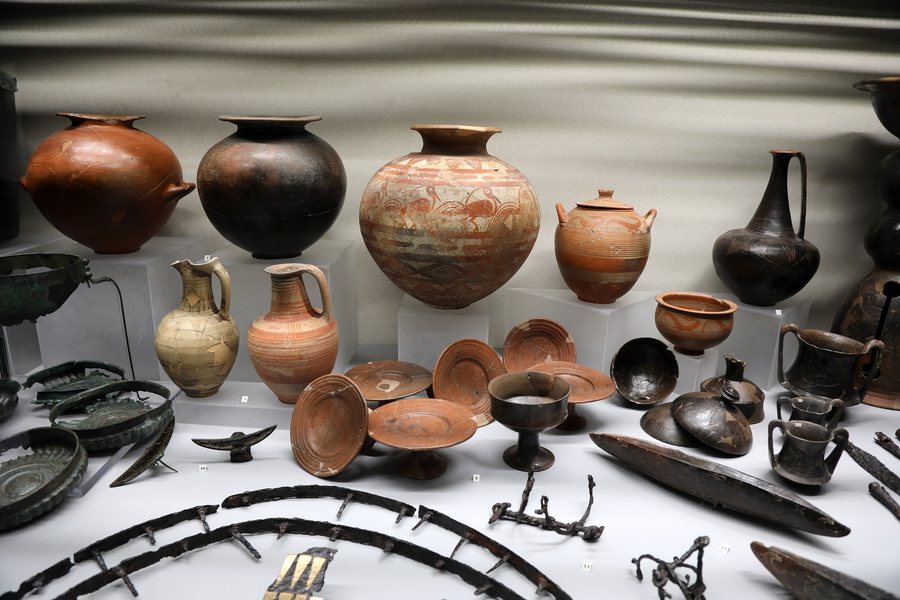 File:Età del ferro, periodo orientalizzante, servizio da banchetto, dalla tomba 16 della necropoli di s. martino a capena, VII secolo ac., vasi 01.jpg
Photo: Francesco Bini via Source, CC BY-SA 4.0
File:Età del ferro, periodo orientalizzante, servizio da banchetto, dalla tomba 16 della necropoli di s. martino a capena, VII secolo ac., vasi 01.jpg
Photo: Francesco Bini via Source, CC BY-SA 4.0
Clocks, Frescoes and Medieval Traces
The Torre dell'Orologio is a 16th-century building; its window frames bear floral and animal motifs. A water clock there is supplemented by a mechanism that was powered by the fountain below; a bell on the roof indicated the hours. The Museo Civico in the Torre dell'Orologio is dedicated to the history of the medieval village from the fall of the Roman Empire to the modern era. In this one place, clockmaking, architecture and the long development of the medieval village come together.
The Chiesa di San Leone Magno preserves one of the very few early medieval iconostases; it remains intact in its original location. The church also contains numerous frescoes, including fragments in the apse area dating from approximately the year 1000. In the old medieval village, the Palazzo De' Monaci includes an early medieval construction phase in which a Roman wall made of hewn stone blocks was used as a defensive system. Its Renaissance portal bears the year 1599.
Lucus Feroniae and the Ancient City
The Archaeological Park of Lucus Feroniae bears witness to the ancient city of Capena, the capital of the Capenates. Its rectangular forum is surrounded by public buildings such as the basilica and the Temple of Salus Frugifera. The amphitheatre could accommodate around 5,000 spectators and was used for public performances. In the Antiquarium, an extensive selection of archaeological finds presents the period from prehistory to the Archaic period.
Festivals Between August and the Grape Harvest
One of the established dates is the Incontro di Santa Maria: it takes place in Capena every year on the night leading into 14 August and is considered one of the oldest surviving Christian celebrations in the region. During the event, the images of the Madonna delle Grazie and S. Salvatore are carried on the shoulders by the Incollatori after a dangerous and spectacular run. The Vendemmiale Capenate is an annual tradition held in Capena to celebrate the grape harvest and takes place on the first Sunday of October each year. It includes a parade of wine-themed floats, during which young participants in traditional costumes offer grapes and wine to those present.
For excursions in nature, the Nazzano Tevere-Farfa nature reserve, located below Capena, offers numerous opportunities. Typical Capena desserts include Pangiallo and Serpentone di Capena. Those who choose a holiday apartment in Capena can therefore organize their travel days around historical sites, ancient complexes, the two festivals, excursions in nature or regional specialties.
More places for planning your trip: Castagnola, Santa Marinella, Santa Maria Di Galeria, Ciampino, Cineto Romano, Fregene, Morlupo and Ottavia.
For the higher-level travel overview: Rome.

