
Zsennye at the confluence of the Rába and Sorok
Accommodation in Zsennye
Zsennye lies at the confluence of the Rába and Sorok. The village’s main attraction is the former Bezerédj Castle: its origins date back to the Middle Ages, and it stands amid a well-maintained park. The castle’s history and garden give the village a distinctive focus of its own. The wider travel destination of Eisenburg also offers a regional setting for nature, culture and excursions.
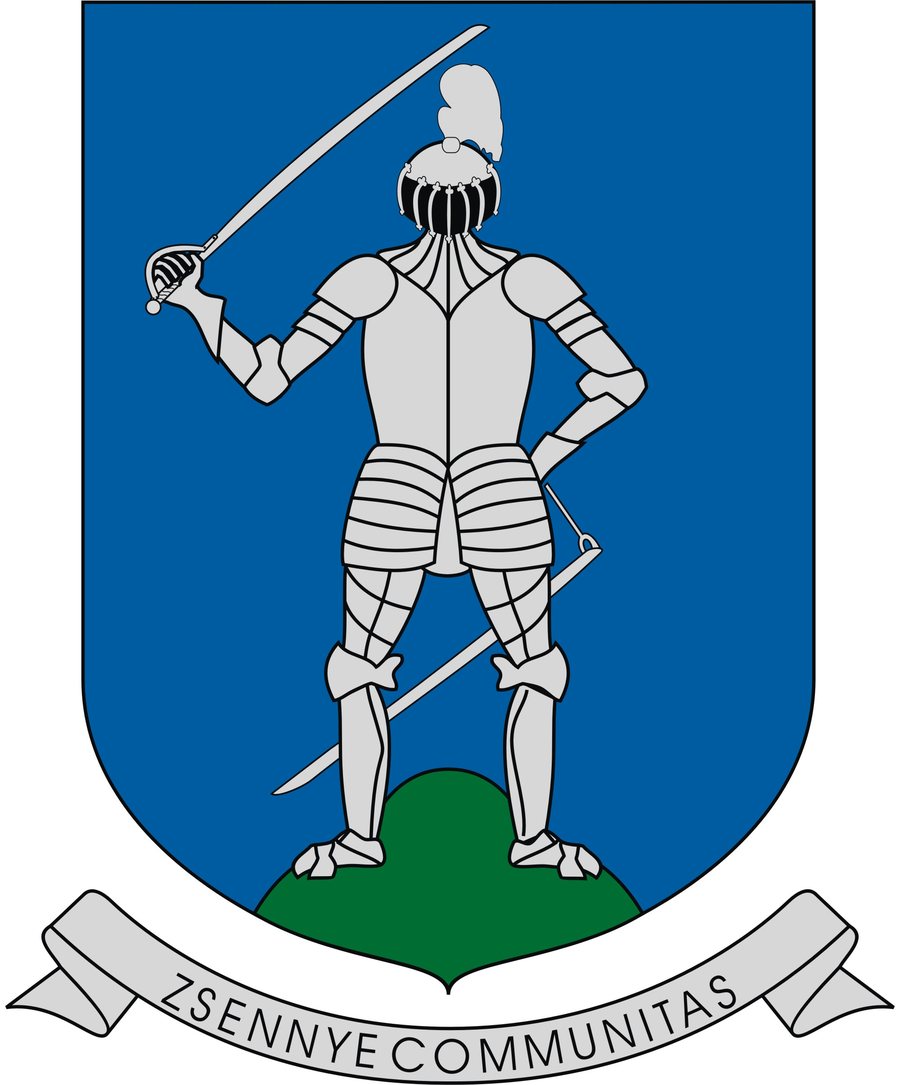 File:HUN Zsennye COA.jpg
Photo: Nemzeti Fejlesztési Minisztérium via Wikimedia Commons, Public domain
Castle and garden in Zsennye
The castle garden is home to a yellow-leaved oak and a fern-leaved walnut tree. The latter pairs unusually described foliage with familiar fruit: its walnuts are no different from ordinary walnuts. These details add a distinctive botanical accent to the well-maintained park for garden enthusiasts.
The artists’ colony at the castle offers group accommodation and meals for up to 40 people. The Horgásztó Fish Farm area is one kilometre from Zsennye and the castle. Together with the confluence setting, these are concrete reference points for finding your way around the village and its immediate surroundings.
Eisenburg as a wider travel horizon
The Írottkő Nature Park is in the northwestern part of Vas County, within the wider travel destination of Eisenburg. It includes the entire 4,303-hectare Kőszeg Landscape Protection Area. This brings a large protected landscape into focus as a regional theme alongside individual attractions.
For cyclists, the Termál Kerékpáros Túraút in Vas County combines cycling with visits to architectural and natural heritage sites and other thermal baths; it passes five thermal bath complexes. The Vulkán Tour has a different focus, leading to Kis-Somlyó, Ság-hegy and Belső-hegy. This puts different themes side by side for regional planning: a cycling route with baths and architectural or natural destinations, and a tour of three named hills.
Cultural attractions and regional products
The religious buildings also provide a concrete historical comparison. St. Michael’s Church in Csempeszkopács was built in the Romanesque style around 1250. The Romanesque church of Ják Abbey was consecrated in 1256. Those interested in medieval architecture and church history will find two clearly dated examples in the wider travel destination of Eisenburg.
The Vasi Skanzen offers another way to explore the history of Vas County: it presents rural ways of life and folk architecture from the past two centuries. Since opening in 1973, it has rescued and rebuilt 43 structures from 27 settlements. The Nádasdy Ferenc Museum displays art and cultural history objects from the county’s castles and manor houses. It also has an exhibition on the history of the Hussars, described as unique in Hungary. The regional selection thus ranges from religious buildings and rural architecture to museum collections and Hussar history.
Regional products can add another distinctive touch: the Natúrbolt in Jurisics Castle in Kőszeg showcases and sells Kőszeg wines, especially red wines, Hegyalja rapeseed and chestnut honey, gingerbread, and jams and syrups from Lukácsháza. The Vas County Tourism Association also provides travellers with a gastronomic map and an online search for recommended restaurants and wineries. As listings can change, it is best to check them when planning your trip.
Choose accommodation to suit your travel focus
Two considerations can help you choose a holiday apartment: Zsennye itself, with its castle and garden, or an itinerary that includes further destinations in the wider travel destination of Eisenburg. First decide which places and themes you actually want to focus on during your trip.
Discover more destinations: Táplánszentkereszt, Balogunyom, Gencsapáti, Szombathely, Dozmat, Torony, Vasszécseny
Go to the overview of the wider travel destination: Szombathelyi.

