
Vasszécseny: Churches, Minerals and Castle Park
Accommodation in Vasszécseny
Vasszécseny brings together several distinct cultural themes: an obelisk with historical significance, churches with different architectural and artistic features, a mineral museum and a castle park. A regional cycling tour also includes a listed building in the village. The attractions range from collections and church art to architecture and outdoor activities—useful points of reference when planning the focus of your stay and choosing a suitable holiday rental.
Churches, a monument and local history
The obelisk commemorating the 800th anniversary of the first written mention of the settlement’s predecessor stands at the intersection of Petőfi Sándor utca and Szécsenyi István utca. Its commemorative purpose points to an early milestone in the village’s history.
The Nagyboldogasszony Church represents a clearly dated phase of construction: between 1835 and 1837, Benedek Ebergényi had it completely rebuilt in the Neoclassical style. It received the name it still bears today during this reconstruction. In the central section of the main arch of the nave is a painted version of Gyula Benczúr’s allegorical drawing about the lands of the Hungarian Crown. It was created by József Dragovics, a painter from Vasszécseny.
The Keresztelő Szent János Church is located in the village district of Lipárt and is the oldest listed building in the municipality. The Keresztényi Közösségi Ház és szoborpark comprises a rectory and a sculpture park and is next to the Nagyboldogasszony Church. The local history thus brings together both a listed building in Lipárt and a complex beside the church.
Minerals and other collection pieces
The Ásványmúzeum invites visitors to explore geological eras as well as minerals, crystals, rocks and fossils. The exhibition covers 120 square metres across four rooms. It displays minerals, rocks and fossils from historic Hungary—whose territory extended beyond the borders of present-day Hungary—as well as from the surrounding countries. The collection also includes the coats of arms of the mining towns of historic Hungary.
Other exhibits include wooden statues of Saint Kinga, Saint Barbara and Saint Anna displayed together, as well as a carved Bányamanó figure from the mining legends of Besztercebánya and Selmecbánya. The painting Teremtérmítosz by the artist László Vincze is also on display at the museum. Natural history objects and themes from mining history are presented side by side here.
The Ásványmúzeum has no regular opening hours. Visits are possible by prior contact and appointment. Be sure to arrange an appointment before visiting.
Castle park, façade details and cycling
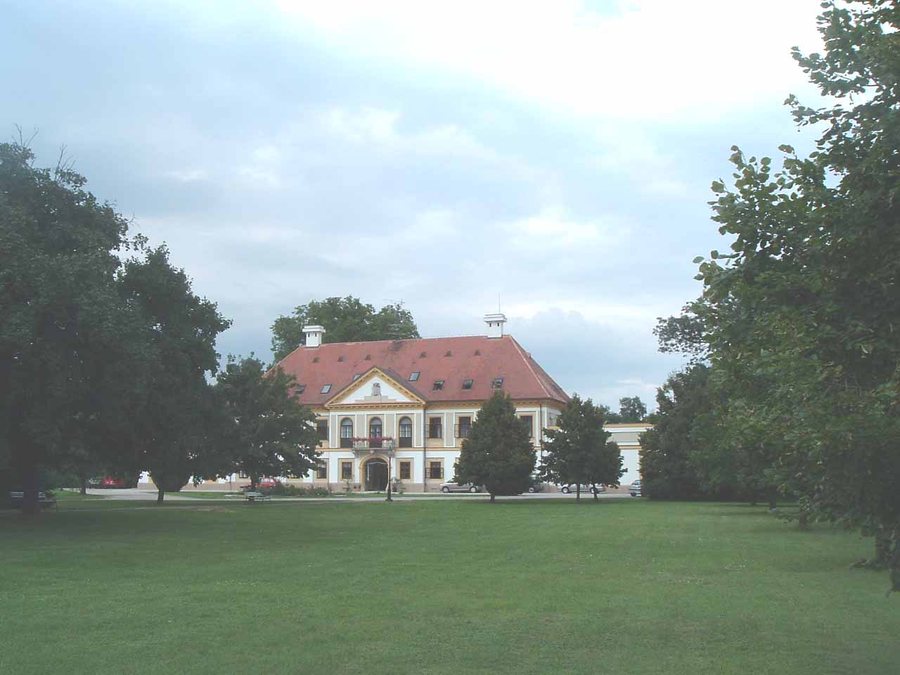
A well-maintained 14-hectare park surrounds the Új-Ebergényi-kastély in Vasszécseny. The coat of arms of the Ebergényi-Viczay family is visible in the tympanum of the façade’s gable. The park and the coat of arms draw attention to two different scales: the extent of the grounds and a specific detail of the castle façade.
The building now known as Magtár was constructed as a Festetics sörház, or brewery. It may have been designed by Kristóf Hofstadter, who worked for Kristóf Festetics in Keszthely as an estate architect. This possible attribution links the building’s history to an architect who also worked in Keszthely for the Festetics family.
A cycling tour south of the centre of Szombathely passes more than twenty castles and valuable buildings in the surrounding region. The structures included on the route include the listed granary in Vasszécseny. This means a local building is also part of a regional route featuring many architectural attractions. Check the tour details before setting out.
Discover more destinations: Balogunyom, Dozmat, Gencsapáti, Táplánszentkereszt, Szombathely, Zsennye, Torony.
For the main travel overview: Szombathelyi.

