
Szentgotthárd: Holiday Apartments and Holiday Homes
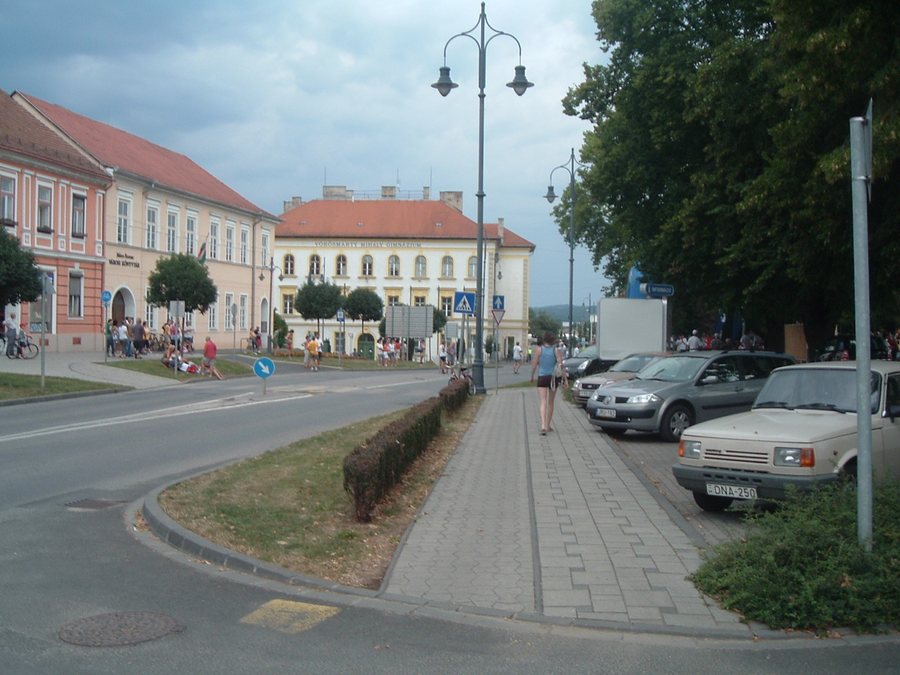
Szentgotthárd lies in the centre of the Vendvidék region, which is also called Rábavidék or the “Slovenian Rába Region”.
When staying in Szentgotthárd, the wish to rent a holiday apartment may be the main consideration.
Culture
The Church of the Assumption of Our Lady was built between 1748 and 1779 according to plans by Franz Anton Pilgram in a restrained Baroque style. A fresco in the church depicts the victory of the Christian army over the Turks at Szentgotthárd and was painted by Stefan Dorfmeister. The tower houses the largest bell in western Hungary; it weighs just under 40 hundredweight.
At the Kolostorépület, visitors can try the interactive game “Kaland a kolostorban”. They explore the building with a tablet and by solving puzzles. The communal rooms of the Kolostorépület can be visited during the office’s opening hours; guided tours of the building are available on request. The Ciszter tanösvény consists of seven installations in the form of opened, unusually inclined codices. They contain multilingual information about the life and customs of the Cistercians who once lived here.
The Pável Ágoston Museum presents the Battle of Szentgotthárd from 1664 on a digital terrain model. In five display cases, it presents works by master potters from the Züric Valley and its surroundings, by Slovenian masters from the Rábavidék region, by potters from Jáker, by stove builders and Habaners, as well as from smaller workshops in Vas County. It also displays works from other pottery workshops in the surrounding area and in Vas County.
The TimeTourist – Időutazó Múzeum is an interactive experience museum in a former Cistercian manor house. With the help of modern technology, visitors can experience five different historical periods there in an immersive atmosphere of images, sounds and scents. Since 1988, the Theatre of Szentgotthárd has provided a venue for celebrations, presentations, concerts, school performances and graduation ceremonies.
The Church of All Saints in Rábakethely was expanded in the Gothic style during its reconstruction; Romanesque details are still visible today. The church contains a stained-glass window depicting Blessed János Brenner. The Chapel of Saint Peter and Paul in Máriaújfalu was built between 1899 and 1908 and contains wooden statues of Saints Peter and Paul.
Visitors can take part in an expert-guided tour of the Brenner Chapel by prior registration. In the Brenner Chapel, whose official name is Jó Pásztor kápolna, Mass is celebrated on the 13th of each month from May to October. The Reformed Church of Szentgotthárd displays influences of Transylvanian folk art in its architectural form, embroidered textiles from Kalotaszeg and its wood-carving motifs.
The Temetőkápolna is a Roman Catholic chapel of Baroque origin that now features a Gothic style. From 1756 onwards, deceased members of the order were buried there; the two artists of the Baroque abbey, Matthias Gusner and the lay brother Kaspar Schrezenmayer, rest in the crypt chambers.
Nature
The artificial Hársas-tó on the edge of the Máriaújfalu district is popular with anglers, bathers and walkers. The 1 km-long Hársas-tó nature trail presents the animal and plant life of the lake and its surroundings, as well as the architectural heritage of the region. Várkert is a locally protected public park with an English landscape garden and a Baroque garden.
Wellness
The Szentgotthárd Spa & Wellness is supplied with thermal water at around 35 °C from a nearby thermal spring. The complex includes indoor and outdoor pools as well as slides.
Other places: Apátistvánfalva, Alsószölnök, Vasszentmihály, Felsőszölnök, Rátót, Kétvölgy.
To the higher-level travel overview: Szentgotthárdi.
Check prices, availability and facilities for your travel dates directly on Booking.com.
View accommodation and offersAdvertisement · Affiliate link to Booking.com
