
Ságvár – Hills, Tunnel and History
Accommodation in Ságvár
Ságvár combines a hilly landscape with distinctive traces of different eras. From the first elevations of the Somogyi-halomvidék, panoramic views stretch as far as Lake Balaton and its northern shore. A Reformed church, a park associated with a Roman fortification, and the hillfort of Böre-vár also tell the story of the village and its surroundings.
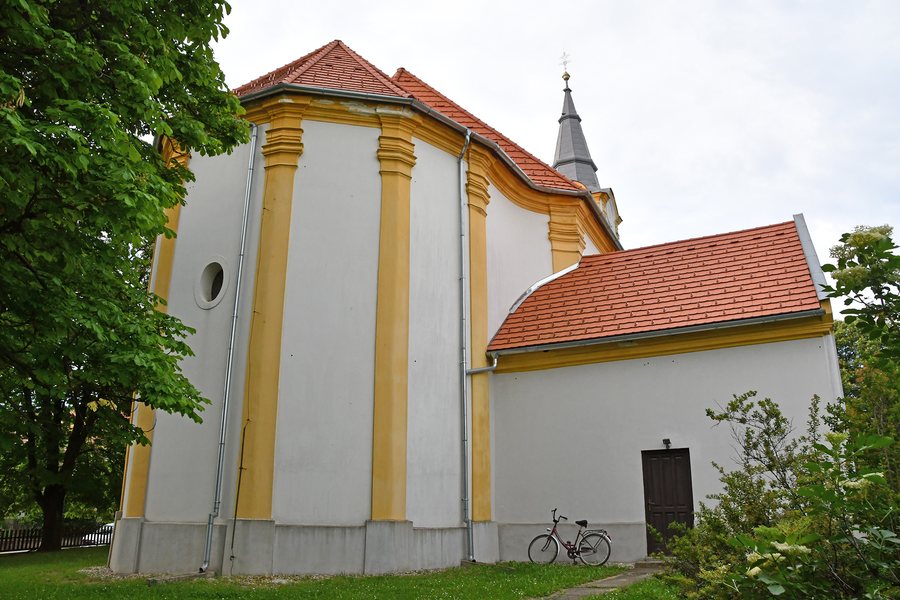 File:Ságvár, római katolikus templom 2024 03.jpg
Photo: Pasztilla aka Attila Terbócs via Wikimedia Commons, CC BY-SA 4.0
File:Ságvár, római katolikus templom 2024 03.jpg
Photo: Pasztilla aka Attila Terbócs via Wikimedia Commons, CC BY-SA 4.0
Hills, vineyards and views
The first hills of the Somogyi-halomvidék curve around Ságvár in a semicircle. Their slopes are home to vineyards, orchards, wine cellars and weekend houses. This mix of cultivated land and hilly terrain gives the area its rural character. Visitors interested in nature and expansive views will find a different focus here than on a stay devoted mainly to historic sites.
The first hills offer panoramic views of Lake Balaton, its northern shore, Ságvár and the surrounding landscape. The shady woods around Ságvár are ideal for excursions and are also used for hunting.
Church, park and Roman past
The present-day Reformed church was built between 1811 and 1814 under the direction of Csicsvai Vasas András. The Reformed congregation financed the construction with money from the share of the harvest. This connection to the local community makes the building’s history particularly vivid: the church was not built solely at the behest of a single patron, but with the congregation’s support.
Right next to the Reformed church, Tricciana Park commemorates the Roman fortification. Archaeological research and excavations bring this historical era to life. Visitors interested in different historical layers can experience the church and the park as two distinct points of connection to the village’s history.
Böre-vár is also part of the area’s history. The hillfort lies within the administrative boundaries of Ságvár, five kilometres southwest of the village, on the southern side of the Jaba Valley. It measures 150 × 57 metres. Its location and size give it a distinct profile among the historic sites associated with Ságvár.
Bujó-lik on Lándor-hegy
An unusual place to visit is Bujó-lik, also known as Lyukas-domb: a tunnel on Lándor-hegy. As of 2013, it was 21.6 metres long, about 2 metres wide and an average of 1.75 metres high. Its length and height have gradually decreased over time. From the village centre, the tunnel is about 1.5 kilometres away along the yellow-marked route. These measurements and directions provide practical guidance when planning an excursion to this special place.
A tree with a pilgrimage story
Képes-fa is an oak, believed to be more than 300 years old, on the road to Jaba puszta. The tree served as a resting place for pilgrims walking to the shrine in Andocs. It got its name from an image of Saint Vendel that pilgrims from Székesfehérvár attached to the tree in 1930. This single spot brings together an old oak, a pilgrimage tradition and a specific event from the 20th century.
The Ságvárért Egyesület developed the Löszölő-Tökölő performance hikes to make use of the natural surroundings. The route leads to special and noteworthy places in Ságvár and its surroundings. Together with the shady woods, it offers another way to appreciate the landscape: you can explore it not only from viewpoints, but also on excursions and hikes.
If you are looking for a holiday rental in Ságvár, the focus of your trip can help you choose where to stay: landscapes and panoramic views, historic sites or excursions such as the walk to Bujó-lik each offer a different kind of discovery. Ságvár offers plenty of specific reasons to explore, without requiring you to limit your stay to just one way of doing so.
Discover more places
You can also discover Balatonszéplak, Töreki, Zamárdi, Som, Balatonendréd, Sosto, Siofok and Nagyberény.
For the broader travel overview: Siófoki.

