
Somogy: Discover Nature and History
Accommodation in Somogy
Somogy offers different ways to explore nature and history: Lake Baláta contains a glacial remnant of a peat bog, the Dráva shapes the wildlife along its banks, and historic sites tell the story of Somogy’s past. When planning a holiday, you can choose between tranquil landscapes, nature experiences and cultural discoveries.
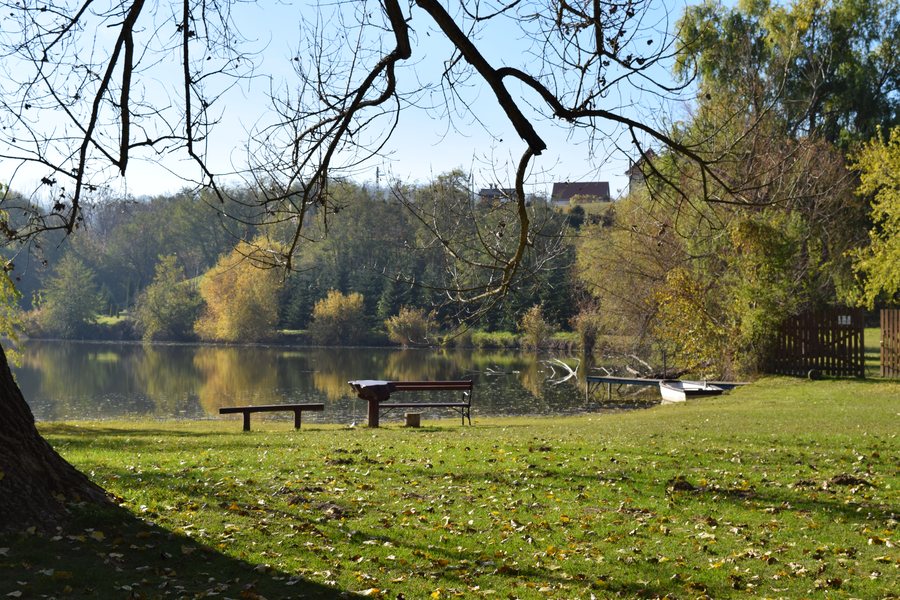 A Füzes tavat körülölelő park, Látrány, Somogy megye
Photo: Botos Andrea via Wikimedia Commons, CC BY-SA 4.0
Wetlands, forests and protected landscapes
Lake Baláta is Somogy’s oldest nature reserve and has been protected since 1942. Its bog basin preserves a glacial remnant of a peat bog and provides a habitat for several plant and animal species that are rare throughout Hungary. From a birdwatching tower in the protected natural area, you can look out over the basin. This nature experience focuses on the distinctive bog landscape and views of the basin.
The Mesztegnyő Forest Railway also passes through an area shaped by forests and water: its 8.8-kilometre main line runs through forests and alongside lakes in the Boronka-melléki Landscape Protection Area. More than 50 protected plant species grow around the railway. If you are looking for another way to experience nature, the Barcsi Borókás offers a nature trail through typical habitats of Inner Somogy: sand steppe, sessile oak-hornbeam forest and bog woodland. Grazing by Racka sheep is another popular attraction for visitors.
The Zselic Landscape Protection Area is one of Somogy’s nationally significant protected natural areas. In 2009, it became the first area in Europe to receive the international title of a star park with a dark night sky. The Zselic Star Park offers guided programmes in its observatory building and the surrounding forest. Important for planning: the observatory is accessible only as part of pre-announced guided tours.
Water and outdoor activities
The Dráva and its oxbow lakes are also notable for their fish: more than 50 fish species have been recorded there, representing two-thirds of Hungary’s fish fauna. To explore the river, excursions by boat and/or water tours on the Dráva are recommended from Barcs. An approximately 50-kilometre excursion route runs from Csurgó via Csurgónagymarton, Ágneslak, Iharosberény, Kanizsaberek, Kaszó, Lake Baláta and Szenta, before returning to Csurgó. The approximate length and named stops provide practical guidance for planning the trip without requiring any particular mode of transport.
At Lake Ropolyi, a thatched house with a veranda-fronted façade inspired by Somogy folk architecture, a swimming lake and a nature ranger’s house have been built. The house provides information about the flora and fauna of Zselic, routes for cycling, horse riding and hiking, as well as the region’s ecotourism offerings and programmes. These themes may help you choose an active or nature-focused holiday.
Cultural history and regional specialities
In Somogyvár, King Ladislaus founded the Benedictine monastery of Szent Egyed in 1091. Somogyvár was declared a national memorial site in 2011; the Szent László Days event series has been held there annually since 1989. The medieval castle ruins of Kereki are also known as Kupavár, Katonavár and Fehérkővár. In Szántódpuszta, an architectural ensemble awarded the Europa Nostra Prize, with numerous buildings, recalls Somogy’s agricultural past. The Szennai Open-Air Ethnographic Collection also received a Europa Nostra Prize in 1982.
There is also practical travel information for visiting the Szenna Open-Air Museum: several bus stops are about 80 metres from the main entrance, with services to and from Kaposvár. If you want to balance nature and culture differently, you can consider this visit alongside the forest and bog landscapes. Somogy’s wine-growing and wine culture are part of the county’s heritage. Mesztegnyő also used to hold a recurring culinary event, the Rétes Festival.
Choose the right area for your trip
When choosing a holiday apartment or house, the most suitable area depends on which experiences you want to prioritise: wetlands and birdwatching, forest landscapes, water or historic sites. For more guidance within the region, you can explore the subregions Tab, Balatonföldvár, Csurgó, Kadarkút, Kaposvár, Fonyód, Tab, Marcali, Lengyeltóti, Siófok, Nagyatád and Barcs in more detail.
For an overview of the wider trip: Hungary.

