
Balatonszentgyörgy
Accommodation in Balatonszentgyörgy
Balatonszentgyörgy offers a range of reasons to visit: Csillagvár explores the history of the border fortress soldiers, important passenger rail lines meet at the railway station, and Lake Balaton, the mouth of the Zala River and a cycle path towards Keszthely are also part of the local landscape. This means you can make cultural, nature-related or active pursuits the focus of your stay, without any one of these aspects replacing the others.
Csillagvár and the history of the town
The exhibitions at Csillagvár offer insights into the 16th-century Ottoman occupation; a panopticon depicts the lives of the border fortress soldiers. This brings the focus both to a specific historical period and to the people whose lives were connected with the border fortress. Those interested in history can explore two distinct themes: the period of Ottoman occupation and the lives of the soldiers. For families, this historical focus can be an opportunity to explore the region’s past together.
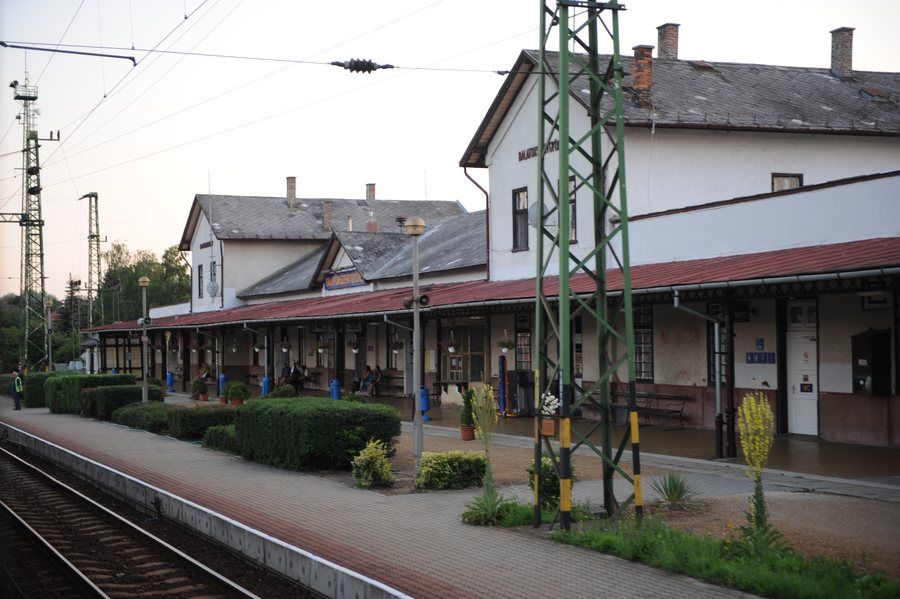
The railway station building in Balatonszentgyörgy is another trace of the past. It was built in 1895 and fully renovated in accordance with heritage conservation requirements. Its construction date and heritage-sensitive renovation make the building a point of interest in its own right for anyone who wants to take a place’s history and architecture into account when travelling. The information about the station refers to this building; it does not describe the construction history of the railway lines.
Railway lines, Lake Balaton and the mouth of the Zala River
Two important passenger railway lines meet at the station: Budapest–Székesfehérvár–Gyékényes and Balatonszentgyörgy–Tapolca–Ukk. Their routes give the station a distinctive role in finding your bearings on the map. If you are planning to travel by train, you can take these two lines into account when locating Balatonszentgyörgy geographically. However, the route information alone does not provide details about specific journey times or connections.
Within Balatonszentgyörgy, Lake Balaton covers 359 hectares. The mouth of the Zala River covers 4,797 m² within the town. In addition, part of the outlying area of Balatonszentgyörgy lies within the territory of Balaton Uplands National Park. This adds a nature-related theme to your holiday plans, alongside the town’s history and rail transport.
Cycling towards Keszthely
A cycle path towards Keszthely has been built in Balatonszentgyörgy. This adds cycling as a distinct consideration when planning your trip. The stated direction indicates the cycle path’s destination, but does not specify its length or journey time. If you would like to include cycling in your stay, you can consider this route as one of the local features described here, alongside the cultural attractions at Csillagvár and the area’s waterside and natural features.
Choose the right focus for your holiday
When looking for a holiday apartment or holiday home in Balatonszentgyörgy, you can start by considering which of these themes matter most for your trip.
Other places at the same higher administrative level: Marcali, Varászló, Kéthely, Táska, Kelevíz, Balatonkeresztur, Vörs and Tikos.
Back to the higher-level travel overview: Marcali.

