
Csomád: Landscape, Petőfi legend and church history
Accommodation in Csomád
Csomád combines a distinctive landscape setting with a local Petőfi legend, a dated reference to the Evangelical church and a walking route with stated measurements. These different themes offer several concrete starting points for planning your holiday: depending on your travel interests, landscape, cultural history or a hike can take centre stage.
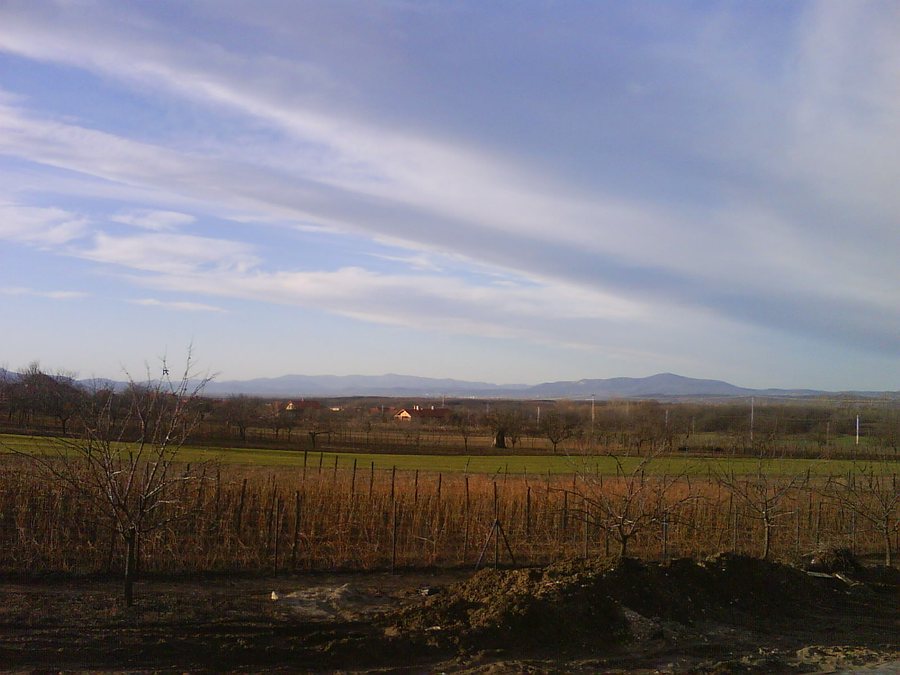 File:Csomadlatkep.jpg
Photo: Charpentier at Hungarian Wikipedia via Wikimedia Commons, Public domain
Landscape between plain and hills
Csomád lies on the eastern side of the Pesti Plain, at the northwestern edge of the Gödöllő Hills and at the foot of Oldal-hegy, Magas-hegy and Hátulsó-hegy. Its elevation is 200 to 210 metres above sea level. This geographical description names both larger landscape areas and three specific hills; the elevation adds a measurable point of reference. This brings the landscape into focus when choosing your destination: you can weigh up whether you are most drawn to the plain, the hills or the connection to the named peaks. This landscape setting can be combined with the area’s cultural and active pursuits to create a travel profile of your own.
A Petőfi legend at the memorial stone
According to a local legend, the young Sándor Petőfi wrote one of his poems beneath the olive tree beside the Petőfi memorial stone in Csomád. The combination of tree, memorial stone and poem makes the story vivid and firmly rooted in the place. For travellers interested in literary tales, it offers a different way to connect with the area than the geographical description. When planning a holiday, this legend can become a personal reason for choosing the destination, alongside its landscape.
A dated reference to the church
The Csomádi Evangelical Church complements the literary story with a clearly dated point of cultural history: in 1958, the National Inspectorate of Monuments (Országos Műemlék Felügyelőség) declared it a building of historic character. This brings two distinct perspectives together: the Petőfi story, told as a local legend, and the church’s historical designation. For travellers who take cultural history into account when choosing a destination, this distinction is particularly interesting—the story on the one hand and the dated institutional reference on the other.
The walking route to Mogyoród
There is also a specific starting point for planning an active trip: the 9 km walking route to Mogyoród has a stated elevation gain of 150 m. The estimated duration is 3.5 hours. The distance, elevation gain and time provide answers to different planning questions and can be considered together when planning your day. Alongside the cultural perspective, there is therefore a concrete hiking option whose scale can be assessed using these three figures. If you would like to include a hike in your holiday plans, the duration gives you a time frame, while the distance and elevation gain provide additional details.
Cultural history or a hike?
There are different priorities to choose from when planning your trip: would you rather focus on the Petőfi legend and the history of the church, or include the walking route to Mogyoród in your itinerary? This comparison helps distinguish cultural interests from a specific hiking plan. You can begin your search for a holiday rental in Csomád with the travel profile that matters most to you.
The wider setting: Pest
The broader destination of Pest adds a regional perspective to the focus on the town. The part of the highlighted Danube Bend tourist region that belongs to Pest County includes the entire Danube Bend, the Visegrád Hills and the Börzsöny Mountains. These three landscape references define the scale of the regional setting. The two levels answer different questions: Csomád’s local features help you decide on a town, while Pest describes a broader landscape setting. When planning your trip, you can therefore consider whether to focus first on the specific town or the wider destination.
Discover more destinations: Vácrátót, Galgamácsa, Erdőkertes, Őrbottyán
Return to the wider travel overview: Veresegyházi.

