
Ecser: Traditions and Local History
Accommodation in Ecser
Ecser brings together several traces of its local history and an annual Good Friday custom. The Szerelem Stream runs through the village. According to folk belief, symbolically washing in the stream on Good Friday is meant to preserve health, youth and beauty for the coming year. Every year, residents go to the stream to observe this custom. Good Friday gives the tradition its fixed date; the stream anchors it in the heart of the village.
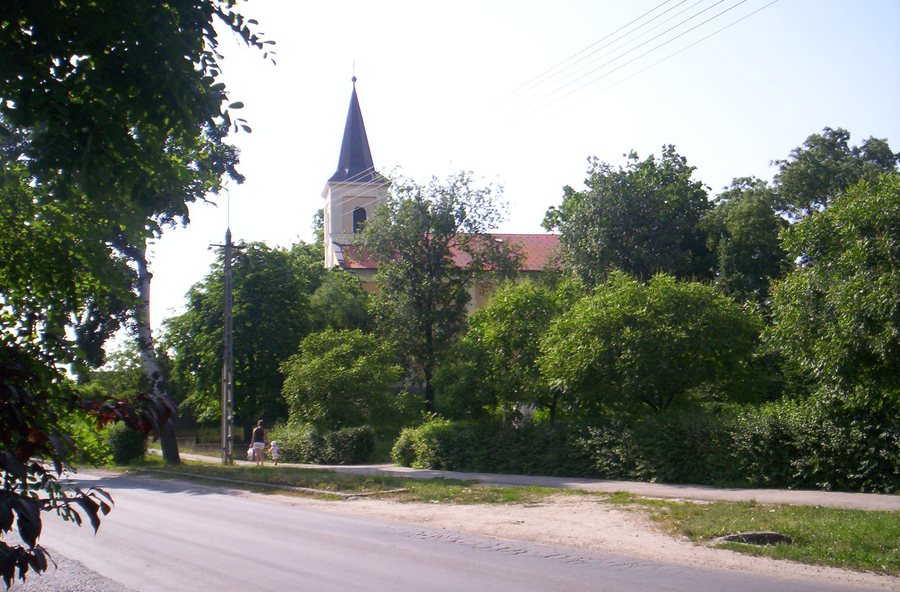
Church, Memorial and Stone Crosses
The Roman Catholic church is dedicated to Saint Anthony of Padua and was built in the Baroque style. Construction began in 1735 on the site of an older chapel. The church’s history thus points to two successive building phases: a chapel already stood on this site before construction of the church began.
Next to the church, in Hősök Park in the centre of Ecser, stands a memorial to residents who lost their lives in the Second World War. The church and memorial represent different aspects of local history: one concerns religious and architectural history, the other commemorates residents who lost their lives in the war. Those interested in local history will find two specific topics here, clearly distinct from one another.
The two stone crosses can also be distinguished by their locations and dates. The cross at the corner of Kálvária utca and Szent Imra utca was erected in 1932 by Szlifka András and his wife, Csaja Julianna. The cross at the lower end of Zrínyi utca dates from 1908. It is therefore the older of the two: the dates are 24 years apart. The details of each cross’s location, date and named donors give it its own historical context.
Cultural Life and Local Traditions
The Ecseri Tájház serves Slovak cultural life and displays a collection of objects from Ecser’s past. Community events were planned in connection with the house in house rules dated 2012. Those same rules provided for visits by prior arrangement with representatives of the Ecseri Szlovák Önkormányzat or board members of the Ecseri Zöldkoszorú Hagyományőrző Kör. Before visiting, check whether the rules and contact options mentioned at the time are still in effect.
Ecser is also shaped by cultural expressions that differ in both their period and form. As early as the mid-19th century, the village stood out from the surrounding villages for its rich, elaborate folk costume. The national dance piece “Ecseri lakodalmas” was choreographed by Miklós Rábai and inspired by wedding customs in Ecser. The costume represents a historical clothing tradition; the dance piece draws on local wedding customs in choreographed form. Both examples highlight different aspects of cultural life.
Plan Your Stay
If you are looking for a holiday rental in Ecser, the purpose of your trip can help determine what you want to focus on. The church, memorial and crosses offer distinct topics in architectural and commemorative history. If you are interested in cultural traditions, the Tájház, historical costume, dance piece and Good Friday custom offer further perspectives on the village. Consider which of these topics appeals to you most, and base your accommodation search on your own travel plans.
Discover more destinations: Gomba, Vecsés, Nyáregyháza, Monor, Gyömrő, Pilis, Maglód, Vasad.
Back to the overarching travel overview: Monori.

