
Százhalombatta: History Across Several Eras
Accommodation in Százhalombatta
Százhalombatta offers several historical perspectives. The Matrica Museum’s permanent exhibition takes visitors from the Ice Age to the 19th century; the town also has two churches dating from different historical periods and a protected burial mound field. The Catholic Szent István Church was consecrated in 1996, while the Serbian Orthodox Church was built around 1750. If you are planning a cultural trip, you can explore local history, sacred architecture and archaeological heritage as distinct subjects, rather than reducing Százhalombatta to a single century.
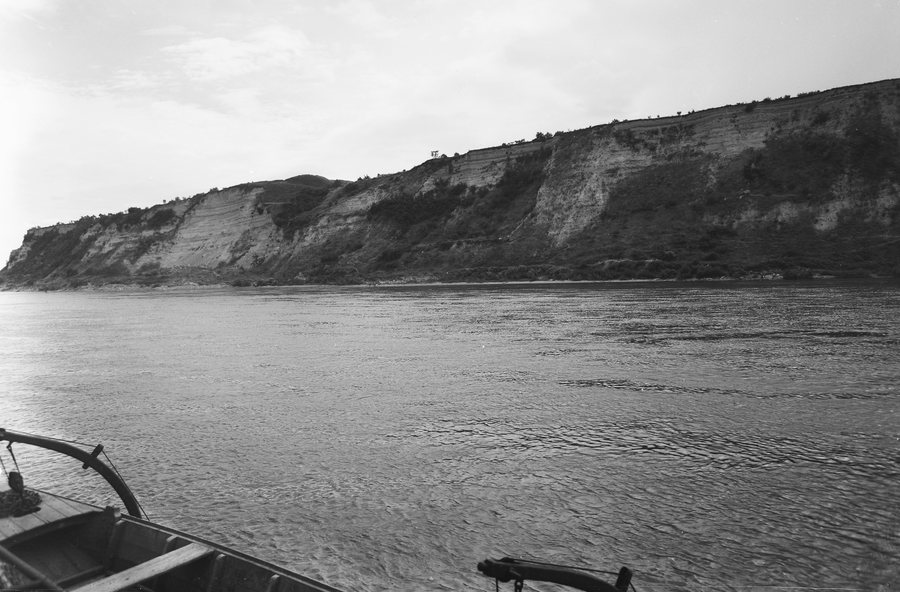 Százhalombatta 1955, löszfal a Dunáról nézve. Fortepan 91106
Photo: Photo: FOTO:Fortepan — ID 91106 : Adományozó/Donor: UVATERV. archive copy at the Wayback Machine
Local History at the Matrica Museum
The Matrica Museum’s permanent exhibition traces local history from the Ice Age to the 19th century. This broad sweep gives you an overarching historical perspective instead of limiting your view to just one era. The museum garden also displays stone reliefs from the Roman military camp and the cemetery of Matrica. The broad chronology and these specific finds complement each other: you can focus either on the development of local history or on individual traces of the Roman past.
Two Churches, Different Historical Dates
The Serbian Orthodox Church stands on the main street of the old town and was built around 1750. It is Baroque. Its location, construction date and style provide specific points of reference for understanding the building. The Catholic Szent István Church offers a different point of reference: it was designed by Imre Makovecz and consecrated in 1996. The difference between the construction date and the year of consecration gives the comparison a clear chronological perspective; the denominations also identify two distinct religious affiliations. For travellers interested in architecture or religious history, these are two clearly distinct perspectives on church architecture.
A Protected Archaeological Site
The burial mound field near Százhalombatta, covering just under 70 hectares, is protected for both archaeological and nature conservation purposes. It is associated with Early Iron Age burial mounds, taking you to a much earlier period than the churches. The area figure also gives the archaeological site a sense of scale. Unlike the reliefs on display in the museum garden, the burial mound field itself is an archaeological site; the stone reliefs come from the Roman military camp and the cemetery of Matrica. Its dual protection combines its archaeological significance with nature conservation.
Which Historical Focus Suits Your Trip?
For planning your trip, the scale offers a helpful distinction: would you like to explore a broad historical overview or focus on individual, clearly dated examples? The permanent exhibition offers the first perspective; the churches and Roman stone reliefs are specific examples, while the burial mound field also combines archaeological heritage with nature conservation. If you are travelling with children, you can consider together whether a broad sweep of history, the story of a church building or archaeological finds would spark more curiosity. You could also start a conversation by asking what distinguishes an object on display from a protected site. This will help clarify the cultural focus of your stay; when looking for a holiday apartment in Százhalombatta, you can also put your interests first.
Discover more destinations: Diósd, Érd, Tárnok
Return to the main travel overview: Érd.
