
Abony: Churches, Art and Memorial Garden
Accommodation in Abony
Abony combines two distinct church histories with a public place of remembrance. The Reformed Church has a construction chronology that extends to the tower’s present-day form; the Catholic church’s history also includes the initiative to build it and the donations that funded it. With its carved wooden sculptures and memorial ceremonies, the Millenniumi Emlékkert adds a different cultural dimension. If you are looking for holiday accommodation in Abony, you can first consider whether church architecture, art and memorial culture suit your planned stay.
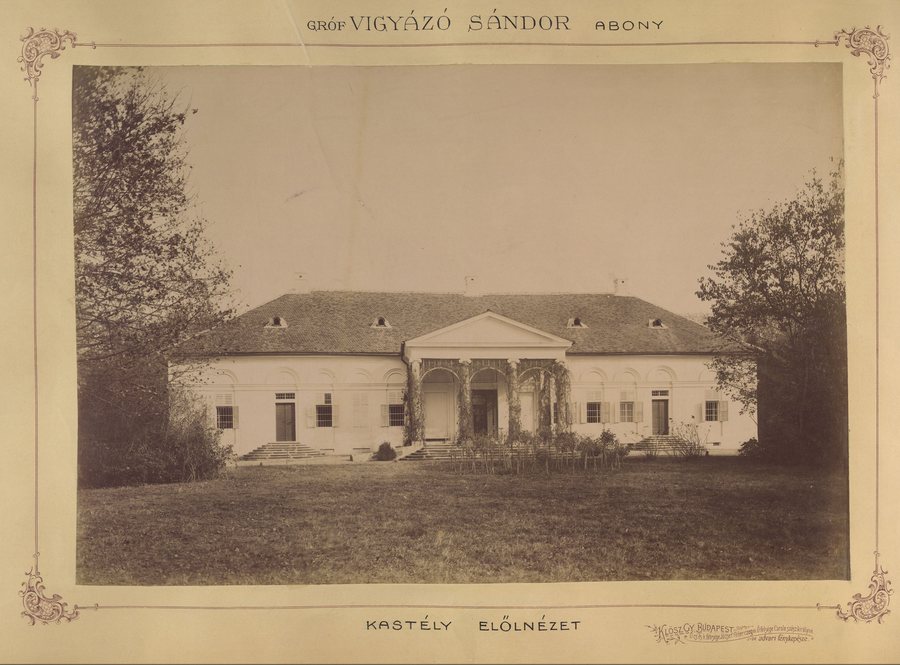 Vigyázó Antal manor house in Abony, photographed between 1895 and 1899
Photo: Photo: FOTO:Fortepan — ID 83440; donor: Budapest Főváros Levéltára
Two Churches with Distinct Building Histories
The Abonyi Református Templom is a stone church built in 1786. Its 30-metre-high tower, with a cornice, acquired its present-day form in 1822. This allows the date the church was built and the tower’s later development to be considered separately: 1786 refers to the church’s construction, while 1822 marks the tower’s present-day form. A cornice is a horizontal projection.
The church also contains 48 painted pictures; their original arrangement is unknown. This gives the building another point of interest alongside its datable architecture. The number of pictures is recorded, but their original arrangement remains unclear.
The Szent István Római Katolikus Templom was built between 1773 and 1785 at the initiative of the parish priest Sztranovszki János. The donations made by the Balogh family of Galánta and the community of landowners are also part of the building’s history. Located in the centre of Abony, the church has a monumental tower that rises above the town and stands out slightly from the plane of the main façade. It therefore offers an opportunity to consider not only its construction period but also the impact of its tower on the townscape.
The two churches raise different questions about local history: the Catholic church draws attention to its construction period, initiative and donations, while the Reformed Church stands out for the tower’s height, the date of its present-day form and its painted pictures. This lets you explore building history and architectural details in different ways.
Sculptures and Memorial Ceremonies at the Millenniumi Emlékkert
The public Millenniumi Emlékkert is home to carved wooden sculptures by Blaskó Sándor. The town reports that the sculptures were restored in 2026. The garden serves as a venue for memorial ceremonies on national holidays and at events. Here, sculptural art and public remembrance come together: the sculptures shape the place, while memorial ceremonies determine its use on the specified occasions.
When looking for holiday accommodation in Abony, this distinction is a useful starting point: first consider whether building history and church art or the memorial garden and its sculptures will be the cultural focus of your stay. If you plan to visit specifically for a memorial ceremony, check the date of the event in advance.
Discover more destinations: Albertirsa, Dánszentmiklós, Ceglédbercel, Cegléd, Mikebuda, Nyársapát, Csemő, Nagykőrös
For the main travel overview: Ceglédi.
