
Mátraverebély: Szentkút, Springs and Hiking Trails
Accommodation in Mátraverebély
Mátraverebély combines the pilgrimage site of Szentkút with trails in the valley of the Szentkúti-patak and a section of the National Blue Trail. Springs, a signposted gorge and hermits’ caves are among the local highlights. Depending on your plans, you can focus on a short walk in the valley, the longer hiking stage or the religious history of Szentkút.
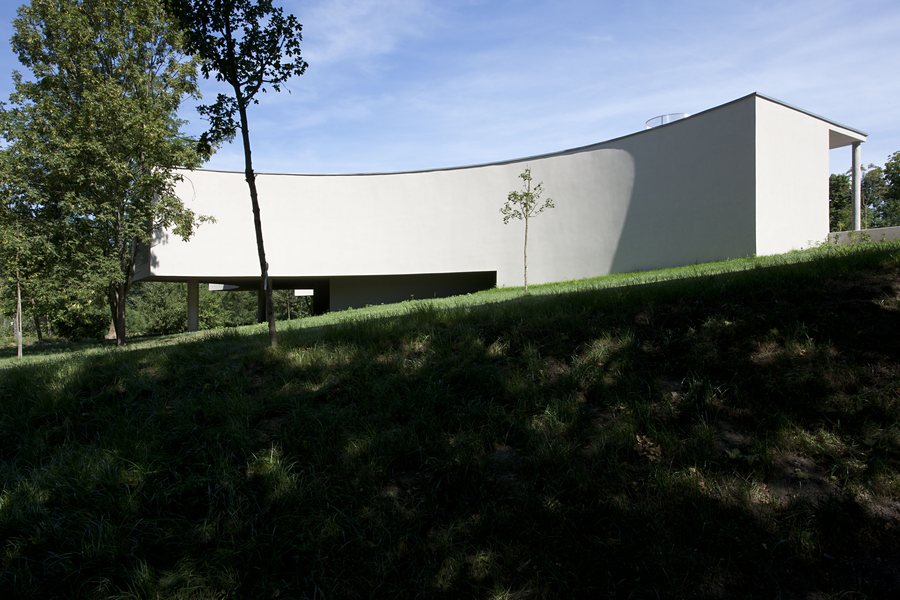 File:Mátraverebély-Szentkút, Zarándokközpont, S-010.jpg
Photo: Szijjartocs via Wikimedia Commons, CC BY-SA 4.0
Szentkút Pilgrimage Site
Mátraverebély-Szentkút is known for its spring water, which is associated with miracles, and for the statue of the Virgin Mary. The site also includes hermits’ caves and a group of springs in the valley. Here, religious tradition and the landscape can be explored through several distinct features: the water, the caves and the statue of Mary.
The hiking trails of Mátraverebély-Szentkút offer suitable options for visitors of all ages. Geological walks for groups are organised by prior arrangement. A local app with a guide helps tourists find their way and provides another way to explore the pilgrimage site.
Springs and Gorge in the Valley
A short walk in the valley of the Szentkúti-patak leads to a signposted gorge. According to legend, the Szent László Fissure is where the king made his great leap. Further along the valley are the Köszvényes Spring and a group of three springs. There is a bench and a rain shelter at the Köszvényes Spring. The route thus links a legendary gorge with other stops in the valley; the resting place is specifically at the Köszvényes Spring.
From the Valley Trail to a Hiking Stage
A 2023 regional tourism strategy describes Section 20 of the National Blue Trail. It starts in Mátraverebély and passes through Ágasvár, Mátraszentistván, Galya-tető, Vércverés and the Vörösmarty Tourist House before reaching Mátraháza. The stage is approximately 25.4 kilometres long. This means a short walk to the gorge and springs and a much longer hike with several stops are available as distinct options.
To reach the pilgrimage site, turn off Main Road 21 at Mátraverebély in the direction of Szentkút. From there, Szentkút is about five kilometres away and is signposted all the way. These directions are for visiting the pilgrimage site and should be distinguished from the hiking stage described above.
More to Explore in the Broader Neuburg Destination
The broader Neuburg destination offers additional cultural and natural attractions. The old village of Hollókő is a Palóc settlement in Nógrád County in northern Hungary. It is considered a deliberately preserved, living example of rural life before the 20th-century agrarian revolution. While Szentkút is shaped by pilgrimage, springs and legend, Hollókő centres on a traditional way of rural life.
The Boszorkány-kő geological educational trail illustrates basalt volcanism from 2.4 to 5.2 million years ago. It is in the Karancs-Medves Landscape Protection Area, established in 1989 and currently covering 6,928.6 hectares. Along the trail, the rocks of a small fissure volcano can be seen, including sediment inclusions torn from the depths, curved lava slabs and basalt columns formed by weathering.
The Pásztó Museum offers another cultural focus. Its permanent and temporary exhibitions are housed in a Baroque Cistercian monastery building rebuilt in 1717–1718. The museum also presents a medieval glassworks and smithy as an open-air exhibition; this industrial heritage monument is considered unique in Hungary.
When choosing a holiday rental in Mátraverebély, you can first consider whether your stay will focus mainly on Szentkút, a short walk in the valley or the longer hiking stage. The other places in the broader Neuburg destination offer additional cultural and geological attractions to consider when planning your trip.
Discover more destinations: Bátonyterenye, Szuha, Mátranovák.
Back to the broader travel overview: Bátonyterenyei.

