
Seregélyes: Discover cultural heritage and landscape
Accommodation in Seregélyes
Seregélyes offers two appealing perspectives: historic buildings and a landscape with distinctive geological formations. The history of the castle in the village park begins with the Zichy family’s commission to build it in 1821. On Fő utca, the Tájház reflects the simplicity of traditional folk architecture. There are also two churches with clearly dated construction phases, as well as the castle park, where rare living things can be observed. When planning your trip, you can weigh cultural history and landscape as different but equally valuable interests.
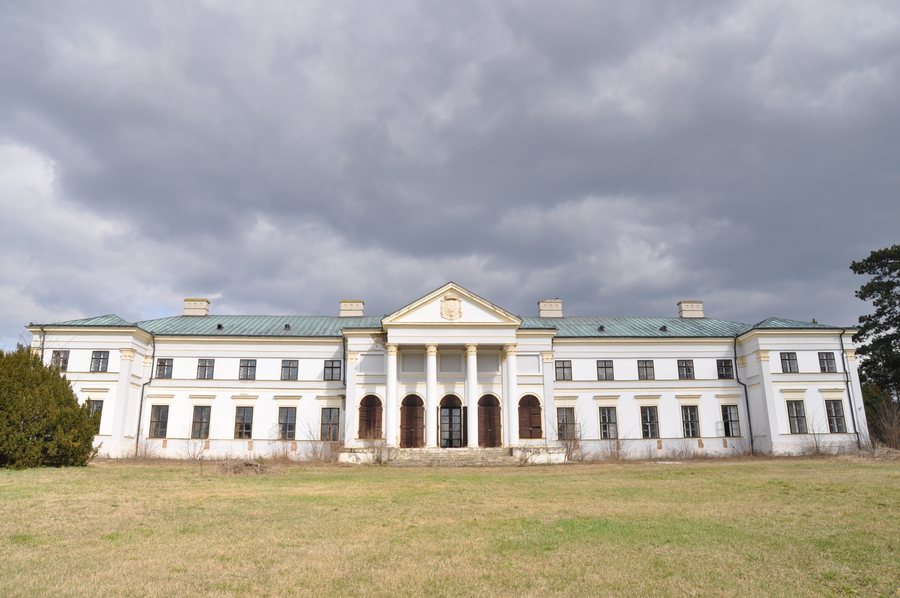 File:Seregélyes, Zichy–Hadik-kastély, 10.jpg
Photo: Random photos 1989 via Wikimedia Commons, CC BY-SA 4.0
Neoclassical features and folk architecture
In 1821, the Zichy family had a castle with neoclassical features built in the park in the village of Seregélyes. The castle is known as Zichy–Hadik Castle. By contrast, the Tájház on Fő utca centres on the simplicity of traditional folk architecture. This contrast gives the village’s history two distinct architectural accents: a castle with neoclassical features on the one hand, and a house reflecting traditional construction methods on the other.
A description dated 2013 reports that the Tájház housed a folk art exhibition made up exclusively of original pieces. The building and exhibition thus offer two different perspectives on the house: its architectural form and the folk art pieces. In May 2024, a local contact recommended the Tájház, as well as the Catholic and Reformed churches, to visitors. Her recommendation brings together three specific cultural sites in Seregélyes.
Churches and a musical life story
The Reformed church was built in 1735 and remodelled in 1792. The Catholic church in Seregélyes was built between 1801 and 1803. The Reformed church therefore has two dates corresponding to different construction phases, while a single continuous construction period is recorded for the Catholic church. If you are interested in architectural history, you can use this sequence as a chronological comparison rather than viewing both churches as identical historical stops.
Another cultural-historical connection leads to Zichy Géza. The pianist, who was friends with Liszt Ferenc, rests in the grófi temető in Seregélyes. After losing his right arm, he played the piano with his left hand. The town’s historical significance thus extends beyond its buildings to include a specific musical life story.
Landscape and nature observation
The landscape of Seregélyes includes a loess ridge that extends as far as Paks, the tectonically formed Háromág Valley, and the area of a former branch of Lake Velence. The castle park offers opportunities to observe rare living things.
The wider destination of Székesfehérvár also offers a connection with nature: the reed beds at Lake Velence are home to thousands of waterbirds.
Choose a suitable travel base based on your interests
When looking for a holiday rental in Seregélyes, it is worth deciding in advance whether you would rather plan your trip around cultural heritage or landscape and nature observation. The castle, Tájház and churches represent different points of cultural-historical interest; the loess ridge, Háromág Valley and castle park offer specific starting points for exploring the landscape. If you are travelling with family, these different themes can also help you decide on shared holiday priorities.
For the wider travel overview: Abai.

