
Hódmezővásárhely: City History, Routes and Thermal Waters
Accommodation in Hódmezővásárhely
Hódmezővásárhely can be explored through several distinct themes: exhibitions on the city’s history, a sculpture route and abundant thermal water resources. When choosing a holiday apartment, it helps to consider the kind of mix you want for each day. Should your stay focus mainly on exploring the town, or also include other cultural and landscape themes in the broader destination of Csongrád?
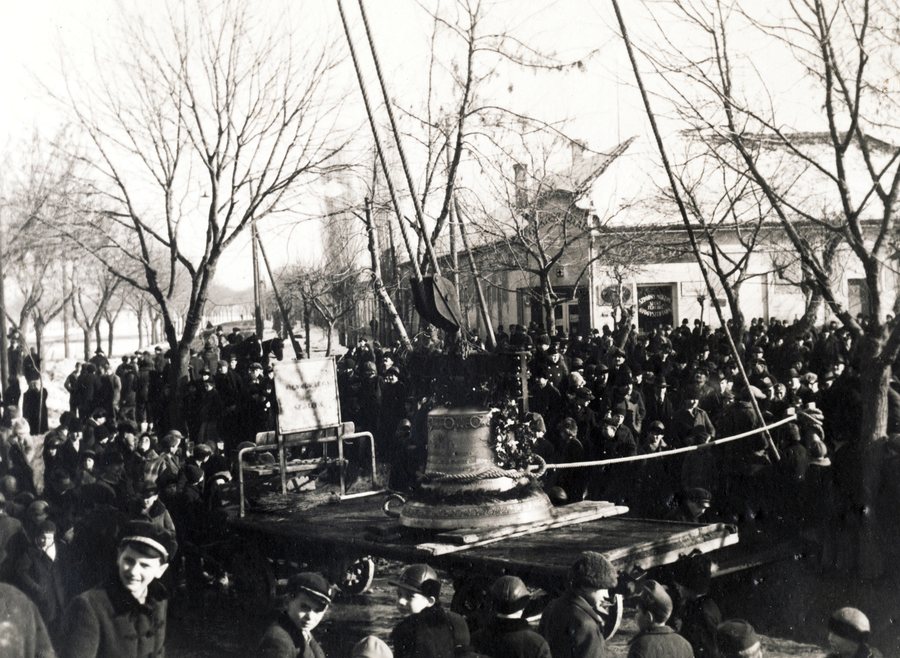 Hódmezővásárhely 1950, a Szent István-templom harangjának beemelése
Photo: Photo: FOTO:Fortepan — ID 100133 : Adományozó/Donor: Jezsuita Levéltár. archive copy at the Wayback Machine
City history across different periods
The permanent exhibition at Emlékpont presents historical developments that shaped Hódmezővásárhely and its residents during the fifty years before the museum opened on 7 July 2006. The Tornyai János Museum offers a different view of the past: its permanent exhibition, “Évszázadok a Hód-tó partján – Hódtól Újvárosig”, features archaeological finds and everyday objects dating from the 13th century to the early 19th century. Two distinct historical periods are thus in focus: the decades before the museum opened, and finds and everyday objects from several centuries.
Routes and thermal waters in Hódmezővásárhely
The “Szobor-kaland Vásárhelyen” route is six kilometres long. The stated walking time is three hours, while the cycling time is one hour. The difference between the two time estimates is useful for planning your day: it shows how much the expected pace depends on whether you tackle the route on foot or by bike. Check local conditions before setting out.
Another route option is “Hódmezővásárhely – Mártély – Hódmezővásárhely”, listed as 20 kilometres long with a duration of 1.5 hours. Here, too, it is advisable to check local conditions before setting out. Abundant thermal water resources are among Hódmezővásárhely’s significant natural attractions and supply the local beach baths. Thermal water therefore has a tangible connection to the town, alongside its historical exhibitions and designated routes.
The wider setting: Csongrád
The broader destination of Csongrád opens up a landscape shaped by the Tisza and its backwaters, the Maros and Körös rivers, and numerous lakes and canals. Csongrád-Csanád is rich in thermal and medicinal waters. To the south, the region borders Romania and Serbia and lies at the intersection of transport and trade routes. It also encompasses most of the major tourist micro-regions in the Tisza-Körös-Maros area.
Special plant and animal species around the salt lakes and in the sandy forests and puszta areas of Csongrád-Csanád are protected in nature reserves. The protected floodplains of the Tisza have remained relatively untouched and are considered contiguous areas that can be explored safely. The region’s cultural heritage is also part of its character: more than 200 listed buildings are recorded in Csongrád-Csanád. These landscape and cultural themes describe the wider setting of the destination, not individual features of Hódmezővásárhely.
Cultural sites in the broader destination
The TramTrain connects the city centres of Hódmezővásárhely and Szeged. If you plan to visit both centres, check the timetable before travelling. Szeged combines the architectural expansiveness of a Great Plain city with a modern metropolitan structure and has a varied theatre and music scene. The visitor centre at Szeged Cathedral features permanent exhibitions on the construction history of the cathedral and Dóm Square, as well as the liturgical collection of the Diocese of Szeged-Csanád. A viewing level in the west tower offers panoramic views over Szeged and can be reached by climbing 302 steps. Check the latest access information before planning a visit.
The Móra Ferenc Museum in Szeged also offers a range of cultural themes: its ethnographic, natural history and art history exhibitions focus on Szeged and its surroundings; the exhibition programme may change. The museum is housed in the Palace of Public Culture, built in the Neoclassical style in 1896. In Makó, Hagymaház is a cultural centre with a theatre hall.
The Rotunda at the Ópusztaszer National Heritage Park houses the exhibition “Szer monostora és települése”; the park also includes the open-air ethnographic collection, the Skanzen. If you plan to see the Feszty Panorama, note that visits are by appointment. Together with Szeged’s urban architecture and cultural life, and the cultural centre in Makó, this forms a regional theme trail extending beyond the exhibitions and routes in Hódmezővásárhely.
Tailor your stay to your interests
For a stay focused on Hódmezővásárhely, city history, the sculpture route and thermal water resources offer different themes to choose from. Those who also include Csongrád can consider other highlights, such as river landscapes, protected natural areas, or cultural sites in Szeged, Makó and Ópusztaszer. This distinction can help you decide on the kind of mix you want for each day before looking for a holiday apartment for your stay.
Discover more destinations: Székkutas, Mártély.
Back to the broader travel overview: Hódmezővásárhelyi.
