
Budakalász: Local History and Danube Riverside
Accommodation in Budakalász
Budakalász offers travellers several clearly distinct themes: local history, the creation of a gravel pit lake, and cycling along the Danube. In Budakalász, the area around the Serbian Orthodox Church of Szent Gábriel Arkangyal leads into Ófalu, the town’s oldest quarter. Omszk-tó tells the story of how gravel extraction changed the landscape; cycling along the Danube offers another option. When choosing a holiday apartment, you can first consider which of these interests you want to shape your stay. If you’re travelling in a group with different interests, you can weigh up the options: the historic town centre, a lake created by excavation, or getting active by the river.
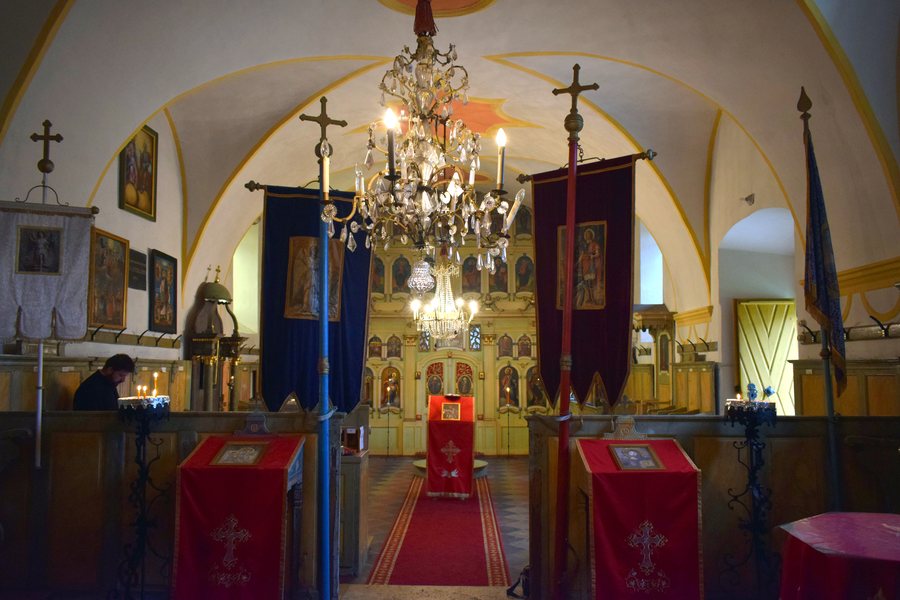
Church and Oldest Quarter
The Serbian Orthodox Church of Szent Gábriel Arkangyal was built in 1752. Together with Ófalu, its surroundings form the oldest quarter of Budakalász. The construction date provides a specific historical reference, while Ófalu places the church within the town’s historic centre. The church is also one of four listed buildings in Budakalász that are protected at national level. The construction date and protected status therefore offer two different points of reference: one states when the building was erected, while the other identifies it as a protected historic building.
Luppa-sziget is locally protected in Budakalász. This protection applies to an area, whereas the church is protected nationally as a historic building. The comparison makes the different levels of protection clear: an individual building on the one hand, and a locally protected area on the other. If you’re interested in local history, you can consider these aspects separately without treating them as equivalent.
Omszk-tó and the Danube Riverside
Omszk-tó is a gravel pit lake on Tanító utca in Budakalász. It was created by gravel extraction in the 1960s. Its history offers a distinct perspective on the landscape: the lake itself and the changes brought about by extraction are both part of what makes it distinctive.
Cycling is possible along the Danube in Budakalász. You can ride along the riverside on a cycle path, with two designated rest areas along the route. A municipal visitor information source from 2017 describes this option. Check route conditions before setting out. This means there are two different riverside experiences to choose from: at Omszk-tó, the landscape is shaped by gravel extraction; along the Danube, you can cycle on the path and use the rest areas.
Planning Your Stay
The Budakalászi Helytörténeti Múzeum is at Budai utca 31. If you’re considering a visit, check the visiting arrangements in advance. LupaWake is about a 20-minute walk from Budakalász railway station. This approximate walking time provides a useful reference point when planning your visit. The museum and LupaWake therefore offer different practical details: an address for the museum and a walking time from the station for LupaWake.
Discover more destinations: Budaörs, Budapest
Return to the main travel overview: Budapest.

