
Cserépváralja: Beehive Stones and Local History
Accommodation in Cserépváralja
Cserépváralja’s special appeal lies in Mangó-tető and its local history: here, striking beehive stones meet hiking destinations and historical connections. When planning your trip, you can decide whether you’d rather spend most of your time outdoors or learn more about the town’s cultural history.
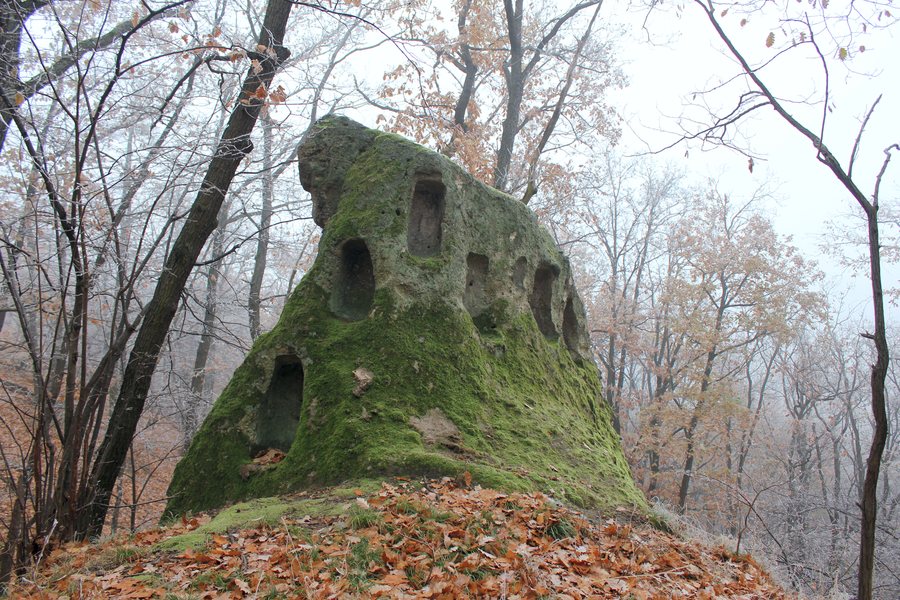 File:A cserépváraljai Nagy-Bábaszék ÉK-i oldala.jpg
Photo: Baráz Csaba via Wikimedia Commons, CC BY-SA 3.0
Beehive Stones at Mangó-tető
Particularly monumental beehive stones can be found on Mangó-tető in the area of Cserépváralja. The larger one is 10 to 13 metres high and has 25 niches. Its south side is a regular cone shape—a distinctive detail if you’re interested in the rock formations.
Since 1 January 1977, the beehive stones have been part of a particularly protected area of Bükk National Park. Leaving the marked hiking trails is prohibited; trail conditions may also change. Possible hiking destinations include Alsó-szoros, Felső-szoros and Szurdok-völgy. This lets you combine the natural side of your stay with a variety of stops, without treating the three destinations as one and the same.
Traces of the Castle and Local History
The French-born L’Huillier family settled in the area at the beginning of the 18th century and built their mansion below the castle hill using stones from the castle walls. Another historical connection dates back to 1848: during the Hungarian War of Independence, Mihály Munkácsy (1844–1900), then four years old, was taken by his parents to his uncle in Cserépváralja. His uncle worked as the mansion’s steward.
Cserépvár also forms part of the area’s historical landscape, but is located near the destination. After the final fall of Eger, the Hungarian garrison left the castle in 1596. It then came under Ottoman rule for nearly a century without a siege. This episode provides a different historical perspective from the story of the mansion and Munkácsy’s biography.
Church and Cultural Connections
The Munkás Szent József-templom in Cserépváralja is one of the modern churches of the Archdiocese of Eger. Csaba László built the present-day church between 1959 and 1961. The construction period provides a specific reference point for the town’s more recent history, alongside the stories from the 18th and 19th centuries.
Hiking and the Right Base for Your Trip
The three-hour “Élet a Bükkalján” hike offers a broader perspective on the area’s cultural history. It is offered in Cserépváralja and the surrounding area and introduces participants to cultural and historical values. Check the current dates before planning. Together with the hiking destinations at Mangó-tető, it offers two distinct focuses: nature and physical activity on the one hand, and local and regional history on the other.
Those who focus on the rock formations and hiking destinations plan differently from those who are primarily interested in castle and church history. So your choice of stay begins with the activities you’d like to experience in Cserépváralja.
Discover more destinations: Cserépfalu, Négyes, Mezőkeresztes, Sály, Mezőkövesd, Szentistván, Tibolddaróc, Szomolya.
For the broader travel overview: Mezőkövesdi.

